

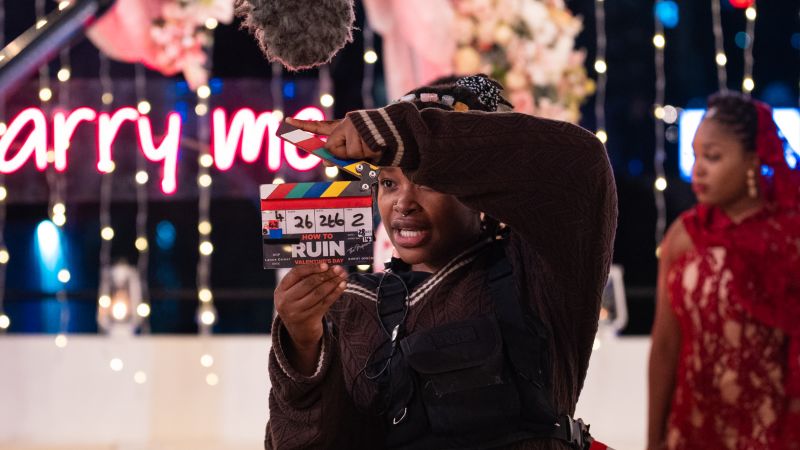
In 2019, South African film director Letabile Ramaphakela was about to make his big break.
After more than a decade in the film industry, the comedy writer, producer, and director has secured financing for her first feature film, Seriously Single.
“I was really excited because it was supposed to be released in 2020,” says Ramaphakela. “This was supposed to be our big movie release, but then COVID-19 hit and we were stuck.”
But like any good comedy, timing is everything. And an even bigger opportunity was just around the corner.

“Netflix saw the movie and really liked it,” Ramaphakela says. “When COVID-19 hit, they said, ‘Why don’t we make it a Netflix original?’ So we licensed the film to them, and our story began from there.”
Since then, Ramaphakhela and her production company Burnt Onion have produced several original series for the streamer, including the award-winning “How to Ruin Christmas.”
Ramaphakela is one of several South African creators who have been able to access sustainable funding, regular commissions, and a huge global audience through Netflix.
The US-based streaming giant entered the African market in 2016 and after initially investing $175 million in South Africa, Nigeria and Kenya from 2016 to 2022, it has doubled its investment in South Africa, pouring approximately $250 million into content from 2021 to 2024.
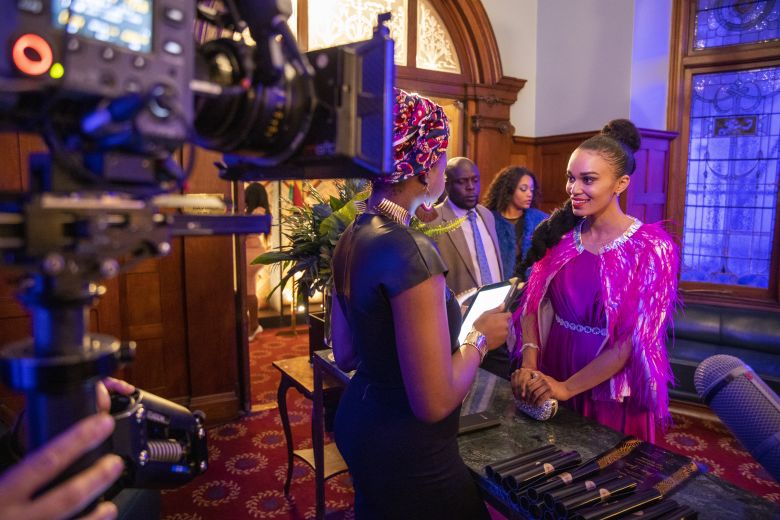
Streaming platforms such as Netflix and South African service Showmax, which focus on producing local content, have been a major catalyst for the growth of Africa’s film and television sector.
South Africa has become one of Netflix’s global production hubs, thanks in large part to infrastructure such as studio space and the “high standards” of local production staff, says Keian Williams, director of scripted content for Netflix Africa.
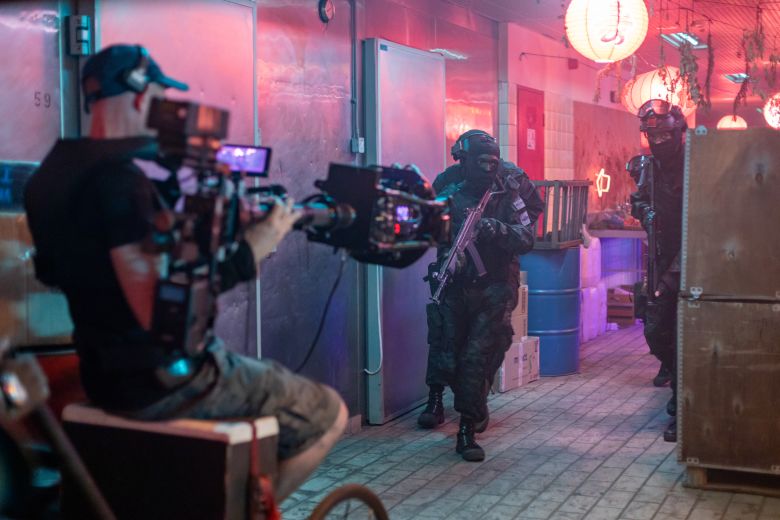
In addition to commissioning original content, the country is also used as a production location for international series, including the live-action series One Piece (2023), which is based on the Japanese manga of the same name and is Africa’s largest Netflix production in terms of scale and budget.

“African viewers want to see shows that have their accents and dialects, reflect their lived experiences, and touch on topics and things that are of interest to them,” Williams said.
However, the continental market is still small. Netflix’s main competitor is Showmax, which dominates regional streaming in Africa with a strong local content strategy focused on reality shows, sports, telenovelas and soaps, and exclusive licensing rights to stream HBO Max content in Africa. (HBO Max is owned by CNN’s parent company, Warner Bros. Discovery.)

Meanwhile, foreign streamers have a limited presence in the African market. As of 2022, Disney+, available in six African countries, has only a small amount of content produced on the continent, and Amazon’s Prime Video stopped commissioning original content in January 2024 after releasing its first African original film just one year earlier.
Part of the problem is connectivity. Although streaming is viable in many African countries, including South Africa, Nigeria, and Kenya, which have the continent’s largest entertainment and media sectors, internet access remains low in sub-Saharan Africa, at around 37%.
However, that could change quickly. In 2021, Google announced that it would invest $1 billion in projects to bring fast and affordable internet to the African continent, including installing new fiber optic cables to improve speed and capacity.
In 2019, there were 1,653 movie theaters. ” class=”image_expandable__dam-img image_expandable__dam-img–loading” onload=’this.classList.remove(‘image_expandable__dam-img–loading’)’ onerror=”imageLoadError(this)” height=”4160″ width=”6240″loading=’lazy’/>
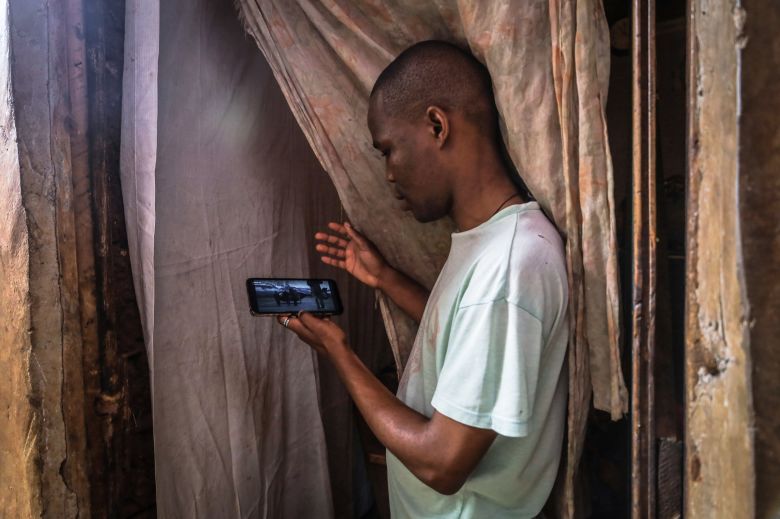
Alex Okosi, managing director of Google Africa, said the continent’s “mobile-first revolution” was “foundational” to the changing entertainment and media landscape.
With the increased adoption of smartphones, “people are moving away from traditional linear TV to more personalized on-demand viewing, where people can unlock the content they want, when they want it, and how they want it,” Okosi added.
Because mobile data is the main way most people on the continent get online, several streamers, including Netflix, are introducing mobile-only subscription plans at a fraction of the cost.

But streamers aren’t the only option. Free, ad-supported platforms like Google-owned YouTube are creating new avenues for creators to reach audiences, Okosi said.
He focuses on Nigerian filmmaker Omoni Oboli, a key figure in Nollywood and dubbed the “Queen of Box Office” for hit films, and is producing a feature film for her YouTube channel. Her recent film “Love in Every Word” has 29 million views and continues to grow, marking a shift away from traditional television and movie theaters as the only way to watch premium content.
However, film and creative industries across Africa still face many challenges, including lack of infrastructure, limited funding, and IP (intellectual property) protection.
Nigeria’s Nollywood is a film production powerhouse that ranks second only to India’s Bollywood. Production teams often work on tight budgets and short schedules, profit margins are low, and the industry is heavily plagued by piracy. It is estimated that Nigeria lost $3 billion in revenue in 2019 alone due to digital piracy.
However, investments are being made. Earlier this year, African trade and finance bank Afreximbank launched a $1 billion African Film Fund to finance production, distribution and digital infrastructure.

London-born Hollywood actor Idris Elba, whose parents are from Sierra Leone and Ghana, is planning to build studios in Zanzibar, Ghana and Sierra Leone.
“A lot of the images about Africa don’t even come from Africa,” Elba told CNN in 2024. “A lot of the media focuses[on negative portrayals of Africa]. But the median age in Africa is 19 years old. These young people are optimistic and deserve a chance to tell their stories.”
“The median age in Africa is 19 years old. These young people are optimistic and deserve a chance to tell their stories.”
Idris Elba, actor
Streamers like Netflix are also investing in education and training. “One Piece”‘s budget includes $400,000 to train and develop young talent, and earlier this year the streamer launched its “ScreenCraft Pathways” program, which aims to provide paid hands-on experience to up-and-coming talent.

“Where we’ve really worked and invested is in the writers’ room,” Williams says. “Development isn’t just about introducing them into our programs and courses, it’s about taking those skills and putting them into practice on our shows. That continuity has led to shows like ‘Bad Influencers,’ where creative producers and show creators came through one of our Grow programs,” Williams added.
Some critics worry that streaming services will homogenize the audiovisual field, eroding nuance and cultural authenticity by shaping content for a general, global audience.
But some creators working on the continent balked at the idea.

Akin Omotoso, a Nigerian filmmaker who has produced films such as Disney+’s Rise (2022) and Netflix’s Marked (2025), says his experience has helped him grow “tremendously as a filmmaker.”
“I see people grappling with it in the face of fear of interfering (or) streamlining the story,” Omotoso told CNN in an email. “Filmmaking funding has never come without strings attached. It’s always up to the filmmakers to navigate external requirements and their own authentic expression.”
“Filmmaking funding has never come without strings attached. It’s always up to the filmmakers to navigate external requirements and their own authentic expression.”
Aki Omotoso (film director, producer)
Similarly, Bradley Joshua, co-founder and CEO of South African production company Gambit Films, makers of the hit series “Blood and Water,” said Netflix’s focus on local content is “surprising and refreshing.”
“Our first impression was that we needed to tell stories that resonated around the world,” says Joshua. “But they were like, no, we actually need to tell a story that resonates locally.”
He added that the increased budget for the project also enabled the hiring of cultural and linguistic advisors to ensure the project accurately represented South Africa’s diversity.

Ramaphakela doesn’t feel that working with global streamers has made her work any less culturally limited, but points out that the industry has become more “risk-averse” globally.
“At the end of the day, people need their money back,” she added. Fortunately, Africa is a largely untapped market, creating huge opportunities for those willing to invest.
“I’m excited to see more streamers open up,” Ramaphakela said, adding, “I’m looking forward to the industry opening up in terms of creativity, new ideas, new programming. I can’t wait for the next 10 years.”
