

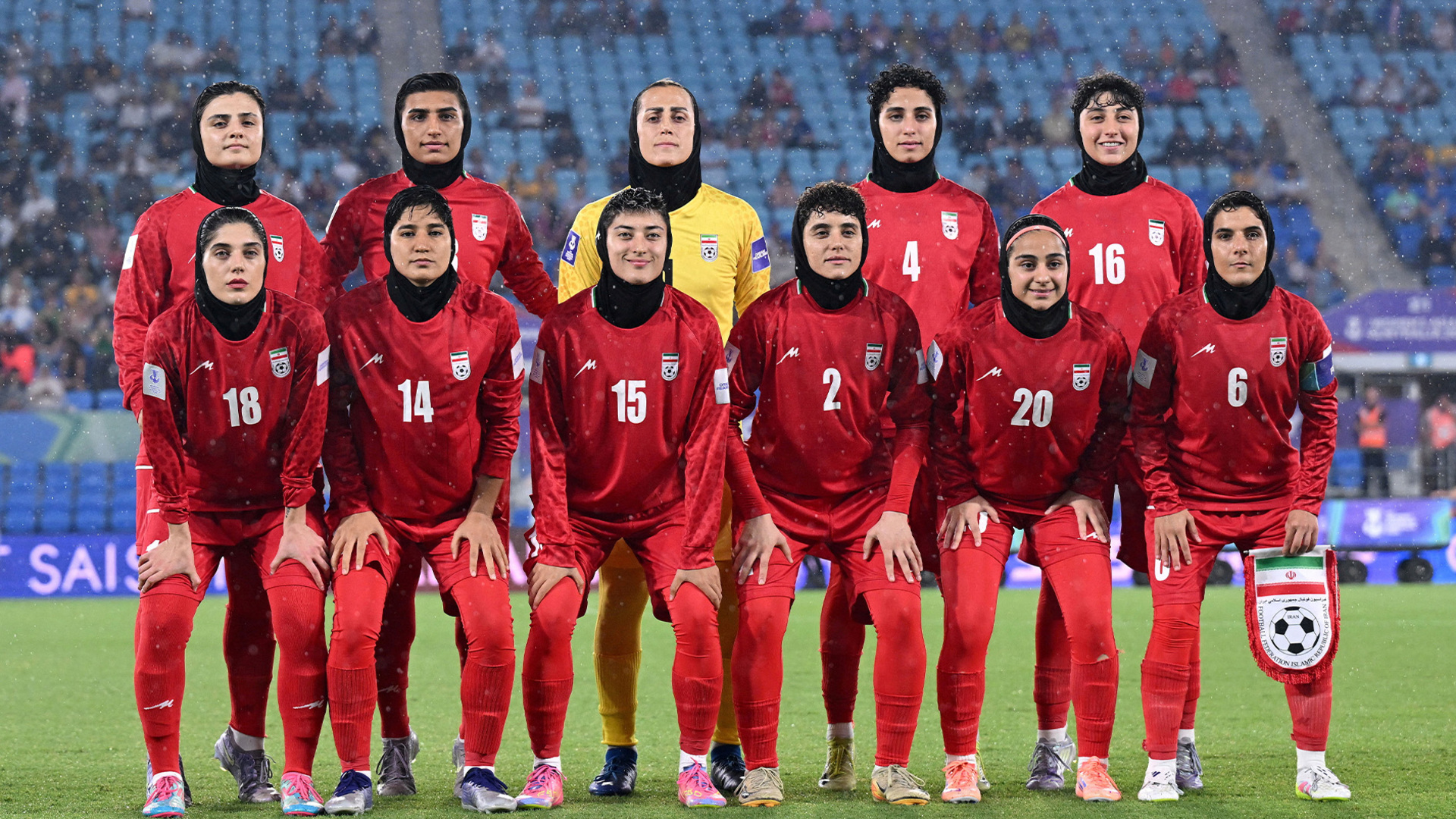
The Iranian women’s soccer team’s participation in the 2026 Asian Cup in Australia ended on Sunday, but the team’s competition and domestic journey continue to be in turmoil after some players opted for asylum in the host country.
The tournament began on March 1, the day after the United States and Israel launched an attack on Iran, killing about 170 people, including Supreme Leader Ayatollah Khamenei, numerous military and political leaders, and elementary school girls.
Recommended stories
list of 3 itemsend of list
The Iranian government responded by firing waves of missiles and drones at Israel, several military bases in the Middle East where U.S. forces operate, and regional infrastructure.
Iran played all their matches on March 2nd, 5th, and 8th at Gold Coast Stadium in Queensland, Australia.
When the team took to the field for the tournament’s first match against South Korea, the players were under great mental and emotional strain, choking back tears before the game.
The events that occurred between their opening game and their return from Australia made headlines around the world.
Here’s what we know so far:
Iran entered Group A of the Asian Cup and were eliminated from the tournament after losing all three matches.
However, the players stood silently as the Iranian national anthem played, drawing attention even before the first kickoff.
Three days later, the script was flipped when Iran faced Australia in the second match of the tournament. This time, the players not only sang the national anthem but also saluted, raising concerns that they were forced to change their stance after receiving backlash from Iranian media.
When the Lionesses faced the Philippines in their final game at Gold Coast Stadium on Sunday, the team repeated the sing-along and salute routine as the national anthem played.
Why didn’t Iranian players sing the national anthem in the first game, but later changed their attitude?
Neither players nor team management have explained why they refrained from singing before the first game, but fans and rights activists have speculated that it was an act of defiance against the Iranian government.
Some suggested the players may have chosen silence to show respect to Khamenei.
Why was the safety of Iranian athletes threatened?
After the first game, a host on Iranian state television IRIB branded the players “traitors” and said they were showing a “lack of patriotism” by not singing the national anthem, adding that their actions amounted to “the height of disgrace.”
“Let me tell you one thing: wartime traitors should be treated more harshly,” Mohammad Reza Shahbaz said in a video widely shared on social media.
“Anyone who is against our country in times of war must be treated more harshly. Just like with this issue of our women’s soccer team not playing the national anthem, these people must be treated more harshly.”
In response to these comments, FIFPRO, the world’s representative organization for professional football players, called on FIFA and the AFC to “take all necessary measures” to protect Iranian players.
Members of Australia’s Iranian community also intervened, pleading with Australian Home Secretary Tony Burke to give the players shelter.
How did the Australian government react?
Australian government officials did not commit to any action during the Iran game, but the country’s foreign minister expressed sympathy for the players.
However, on the day of the team’s departure from Australia, Burke announced that the government had offered all players and staff the opportunity to remain in Australia.
How many Iranian athletes have defected to Australia?
Mr Burke told reporters on Tuesday that five Iranian players had decided to apply for asylum in Australia and would receive support from the government.
“They are welcome to stay in Australia, they feel safe here and they should feel like home here,” he said.
The next day, Burke confirmed that additional players and team support staff had obtained humanitarian visas hours before departure.
However, one player who had previously chosen to stay changed his mind and decided to return to Iran.
The player, later identified as Mohadese Zolfigor, changed his decision after taking advice from his teammates, Burke told the Australian Parliament.
“She was advised by her teammates and advised to contact the Iranian embassy,” he said.
How did Iranian players escape from the hotel?
FIFPRO Asia and Oceania chairman Beau Bush said five players applied for asylum with Australian authorities after the first game against Iran.
“Five players came forward to the authorities and were granted humanitarian visas to stay,” President Bush told Al Jazeera on Wednesday.
Australian media reported that the team was accompanied by Iranian government officials who were controlling their movements.
The hotel where the Iranian delegation was staying was constantly surrounded by local police and frequented by members of the Australian-Iranian community who were pushing for the players to defect.
According to multiple reports, five Iranian athletes were seen interacting with members of the diaspora and hotel security before emerging from the hotel lobby as police stationed outside looked on.
“Within 30 minutes, two members of the Iranian delegation ran across the lobby and down the stairs leading to the underground car park,” the BBC reported.
“The players and their coach, Marzieh Jafari, followed them. The door at the bottom of the stairs was locked, so the Iranians retreated nervously. The women left.”
Minister Burke later admitted that the police presence ensured the players knew there was an opportunity for escape.

The players, who managed to escape with the help of Iranian human rights activists, were taken to a safe location by Australian law enforcement officials, where they met with immigration officials and signed documents.
“There were celebrations among those in attendance when immigration officials completed the processing of the woman’s humanitarian visa at around 1:30 a.m. on Tuesday (3:30 p.m. Japan time, Monday),” Burke told reporters, adding that “conversations with the players regarding their asylum claims had been ongoing for several days.”
FIFPRO’s Bush, who was aware of the details of the players’ asylum grants, said another player and one staff member had “taken the opportunity” and been issued humanitarian visas to stay in Australia for at least 12 months with a path to permanent residency.
“We understand that everyone on the team was interviewed individually by the Australian Federal Police. (The players) were made aware of their rights and the support available to them. They were not rushed through the process,” Busch said.
“They were independently questioned and provided support away from Iranian authorities to avoid pressure,” he added.
Were the players under pressure to return to Iran?
Mr Bush, who is also chief executive of the Australian national professional football team, believes players were under “huge pressure” due to events in Iran.
“We know they are worried about their families back home, and they have to make very difficult decisions about whether to stay or go home,” he said.
President Bush described Iran’s “long history of repression of all dissident voices” as cause for concern.
“We know there have been issues with athletes, (some) of whom have been sentenced to death. So we are very concerned about the well-being of these really brave women (who were called traitors).”
Mr Bush said FIFPRO called on the Australian government to ensure that the players had “a degree of independence” and that accompanying Iranian officials understood their rights in a way that did not put pressure on them.
How many players have returned to Iran and where are they now?
The remaining 21 players from the team that traveled to Australia, head coach Jafari and other support staff made the long journey home via Sydney.
The players are currently on their way to Malaysia as Iranian airspace is closed due to US and Israeli attacks.
It is unclear when he will leave Malaysia and where he will go, but Turkiye is likely to be an option due to its land links with Iran.
What will happen to the players returning to Iran?
President Bush expressed concern for the safety of the returning players, saying their safety is FIFPRO’s “top priority.”
“FIFA and the AFC are working to exert as much pressure as possible on the Iranian authorities to clarify their expectations regarding security and to avoid retaliation or retaliation,” he said.
“Knowing that airstrikes are occurring across Iran is a significant challenge and we are concerned for the safety of these women.”
Iranian Prosecutor General’s Office and Foreign Ministry spokesman Esmail Baghai reassured the players that they would be welcomed “with open arms”.
Bagai urged his players to “go home” hours after five of his teammates applied for asylum.
The attorney general’s office said the players were invited to return home “in peace and confidence.”
“These loved ones are invited to return to their homeland in peace and confidence, as well as address the concerns of their families.”
But Busch said the player welfare organization was not satisfied with the official statement.
“While it is heartening to hear that, we are operating in a context where for decades athletes, players and others have faced persecution for standing up for the most fundamental rights of peaceful protest and freedom of speech.
“We need to see evidence that they will continue to be looked after and that there is no ill will towards them. Our hope is that FIFA, AFC and everyone in the international sporting community will continue to put maximum pressure on the Iranian authorities to ensure they deliver on that promise.”
How will the six players fit into Australian society?
FIFPRO will work with the Australian Government, human rights organizations and the Iranian community in the country to ensure active support for the athletes.
“For the past few days, my phone has been ringing off the hook with people in the soccer world, human rights groups, lawyers, refugee advocates, people (offering) support for women,” Bush said.
“I’m already fielding calls from A-League clubs asking if women would like to come in for training,” he said, referring to the Australian Football League.
Within hours of Mr Burke confirming asylum had been granted to five players, the Brisbane-based football club offered them the opportunity to train at its facilities.
