

Foreign police and soldiers may soon come face-to-face with hundreds of children as a new multinational force gathers in Haiti.
Experts estimate that around 50% of armed groups in the country are children. At least 302 children were “recruited and exploited” by gangs across the capital Port-au-Prince in 2024 alone, according to the United Nations Secretary-General’s latest report on children and armed conflict. Most were said to have been used in battle.
Traces of this phenomenon can be found on the gang’s social media. During a gang attack that killed dozens of people in Haiti’s agricultural capital Artibonite last week, a video showed a round-cheeked boy waving a rifle and robbing the camera. Behind him, an older man fired repeatedly into the distance.
That same week, the first of new reinforcements for the anti-gang unit arrived in Haiti, according to the unit’s X report. Initial plans call for the U.N. Security Council-sanctioned force to eventually deploy about 5,500 personnel to work with Haiti’s police and military.
Geeta Narayan, UNICEF’s head of operations in Haiti, said: “We anticipate that many children will break out of gangs as a result of GSF’s work. We fervently hope that they will not become victims.”

Life in Haiti has become increasingly difficult after years of political turmoil and gang terror. Dozens of armed groups are rampant in Port-au-Prince and surrounding areas, extorting businesses, kidnapping people and forcing farmers off their land.
And after years of instilling fear and despair, they are also reaping young recruits, attracting more than 200% more boys and girls by 2025, according to UNICEF.
“Insurgents are very good at social media,” Narayan said. “They put appealing content on social media with superficial slogans saying, ‘Come and join us. It’s about people standing up.’ They’re obviously trying to attract people, but visually they’re showing money, money, and living in a good house.”
One such account is run by a Village de Dieu gang leader known as Izo, who produces colorful music videos that show off the group’s military-style armor and weapons, along with shoes and jewelry. He has 19,000 subscribers and over 2 million views on YouTube.
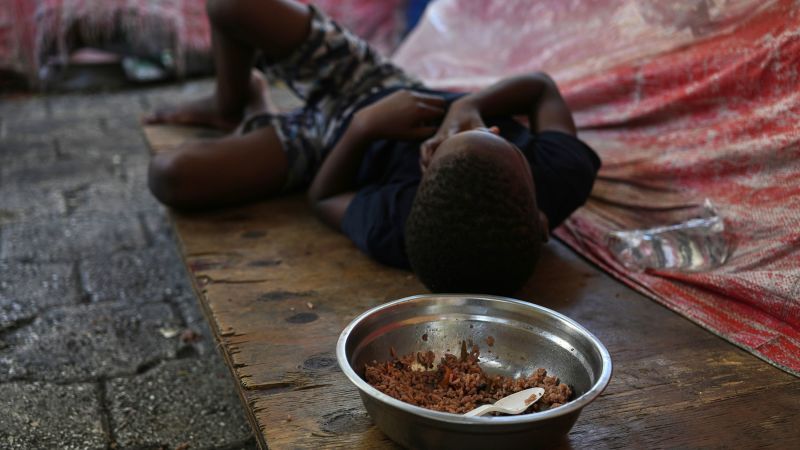
Children who are struggling to fend for themselves are most vulnerable to gang recruitment and human trafficking. In a country with a weak social safety net, wealthy gangs in Port-au-Prince often set up food and housing distribution systems for homeless children within their territories, claiming to “look after” them, according to a United Nations study.
Cash payments could follow in exchange for gang work.
“Depending on the nature of the task assigned, the amount paid for activities such as guarding kidnappers, gathering intelligence, searching homes, and monitoring police movements ranges from approximately $100 to $300,” the UN report said. “According to local sources, these payments are typically made twice a month. Participation in ‘major missions’ such as carrying out kidnappings, hijacking vehicles, or engaging in armed confrontations with rival gangs are reportedly rewarded with high payments of up to $700.”
In 2024, a child recruit told CNN that he was 11 years old and homeless when a gang offered to feed him. He was eventually given the job of burning the bodies of people killed by the gang, he said.
Not everyone is invited. In some gang-controlled areas, children are sometimes surrendered by desperate parents to protect them and their families, Narayan said. Others are abducted or forced into exploitative sexual relationships with gang members.
Aid organizations are limited in what they can do to alleviate the pressure on Haitian children and families.
Humanitarian workers have responded quickly to the gang attacks, dispatching water trucks and setting up temporary shelters for displaced families, but the scale of the crisis is so great that it is difficult to imagine any real rebuilding. More than 1.4 million people are now homeless, and deadly gang attacks have left homes, schools and health facilities in the dust.

That’s why, alongside the security crackdown, we must address hunger and basic humanitarian needs, said Wanja Kaaria, head of the World Food Program in Haiti, which provides emergency response and regular meals to about 600,000 schoolchildren.
“It’s hard to imagine complete peace when people wake up and don’t have enough to eat,” she said.
Handover protocol for children
The nascent GSF is the international community’s latest and boldest attempt to break the grip of heavily armed gangs in the country, giving it expanded powers to aggressively pursue armed groups. So far, an advance contingent of Chadian troops has arrived, reinforcing operations already on the ground from its UN-sanctioned predecessor mission, Multinational Security Support (MSS).
Multiple security experts told CNN that once GSF operations begin, child soldiers could be brought to the front lines to confront the new forces. Meanwhile, human rights experts have expressed concern about how children affiliated with organized crime groups are treated when confronted on the volatile streets.
At least 30 children, some as young as 10, have been summarily executed by police or vigilantes on suspicion of gang association since 2022, according to United Nations figures.
Narayan said he expected security forces encountering the children to comply with the Extradition Protocol signed by the Haitian government and the United Nations, which requires them to be properly detained and handed over to Haitian child welfare agencies. It is unclear whether GSF forces have special training or experience to do this.
UNICEF runs a program called Prejeune for children who escape from gangs and aims to help them reintegrate into civilian society. More than 500 children have participated so far, many of whom are going through the complex process of overcoming deep trauma.
“There needs to be a process of reconciliation between the child and the community,” Narayan said. “They often do terrible things, and it’s natural for families to want them back.”
