

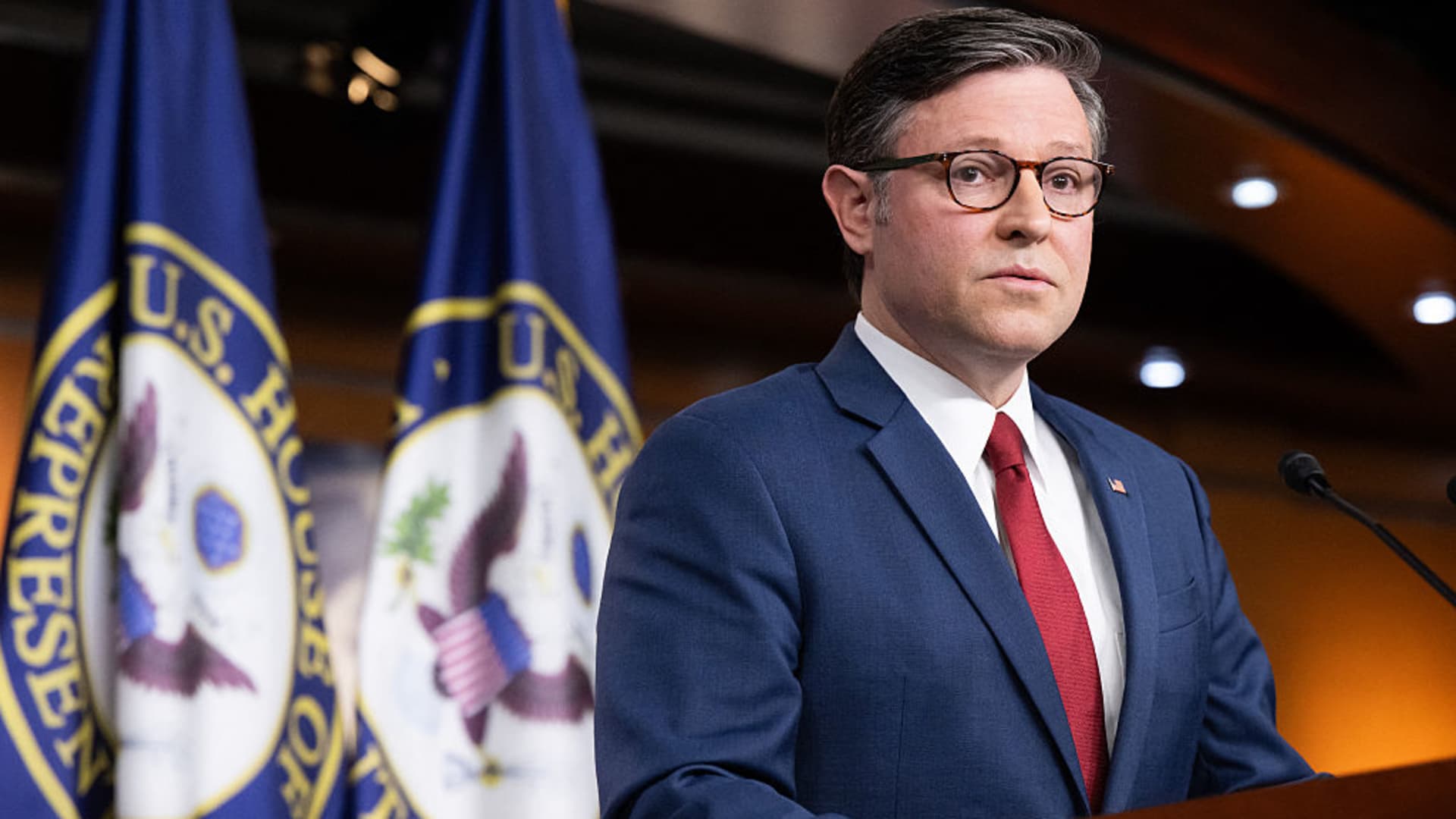
Speaker of the House Mike Johnson (R-Louisiana) speaks during a press conference on the 41st day of the federal government shutdown at the U.S. Capitol in Washington, DC, on November 10, 2025.
Saul Loeb | AFP | Getty Images
The Senate passed a bill Monday night that would fund the federal government through January and end the longest government shutdown in U.S. history.
The bill passed 60-40 with the support of a few Democratic senators and almost all Republicans, and will now be sent to the House.
If the bill passes the House, it will go to President Donald Trump for his signature.
President Trump said early Monday that he supported the funding deal negotiated between Republicans and the moderate Senate Democratic caucus about six weeks after the government shutdown began on Oct. 1.
House Speaker Mike Johnson said at the Republican conference early Monday that he hopes House Republicans will begin traveling to Washington, D.C., to vote on the deal.
House members were told that voting on the deal could begin by 4pm ET on Wednesday.
Before the Senate vote, Johnson rejected a key guarantee of the deal to Democrats: a promise that Congress would hold a separate vote in December on the possibility of expanding Affordable Care Act subsidies. According to the Senate agreement, that vote would be based on the bill chosen by Democrats.
“I’m not committed to it, I’m not committed to it,” Johnson, R-Louisiana, said on CNN.
These subsidies, which expire at the end of December, are helping lower the cost of individual health insurance plans for more than 20 million Americans.
On Sunday night, Democratic senators almost universally refused to vote to reinstate the administration because the original House Republican bill did not extend the ACA tax credits until the Senate passed the first phase of the newly negotiated deal.
Senate Majority Leader Chuck Schumer of New York angrily criticized the deal Sunday night, saying it doesn’t guarantee the subsidies will last until 2026 because without them, many Americans would face much higher premiums.
The Senate agreement will provide funding to the government until the end of January. Reversing all federal employee layoffs related to the government shutdown. and ensure that all federal employees are paid their regular salaries during the shutdown.
The agreement also includes provisions for a bipartisan budget process and prevents the White House from using continuing resolutions to fund the government.
CR has been used repeatedly to avert government shutdowns, but it is controversial because it often prevents lawmakers from making decisions about long-term government funding that could be resolved in the regular budget.
The agreement will also fund the SNAP program, which will feed 42 million Americans through food stamps through September.
Under a federal law passed in 2019, public employees who are furloughed during a government shutdown must be paid for the time they were furloughed at their standard salary “on the earliest possible date, regardless of their scheduled payday.”
— CNBC’s Emily Wilkins contributed to this article.
