

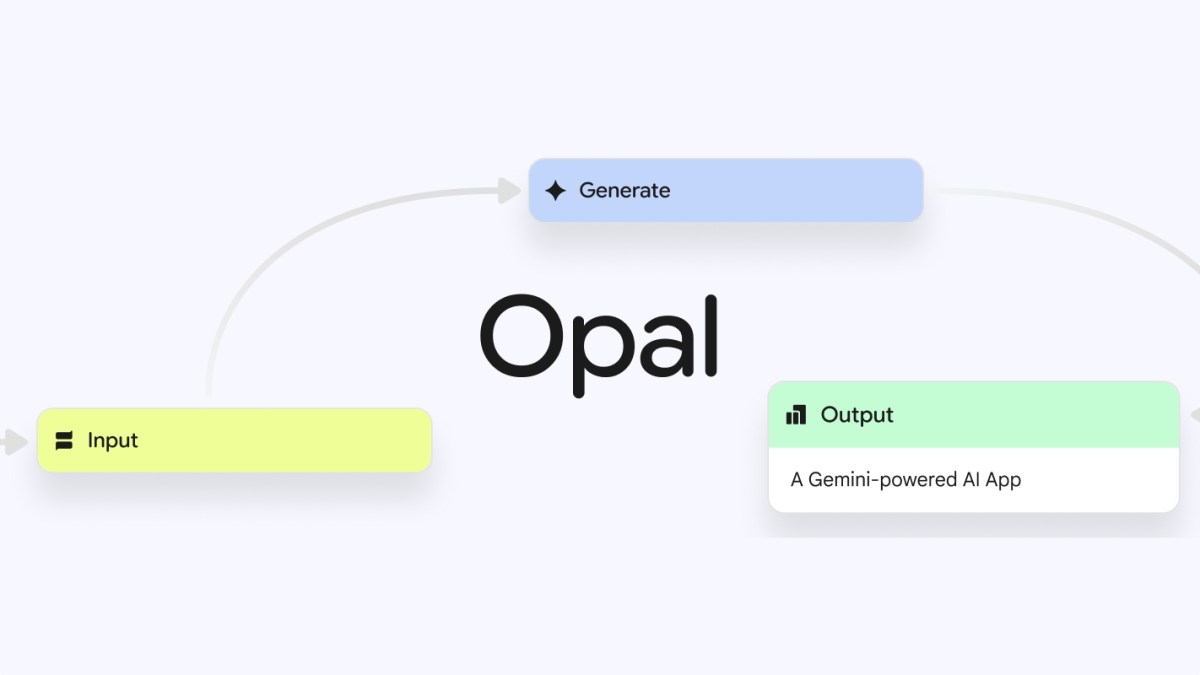
Google will expand access to the AI vibe coding app Opal to 15 more countries. This app allows you to create mini web apps using text prompts and is currently available in Canada, India, Japan, Korea, Vietnam, Indonesia, Brazil, Singapore, Colombia, El Salvador, Costa Rica, Panama, Honduras, Argentina and Pakistan.
“When we published Opal to US users, we expected that they might build a simple and fun tool,” said Megan Li, senior product manager at Google Labs, in a blog post. “We didn’t expect a surge in the number of sophisticated, practical, and highly creative Opal apps instead. The ingenuity of these early adopters has revealed one thing: Opal needs to be in the hands of more creators around the world.”
Opal works by having the user enter a description of the app they want to create, and then the tool uses a variety of Google models to input. Once the app is ready, users can open the Editor panel to view and customize the visual workflow of input, output and generation steps. You can click any step to view or edit the prompt, or manually add a new step using the Opal toolbar. Users can also publish their apps to the web to share links, allowing others to test their apps on their Google accounts.
In addition to the expansion, Google has also announced improvements to Opal.
The technology giant said it has improved its debugging program but intentionally left it no code. Users can now run workflows step by step in the Visual Editor, or adjust specific steps in the Console. The error appears where it occurred, providing context immediately and eliminating guesses.
Google also said it has significantly improved Opal’s core performance. The company notes that previously it took up to five seconds to create a new opal. This time, we’ve increased the speed so that it’s easier to get started. Additionally, users can execute steps in parallel, allowing complex workflows that involve multiple steps simultaneously.
With the launch of Opal in the US in July, Google has joined the list of competitors such as Canva, Figma and Replit, which are building tools that allow non-technical users to design prototype apps without writing code.
