

France’s sports minister called the International Olympic Committee’s decision to introduce genetic testing in women’s games a “backward” and warned it raises major ethical, legal and scientific concerns, while US President Donald Trump praised the IOC’s new policy.
Marina Ferrari said in a statement on Friday that France “takes note” of the decision to require athletes to undergo tests based on the SRY gene, but opposes widespread use of genetic screening.
Recommended stories
list of 4 itemsend of list
“On behalf of the French government, I would like to express our deep concern regarding this decision,” she said. “We oppose the generalization of genetic testing, which raises numerous ethical, legal and medical issues, especially in light of French bioethics law.”
The IOC announced Thursday that only biological female athletes will be eligible to compete in women’s events from the 2028 Los Angeles Olympics onwards, following a one-time genetic test designed to determine male sexual development. The move effectively bars transgender athletes from competing in the women’s division.
The rule is in line with President Trump’s February 2025 executive order that banned transgender athletes from participating in girls’ and women’s sports.
“We celebrate the International Olympic Committee’s decision to ban male participation in women’s sports,” President Trump said on the Truth social platform late Thursday.
“This is only happening because of my strong executive order to stand up for women and girls!”
However, Ferrari said: “These tests, introduced in 1967, were discontinued in 1999 due to strong concerns in the scientific community regarding their relevance. France regrets this setback.”
She added that the policy risks undermining equality by specifically targeting women.
“This decision raises great concern because it specifically targets women by introducing a distinction that undermines the principle of equality,” she said.
Ferrari also warned that this approach does not reflect biological diversity, particularly among intersex people.
“This defines the female sex without taking into account the biological specificity of intersex individuals, who have natural differences in sexual characteristics, leading to a reductive and potentially biased approach,” she said.
New Zealand’s Olympic Committee said on Friday that the IOC’s policy would bring greater “clarity” and “fairness” to future Games.
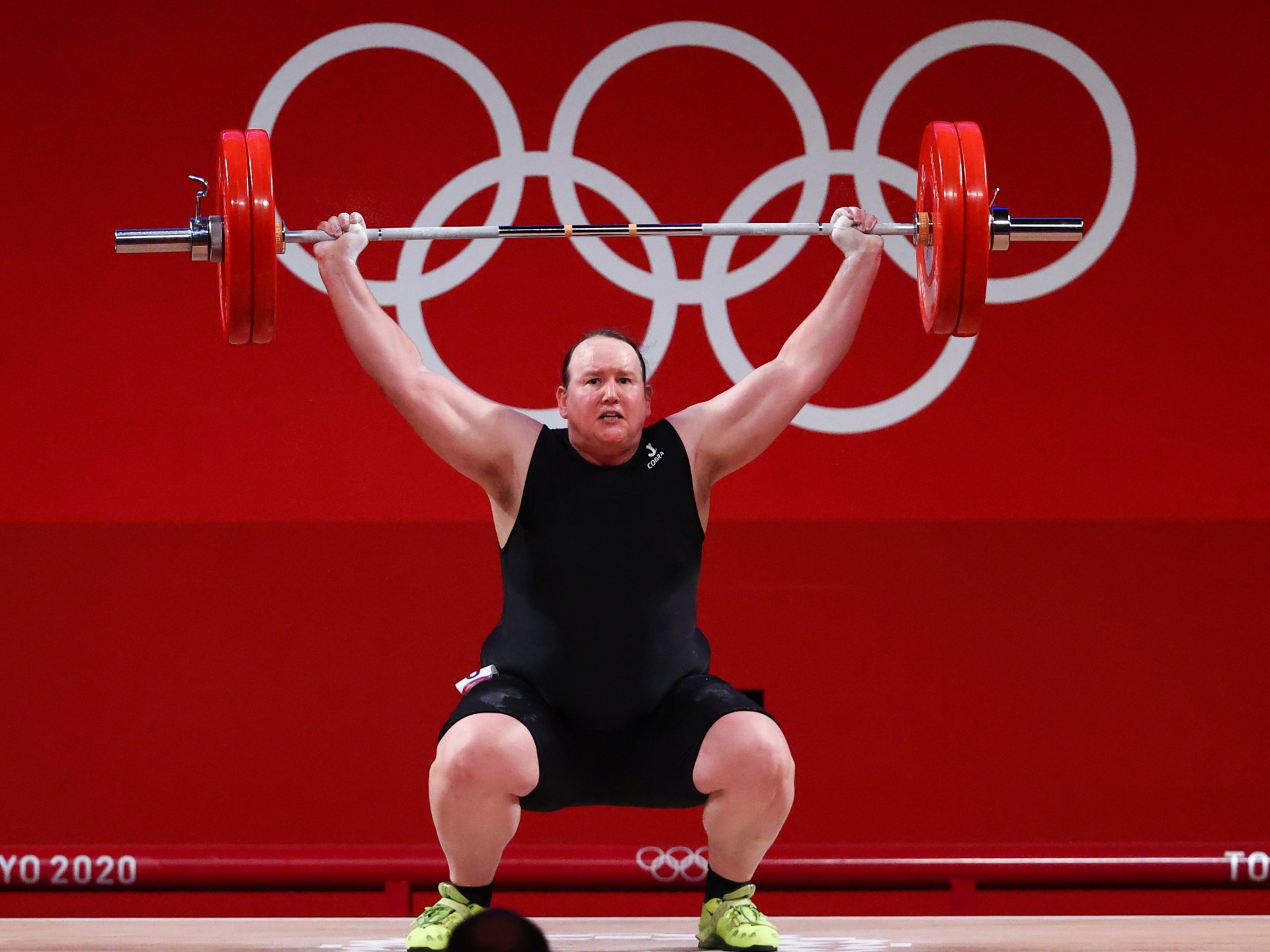
New Zealand weightlifter Laurel Hubbard is the first openly transgender woman to compete at the 2021 Tokyo Olympics.
NZOC chief executive Nikki Nicol said the organization was aware of the “extensive consultation and expert input that has influenced this policy”, particularly from athletes.
She said this would bring “greater clarity, consistency and fairness to the qualifications of the women’s category at Olympic level”.
“This is a complex and sensitive area that directly affects people as well as policy,” she added.
Hubbard, who competed in 2021 and then failed in all of her lifting attempts in Tokyo, said she was aware there would be controversy surrounding her participation.
The NZOC’s comments on Friday made no mention of Hubbard, who has kept a low profile since appearing in the game.
Australian Olympic Committee president Ian Chesterman also reacted to the IOC’s announcement on Thursday, saying the IOC had conducted a comprehensive investigation into what he called a “complex issue”.
“Without a doubt, this is a challenging and complex topic, and at AOC we are approaching it with empathy and understanding.”
He added: “This decision provides clarity for elite female athletes competing at the highest level and demonstrates a commitment to fairness, safety and integrity in Olympic competition, all of which are fundamental principles of the Olympic Movement.”
“As the IOC has stated, at the highest levels of sport, small differences can make a difference, and clarity on eligibility is critical for female athletes to continue to compete on a level playing field.”
