

fstop123 | eplus | Getty Images
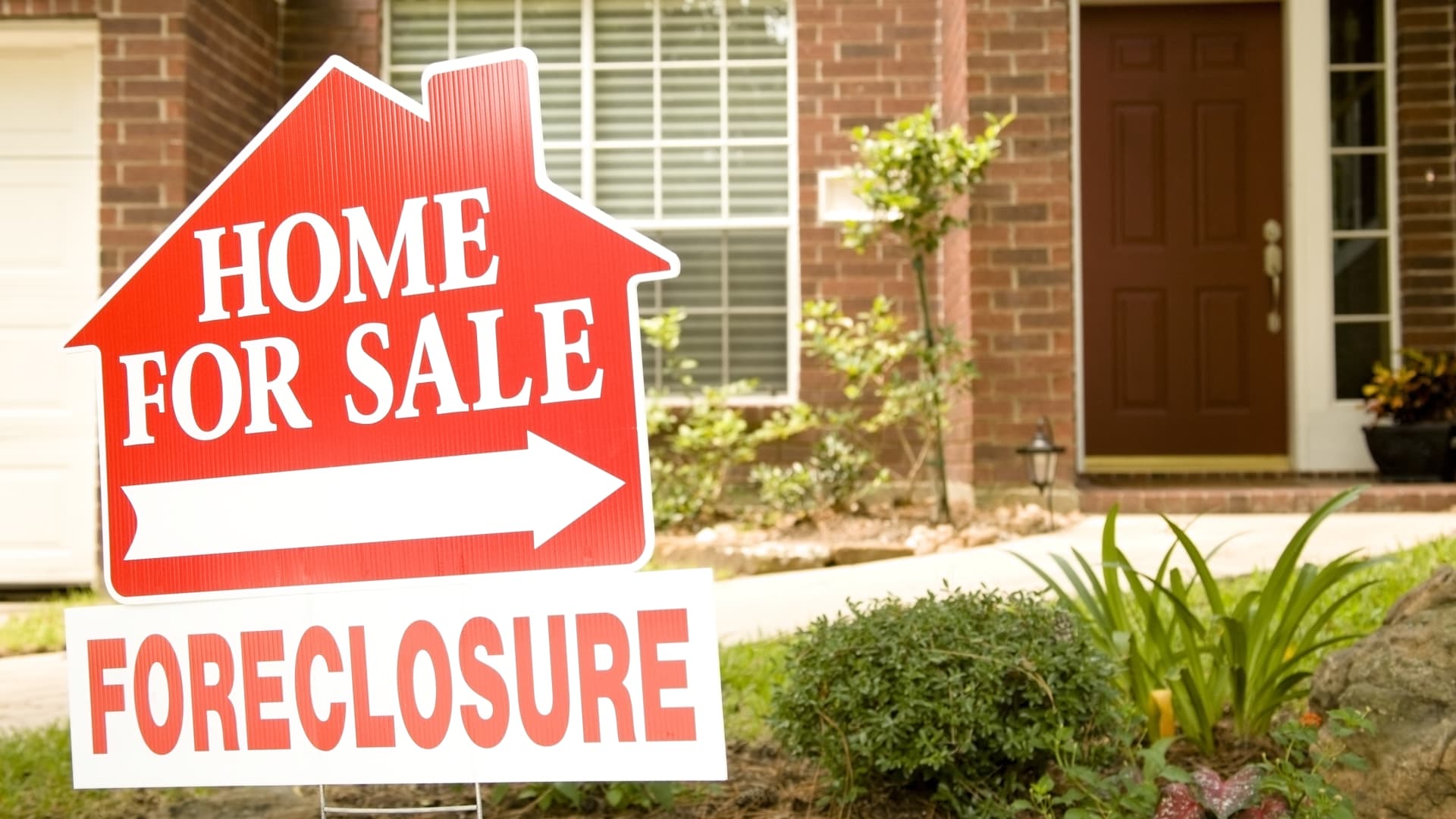
Foreclosure filings rose again in October after hitting historic lows in recent years, according to new data released Thursday.
Although the numbers are still small, the continued rise in foreclosures may be a sign of cracks in the housing market.
According to real estate data and analytics company Atom, 36,766 U.S. properties had some type of foreclosure filing in October (including notices of default, scheduled auctions, and bank foreclosures). Atom said this was a 3% increase compared to September and a 19% increase compared to October 2024, marking the eighth consecutive month of annual growth.
The number of foreclosures initiated, the early stage of the process, rose 6% in the month and 20% from a year earlier. The number of completed foreclosures, the final stage, increased by 32% from the previous year.
“Despite these increases, activity remains well below all-time highs. Current trends appear to reflect a gradual normalization of foreclosure numbers as market conditions correct and some homeowners continue to weather rising housing and borrowing costs,” Attom CEO Rob Barber said in a release.
Florida, South Carolina and Illinois led the nation in state foreclosure filings. At the metropolitan area level, Tampa, Jacksonville and Orlando in Florida had the highest number of applications, with Riverside, California and Cleveland rounding out the top five.
Specifically, when looking at the number of completed foreclosures, Texas, California, and Florida have the highest numbers, suggesting that more inventory is coming to market at distressed prices in those states. Demand remains very strong, especially for affordable housing, so foreclosed properties are likely to find buyers quickly.
At the peak of the Great Recession, more than 4% of mortgages were in foreclosure, said Rick Sharga, CEO of CJ Patrick, a real estate market information company. Less than 0.5% are currently in foreclosure, well below the historical average of 1% to 1.5%. Additionally, 4% of mortgages are delinquent. At the peak of the financial crisis, almost 12% did.
“So we don’t have to worry about a tsunami of foreclosures,” Sharga said. “However, there are some concerns. The (Federal Housing Administration) delinquency rate is over 11% and accounts for 52% of all seriously delinquent loans. More FHA loans could be in foreclosure in 2026.”
He also pointed to an increase in defaults in states, particularly Florida and Texas, where home prices are falling while insurance premiums are rising.
Although housing prices are easing nationwide, they remain high. Meanwhile, mortgage rates were expected to fall even more sharply after the Federal Reserve began cutting interest rates, but they remain within 1 percentage point of recent highs. Some recent buyers who thought they might be able to refinance to a lower rate by now may be feeling the pressure, especially with inflation still stubbornly high.
Consumer debt is at an all-time high, delinquencies on other types of consumer loans are increasing, and the job market appears to be depressed, all of which could be contributing to the rift in the housing market.
“While none of these issues have affected mortgage performance, it is unrealistic to think that these trends, along with weaker home sales and slower home price growth, will not lead to at least a slight increase in delinquencies and defaults in the coming months,” Sharga added.
