

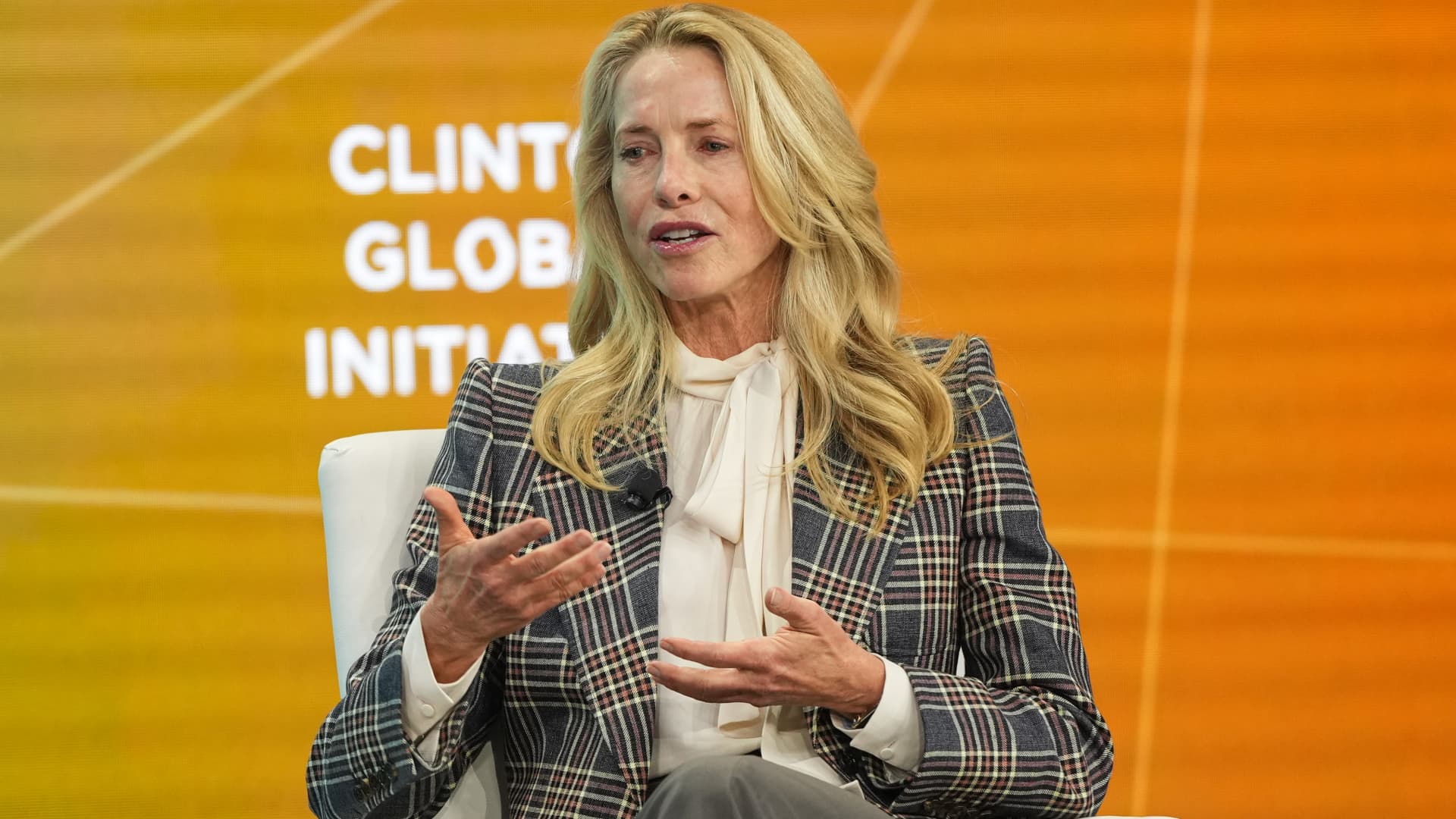
Laurene Powell Jobs attends the Clinton Global Initiative 2024 Annual Meeting at the Hilton Midtown on September 24, 2024 in New York City.
John Nation | Getty Images
A version of this article first appeared in CNBC’s Inside Wealth newsletter by Robert Frank, a weekly guide for high-net-worth investors and consumers. Sign up to receive future editions directly to your inbox.
Concerns about an artificial intelligence bubble roiled stock markets in February, but ultra-wealthy investment firms were still making bullish bets on fast-growing AI startups.
For example, Laurene Powell Jobs’ investment and philanthropy firm, Emerson Collective, participated in a $1 billion round of funding for AI developer World Labs last month. World Labs’ first product, Marble, allows users to create and edit 3D world models using text and image prompts. Indian billionaire Azim Premji’s family office of the same name also participated in AI video generation startup Runway’s $315 million Series E round.
In February, family offices made direct investments in 41 companies, nearly all related to AI, according to data provided exclusively to CNBC by private wealth platform Fintrx.
World Labs and Runway have a great relationship. AI startups raised $171 billion in February, bringing total startup funding from all investors in the same month to a record $189 billion, according to data from Crunchbase. Rounds by Anthropic, OpenAI, and Waymo received the bulk of the funding, with four other companies including World Labs securing 10-figure rounds.
In other family office deals, former Google CEO Eric Schmidt and his wife Wendy’s company Hillspire invested in a novel startup that could benefit the rest of the company’s AI portfolio. Last month, the company participated in Goodfire’s $150 million Series B, which aims to understand and improve how AI models work.
Schmidt warned at a conference in October that AI models can be hacked for malicious purposes. But he said he is generally optimistic about AI and would not compare it to the dot-com bubble of the early 2000s.
“I don’t think that would happen here, but I’m not a professional investor,” he said. “What I do know is that the people who are investing their hard-earned money believe the long-term financial returns are huge. Why else would they take the risk?”
