

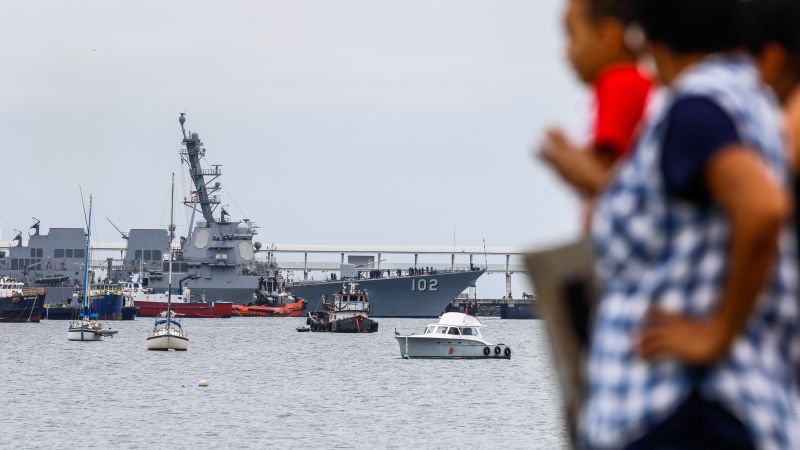
The deployment of US warships in the Caribbean to counter drug trafficking could simply divert the issue to the Pacific, local experts warn.
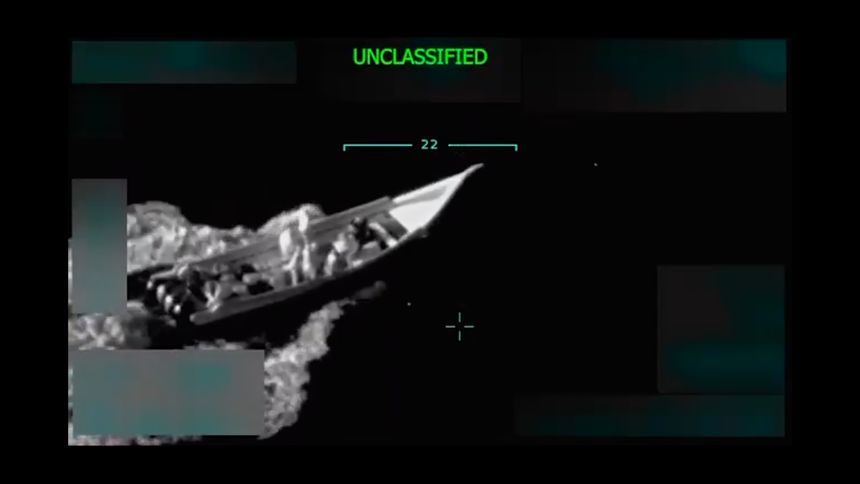
While much attention has been drawn to political tensions between the US and Venezuela after the strike on the allegedly Venezuelan drug ship on Tuesday, security specialists warn that the focus on American ships’ trafficking routes in the Caribbean could have serious deliberate consequences for countries struggling to prevent drug flows, such as in the Pacific corridors.
“What happens is that by blocking this Caribbean corridor, drug traffickers avoid continuing to transport drugs through that route, as they are more dangerous and bring about greater losses.
Ecuador is one of the most violent countries in Latin America due to organized cross-border crime, and has the third highest drug attack after the US and Colombia, according to the UN Office for Drugs and Crime.
Various drug trafficking routes operate from South American countries to Central America, the US and Europe.
Pazmiño believes these routes are popular with human traffickers as they are squeezed out of Caribbean routes.
“This drug flow will no longer pass through Colombia or Venezuela. They will try to use the port of Ecuador, one of our country’s biggest weaknesses and where drugs are constantly leaving,” he warned.
Certainly, Pazmigno believes this effect is already playing around with.
On August 25, Ecuador’s Guayaquil Port Authority declared a state of emergency due to growing anxiety and constant threats of fear.
“Guayaquil Port Authority facilities are in immediate danger given the threat of luring crews and pilots to induce attack ships.”
Pazmigno believes this situation is closely related to military tensions in Caribbean waters, indicating the ability of cross-border crime to bypass trafficking routes.
The Ecuadorian Navy recently reported that it had strengthened its patrols and military operations against drug traffickers.
On August 24th, authorities seized 10 tons of drugs with the help of the US Coast Guard. It provides support under the military agreement signed in 2023.
Daniel Ponton, a criminal policy and crime management expert at Ecuador’s Institute of Advanced Nationals, said management of the Pacific corridor is becoming a much more complicated challenge.
“Drug traffickers know how to take advantage of every moment and vulnerability. Ecuador and other countries in the region need capacity and cooperation. The limited capabilities of the Navy require joint action,” Ponton added.
Meanwhile, Michelle Mafay, an international researcher of organized crime, conflict and violence, warned that militarizing the fight against criminal gangs has the opposite effect of what is intended.
“It’s another political conflict that enforces. It’s not a strategy against organized crime. The US focuses on the Maduro government (Venezuela). While focusing on the removal of Maduro, the illegal and criminal economy will drive more drugs and use semi-permeable vessels or containers with greater vitality.
Mafay said authorities should instead focus on fighting corruption.

“We need to implement radical reforms to the Ecuadorian judicial system, and we have prosecutors who do not work, acquired judges, and lawyers who have been acquired by organized crime groups.
Pazmigno also suggested ways to combat the problem. “We will strengthen the northern border with Colombia and create a joint task force to cover the entire northern border, making it difficult and impossible for cocaine to spill over Ecuadorian territory.”
Even without increasing drug flow, Ecuador has experienced severe internal violence, and has recently reported record numbers of murders in the fight between organized crime gangs. So far, the Ministry of Home Affairs has recorded 5,268 intentional murders. In 2024, the year ended with 7,062 violent deaths. In 2023 there were 8,248.
The Daniel Novore administration is urging the international community to support the fight against international crime.
However, while the region’s eyes are focused on the Caribbean, experts hope this will not lead to increased violence and mafia activity in major regions of cocaine trafficking in the Pacific Ocean.
