

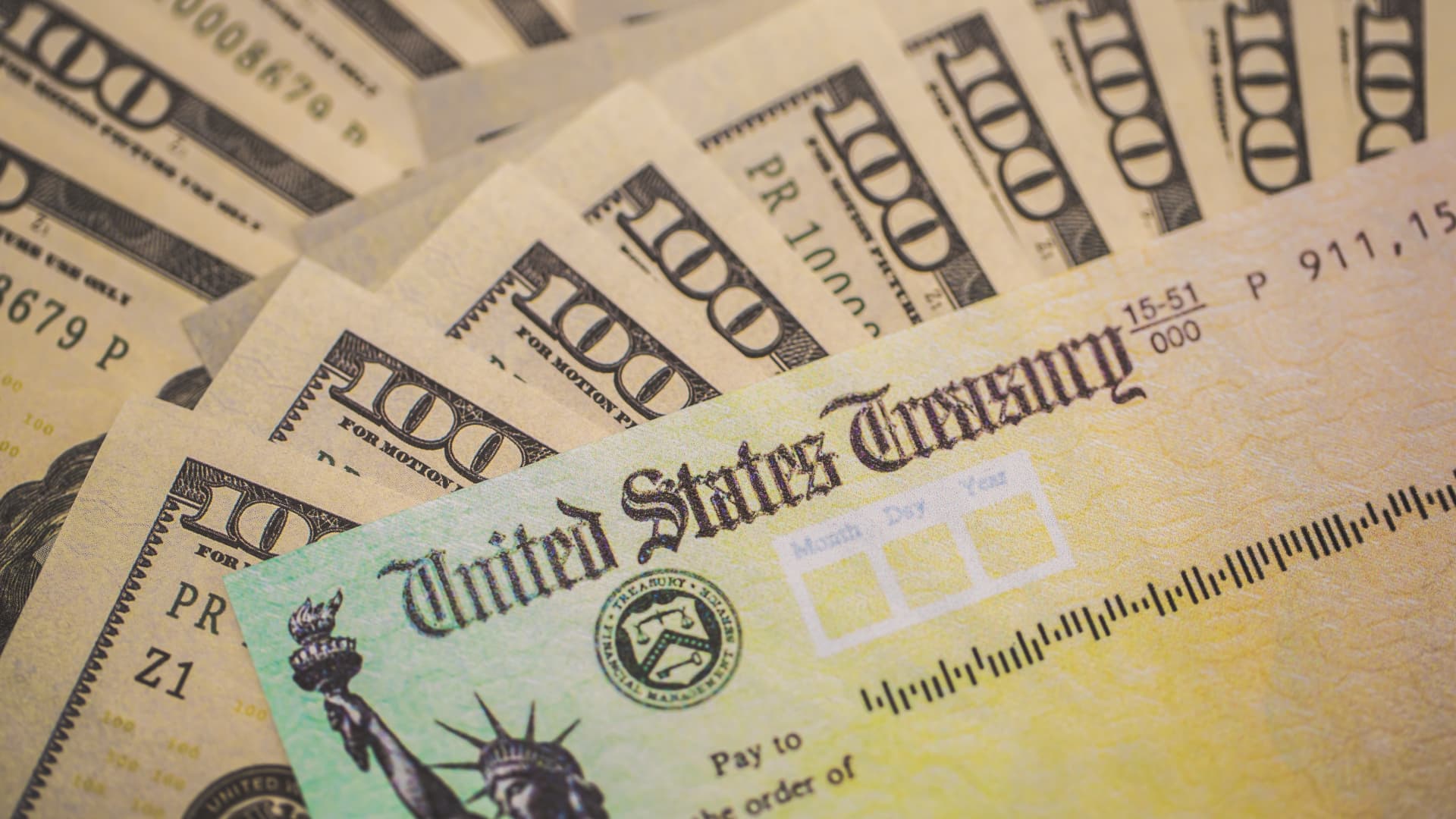

The Supreme Court on Friday struck down the centerpiece of President Donald Trump’s tariff policy, dealing a blow to the possibility of sending so-called tariff dividend checks to families, experts said.
“The tariff dividend was unexpected from the beginning,” said Stephen Cates, a certified financial planner and financial analyst at Bankrate. “The idea was almost aspirational, given that the White House does not have the authority to unilaterally issue stimulus checks to Americans,” he said.
Such a wide-ranging benefit program would require legislation passed by Congress. Congressional approval will be particularly difficult, he said, given the continuing partisan bickering in Washington following the Supreme Court’s landslide defeat.
“Even if tariffs were to return to previous levels and broad stimulus revenues were available, there does not seem to be enough political support to pass such a measure in Congress,” Cates said. “The chances of this policy moving forward are now virtually zero.”
In a 6-3 tariff decision, the Supreme Court ruled that the president had wrongly invoked the International Emergency Economic Powers Act (IEEPA) to carry out much of his trade policy.
Immediately after the high court’s ruling, President Trump signed an executive order using another legal authority to impose a new 10% “universal tariff” and then say he would raise the tax rate to 15%.
Trump said in a post on Truth Social that the new tariffs would take effect “immediately,” but it’s unclear whether an official document detailing the timing has been signed.
“Even if the tariffs challenged in the Supreme Court ruling were replaced by other trade taxes on Americans, the widening federal deficit should make everyone skeptical that those checks would even arrive in the mail,” said Brett House, an economics professor at Columbia Business School.

Treasury Secretary Scott Bessent said Friday during an appearance at the Dallas Economic Club that despite the Supreme Court’s ruling, tariff revenues under Section 122 of the Trade Act of 1974 will remain “very much the same.” The law gives the president temporary authority to reimpose tariff policies and could pave the way for some American households to receive a one-time refund of $2,000 per person in tariffs.
On Monday, a White House official told CNBC in an email: “As Secretary Bessent has made clear, tariff revenues are expected to remain strong through the use of Section 122 tariffs, and the administration is committed to putting that revenue to good use on behalf of the American people.”
“At least $2,000 in dividends.”
The president first floated the idea of directly distributing doses to Americans in July. Next, Sen. Josh Hawley (R-Missouri) introduced the American Worker Rebate Act of 2025, which proposes an economic stimulus package funded by tariff revenue. The Senate referred the bill to the Finance Committee, where it remains.
Later this year, President Trump said rebate checks from the funds generated by the tariffs would soon be issued.
“Everyone (except high income earners!) will be paid a dividend of at least $2,000 per person,” he wrote in a post on Truth Social in November.
National Economic Council Director Kevin Hassett also said that by the end of 2025, “the president will submit a proposal to Congress to make that happen.”
Asked about the tariff refunds in January, President Trump said the checks would arrive “towards the end of the year.”
Customs refund status
The Trump administration may also have to refund taxes already paid to companies that paid them.
Tariffs are taxes on foreign imports and are paid by U.S. businesses that import goods or services. Companies often absorb some of the costs and pass the rest on to consumers at higher prices.
The Supreme Court did not rule on the possibility of tariff refunds, but if the U.S. had to repay companies, it would erode the surplus tariff revenue that funds dividend checks. For now, the possibility of a tariff refund is up in the air. Experts say it’s unclear who is eligible or even how to apply.
“The court didn’t rule on refunds, but in any case, it’s hard to imagine that tariffs would be imposed on people who weren’t previously taxed, rather than on people who were previously taxed,” said Thomas Phillipson, a public policy research professor at the University of Chicago and former acting chairman of the White House Council of Economic Advisers.
Subscribe to CNBC on YouTube.
