

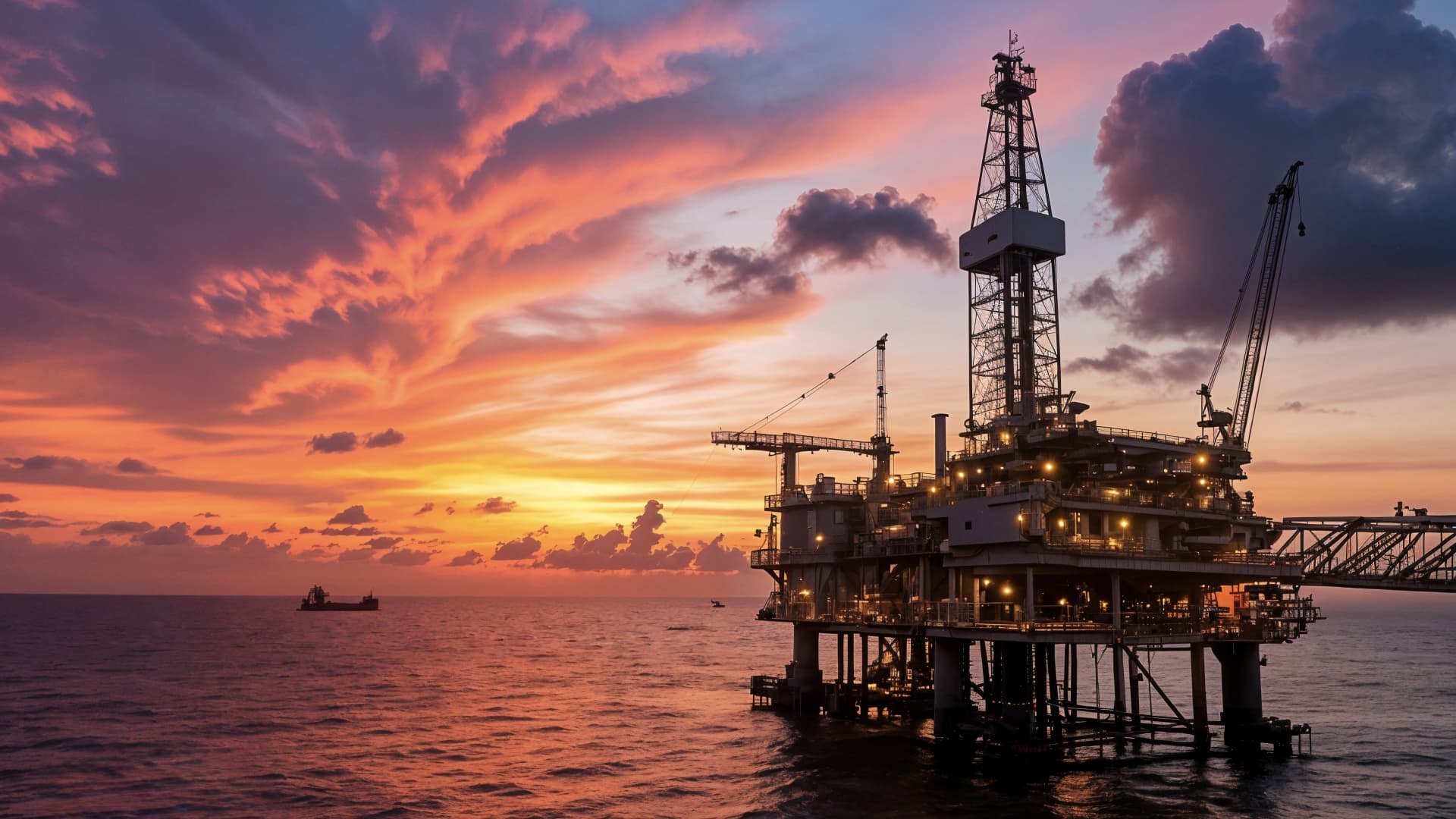
As commodity prices soared Friday morning, strategists warned that Europe was at even higher risk of an energy shock than the U.S. Appearing on CNBC’s “Early Edition Europe,” Joachim Klement, head of strategy at Panmure Liberum, pointed out that Europe currently gets most of its natural gas from Qatar, one of the world’s largest LNG producers. As the Middle East war enters its seventh day, the Strait of Hormuz, a key supply route that handles about a fifth of the world’s oil and gas, is now effectively closed to all shipping due to the continuing threat of attack by Iran. Clement said this was bad news for Europe’s most energy-intensive industries: cars, chemicals and industrial products. “We are currently facing a very dangerous situation where natural gas storage is almost empty and supplies from Qatar are decreasing due to the cold winter and the end of the winter season,” he said. “This creates a big risk of a surge in natural gas in Europe, which will obviously be very negative for energy-intensive industries such as the chemical business, industrial and automotive sectors.” Following the outbreak of Middle East war last weekend, the Stoxx Europe 600 Automotive and Components Index fell 0.7% on Friday and has fallen a further 8% this week. The Stoxx Europe 600 Chemical Industry Index fell 0.9% on Friday and was down 6.3% for the week. Meanwhile, industrial stocks have fallen 4.7% since the start of the conflict. Energy prices are soaring as the escalating conflict between the United States, Israel and its ally Iran, disrupts global supply chains. Dutch Transfer Facility (TTF) futures, Europe’s benchmark gas contract, were trading at 52.33 euros per megawatt hour on Friday. This is lower than the 63.75 euros seen earlier in the week, but LNG is on course for its biggest weekly gain since February 2022 following Russia’s invasion of Ukraine. As of February 27, the day before the dispute began, TTF was 31.96 euros per MWh. Meanwhile, global oil benchmark Brent crude resumed its rise on Friday morning, rising 4.5% to $89.25, a new 52-week high. In the United States, West Texas Intermediate prices last rose 6.2% in early trading to $84.53. Qatar Energy previously suspended LNG production after Iranian drones attacked the state-owned producer’s Ras Laffan and Mesaieed Industrial City facilities, a move that wiped out about 19% of global LNG supplies in the short term. “Unfortunately, Europe is even more vulnerable to this energy shock than the United States,” Clement said. “It’s decreasing because of oil, but also because these days we get most of our natural gas from Qatar.”
