

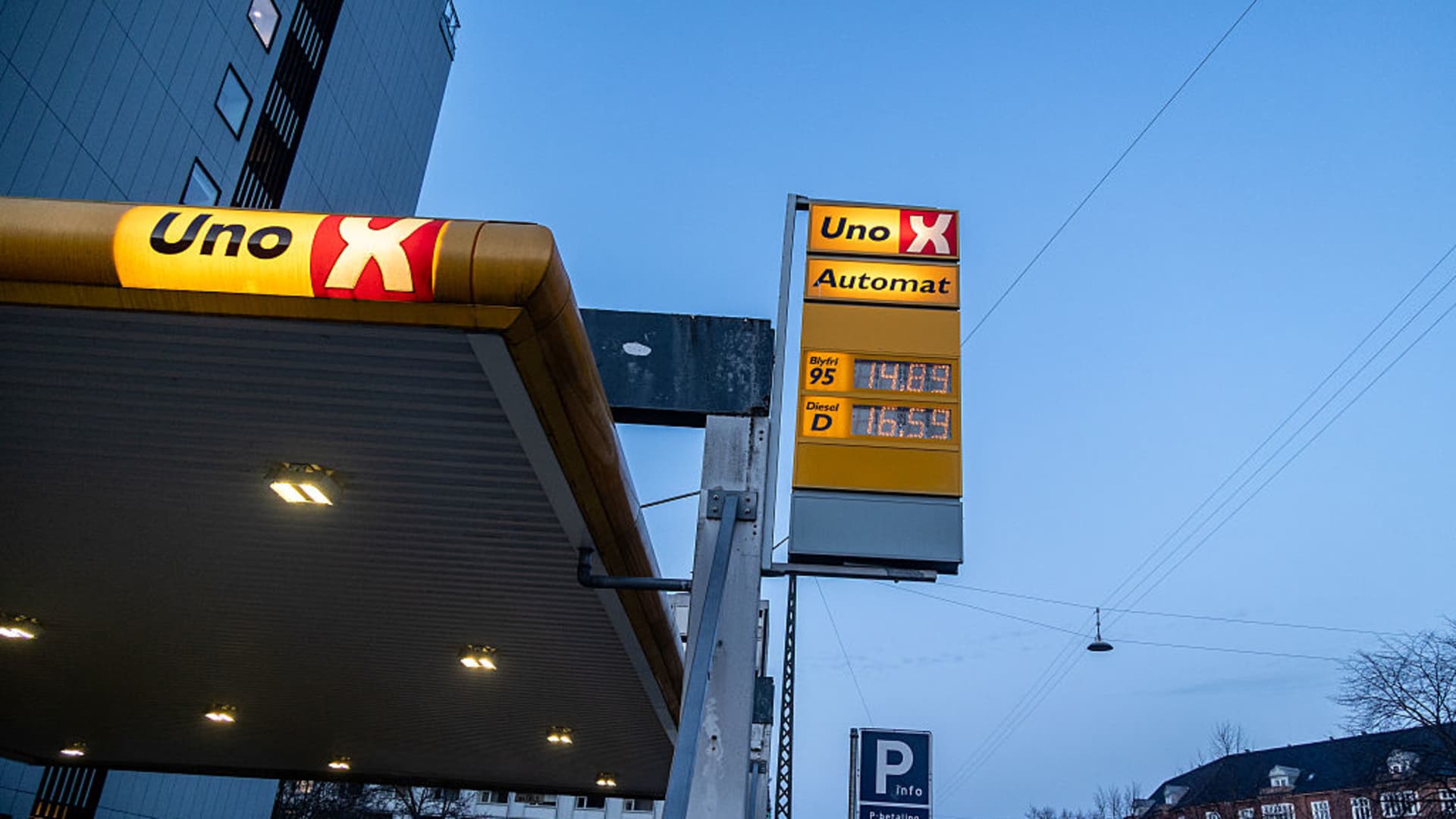
Gas prices at Uno-X gas station in Copenhagen, Denmark, March 9, 2026.
Null Photo | Null Photo | Getty Images
Denmark’s energy minister has called on Scandinavian citizens to cut back on their energy use and ditch their cars as oil prices continue to soar due to the Middle East conflict.
Denmark’s Climate, Energy and Public Works Minister Lars Aagaard said on Wednesday that the ongoing war between the United States and Iran has made the country more reliant on its oil reserves in light of “soaring oil prices” with no end to the conflict in sight.
“What Danes should be happy about, what we ask them to do, is that if there is an energy consumption that they can do without, if it’s not strictly necessary to drive the car, then don’t drive the car,” he said in an interview with local broadcaster DR (Google Translate).
If Denmark saves energy in the near future, there will be two positive effects that will be felt by both the population and the government, he said.
“Firstly, you can feel it in your personal wallet, and secondly, it helps us expand our reserves so that they last longer,” Aagaard said.
Oil concerns remain high
Similar warnings have been issued in countries around the world. In the UK, motoring bodies such as the AA are calling on motorists to reduce “non-essential journeys” and change their driving style to save fuel.
Vietnam’s Ministry of Industry and Trade encouraged enterprises to adopt remote working arrangements and reduce travel and transportation demands to ensure national energy security.
Meanwhile, the Philippine government has temporarily introduced a four-day work week in some executive departments to save energy and reduce fuel usage.
Concerns over oil prices remained high this week as Iranian threats of ship attacks halted oil shipments through the Strait of Hormuz. If the corridor remains closed, inflation could soar, raising the cost of living on everything from gasoline to groceries.

Oil prices soared more than 8% early Thursday to more than $100 a barrel. West Texas Intermediate was last up 4.6% to $91 a barrel, while global benchmark Brent was trading nearly 5% higher at $96.
To allay these concerns, the International Energy Agency agreed on Wednesday to release 400 million barrels of oil to deal with supply disruptions caused by the Iran war.
The IEA, which represents 32 member countries in Europe, North America and Northeast Asia, said it would release reserves over a specified period of time depending on member countries’ needs.
Meanwhile, the United States announced it would release 172 million barrels from its Strategic Petroleum Reserve, with shipments expected to begin next week and take approximately 120 days to complete.
