

Havana —
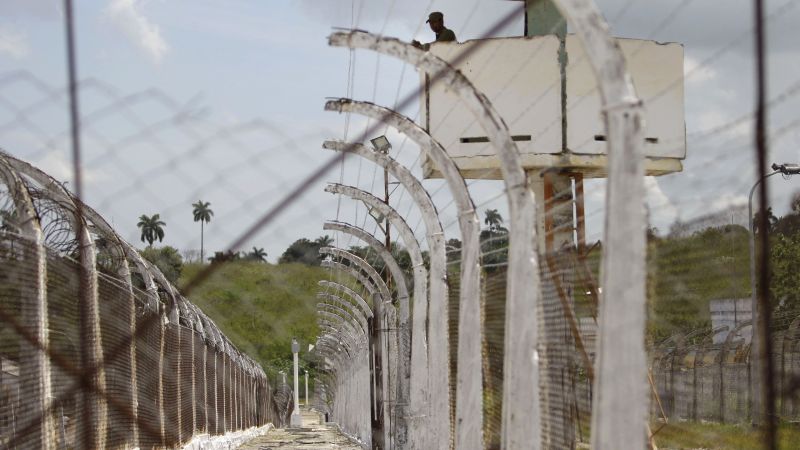
The Cuban government announced Thursday it would release 2,010 prisoners in the largest release in years, as the country finds itself in a bind under growing pressure from the Trump administration.
According to a notice in the ruling Communist Party’s newspaper Granma, the government decided to grant amnesty based on the prisoners’ good behavior, health status and the nature of the “act committed.”
It added that the prisoners included young people, women, people over 60 and foreigners. The list does not include prisoners who have committed crimes such as murder, manslaughter, sexual assault, or “crimes against authority.”
According to Human Rights Watch, Cuba regularly detains and targets dissidents, including activists, journalists, protesters, and political opponents.
Havana has so far carried out sweeping prisoner releases as part of agreements with international parties. For example, in early 2025, Cuba released 553 prisoners after negotiations with the United States and the Vatican, in which the Biden administration promised to ease sanctions on the island.
U.S. President Donald Trump abandoned the agreement after taking office, and Cuba suspended prisoner releases, set to be completed in March.
The Grandma statement did not mention the United States in its announcement, but cited the release of Christians around the world to the “religious celebrations of Holy Week” in which they celebrate Easter. But Cuba has been hit hard by the Trump administration’s pressure campaign, worsening the country’s already struggling economy.
Earlier this year, through military action in Venezuela and threats of tariffs on Mexico, the Trump administration sought to cut off oil flows to Cuba and strongly consolidate the communist-ruled island to advance significant political and economic reforms.
President Trump has argued that Cuba’s government must finally open up the island’s centralized economy before it collapses. He frequently says he wants to “get Cuba.”
Many of Trump’s political allies, including Secretary of State Marco Rubio, are hardliners on Cuba and have long called for an overhaul of the communist leadership.
The island is now quickly running out of oil to power vehicles and generate electricity, exacerbating a long-term energy crisis.
The island was already prone to long power outages, but the situation has been exacerbated by the lack of enough fuel to run power plants. In March, Cuba suffered two nationwide power outages in just one week, leaving more than 10 million people without power.
Cuba lacks the jet fuel needed for long-distance flights, so many schools have canceled classes, workers have been furloughed to conserve energy, flights in some regions have been canceled and life has come to a standstill.
Earlier this week, President Trump allowed a Russian-flagged oil tanker to enter Cuban waters, breaking a fuel blockade, saying, “They have to survive.” The White House later said this was “not a policy change.”
Since 1959, when Cuban revolutionaries led by Fidel Castro overthrew the U.S.-backed government of Fulgencio Batista, Cuba has been under a severe economic blockade from the United States, blocking most commercial activity in Cuba involving Americans and creating significant legal barriers to new investment.
