

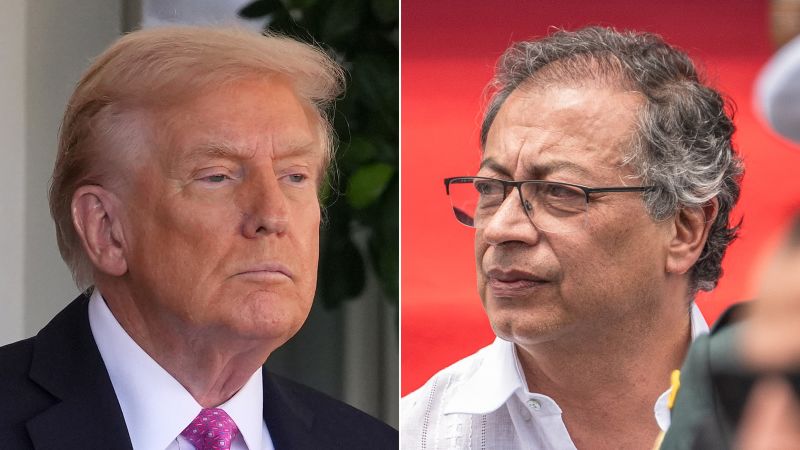
Colombians are expressing a mix of frustration and anxiety as the diplomatic feud between the leaders of Colombia and the United States intensifies.
U.S. President Donald Trump has threatened to cut subsidies and raise tariffs on Colombia, saying the country has largely failed to fight drug cartels that manufacture and transport illegal drugs to the United States.
In a post on Truth Social on Sunday, President Trump accused Colombian President Gustavo Petro of being an “illegal drug leader who strongly encourages the mass production of drugs.” Petro countered that Trump was “disrespectful and ignorant” of the South American country.
The remarks are the latest in a series of abusive comments between the two leaders, and have fueled anxiety among Colombians who fear the altercation could have serious consequences for their lives.
“I don’t think it’s right to give justice to the guilty,” said Colombian taxi driver Ángel Duarte. “If President Trump imposes additional tariffs, many jobs will be lost and many companies will go bankrupt.”
The United States is Colombia’s largest trading partner, accounting for 30% of Colombia’s exports, and the impact on trade would be significant if new tariffs were imposed, according to Colombia’s National Foreign Trade Association. Oil, coffee, flowers, gold, fruit, and industrial products are the main products that depend on purchases from the United States. Higher tariffs would raise the prices of key exports, impacting workers and consumers.
Colombian housewife Sofia Anaya worries the feud will also affect people’s ability to obtain visas. “I have a daughter in the United States, so I have to renew her visa this year,” she told CNN.
She claimed that Mr. Petro brought this on himself, given that Mr. Petro has repeatedly insulted Mr. Trump.
Petro has clashed with the Trump administration over immigration and drug trafficking issues. In September, he called on U.S. officials, including Trump, to face “criminal proceedings” over U.S. attacks on suspected drug smuggling vessels in the Caribbean. The United States later revoked Petro’s visa after he spoke at a pro-Palestinian demonstration in New York and called on U.S. soldiers to disobey President Trump’s orders.
Meanwhile, Colombian university student Gustavo Cuesta criticized the US president. “Calling President Gustavo Petro a drug-trafficking leader is an insult to the entire country, and it must be rejected,” he said. “Trump does not own the world. He must be shown respect.”
Javier Gaitán, a Colombian retiree, said both presidents deserve criticism. “Both are speaking without thinking about the consequences, while the drug traffickers remain calm. Here in Colombia, there is no solution to the drug problem. There is a lot of money involved.”
President Trump’s threat to cut funding leaves Colombia without its largest provider of economic and military aid in the fight against drug trafficking, including resources to eradicate illegal crops such as coca and opium poppies used to produce cocaine and heroin. The total funding is about $450 million a year, but President Trump has not said which items will be cut.
“Petro has to find a way to resolve this issue with the gringos,” Duarte said. “In the end, it’s the people who are hurting.”
