

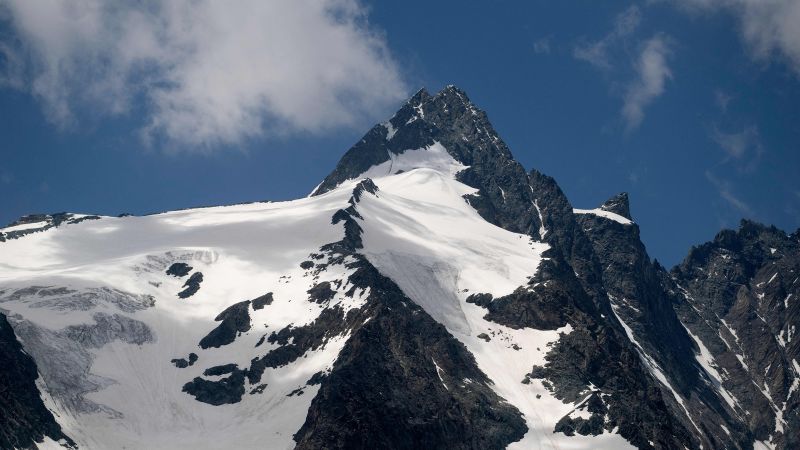
A man accused of leaving his girlfriend to freeze to death on Austria’s highest mountain is scheduled to go on trial Thursday, but the case could have serious implications for climbers and the extent to which they are responsible for the safety of their fellow climbers.
The 36-year-old man, identified in local media as Thomas P., is accused of leaving his 33-year-old girlfriend, Kerstin G., alone for help after encountering difficulties while trying to reach the summit of Austria’s Grossglockner mountain in the early hours of January 19, 2025.
He has been charged with grossly negligent homicide, with Innsbruck state prosecutors accusing him of making multiple mistakes, including calling for help too late and not carrying the proper equipment. Prosecutors claim that unlike his girlfriend, he was the “responsible guide for the tour” because he “already had extensive experience in high-alpine tours and had planned the tour.”
His lawyer, Kurt Jelinek, said Thomas P. denied any wrongdoing and considered his girlfriend’s death a “tragic accident”.
Jelinek said his client was “deeply saddened by the death of his partner” and described the situation on the 3,798 meter (12,460 foot) mountain as “hopeless”.
A travel company said the couple was climbing the Studlgrat route, which is rated as “fairly difficult” by the International Association of Mountaineering Associations (UIAA) standards and requires “very good physique” and “some rock climbing experience.”
According to the lawyer, the group set off at 6:45 a.m. and arrived at the final point of the pre-summit tour, known as the Fürstügsplatzl, or “breakfast spot,” at 1:30 p.m. on January 18, 2025.
In a statement to prosecutors and shared by their lawyers, the defendants claim they both knew before they reached the summit that this was the “point of no return” and agreed to continue.
But as weather conditions deteriorated to the point where it became impossible for Kerstin G to continue climbing, Thomas P left his girlfriend “defenseless, exhausted and hypothermic” about 50 meters (164 feet) below the summit at around 2 a.m. on January 19, where she froze to death, prosecutors said.
There are conflicting accounts between the parties regarding the defendant’s call for help.
Prosecutors said Thomas P. did not call emergency services until 3:30 a.m. on January 19, even though he had been “virtually stranded” on the mountain since about 8:50 p.m. He also did not send a distress signal to a police helicopter that flew over the area around 10:50 p.m.
Prosecutors said rescuers made several unsuccessful attempts to contact the defendant before receiving his first call at 12:35 a.m. on January 19. It is unclear whether he raised the alarm during this call.
The defendant’s lawyer said he did not immediately notice the missed call because his phone vibrated only “slightly.” Citing the defendant’s statement to the Innsbruck public prosecutor’s office, Jelinek said he noticed them when his girlfriend’s condition deteriorated and he took out his mobile phone to arrange a helicopter rescue.
The attorney said his client called at 12:35 a.m. and said he needed help as soon as possible.
However, prosecutors said the conversation remained “unintelligible” and the defendant had kept his phone silent and did not respond to further calls from Alps police.
Prosecutors said the defendant was unable to find shelter and protect her from further heat loss before leaving his girlfriend around 2 a.m. He also did not set up her bivouac (light camping used by climbers) or emergency blankets, she said.
Her body was discovered by mountain rescue teams around 10 a.m. on January 19, the defendant’s lawyer said.
Prosecutors claim that the defendant did not take into account his girlfriend’s lack of mountaineering experience or the harsh winter conditions.
With strong winds that reached speeds of up to 74 km/h (45.9 mph), the temperature would have been -8°C (17.6°F) and felt like -20°C (-4°F). Prosecutors said they should have turned back sooner, or at the latest when they reached the “breakfast place.”
The defendant claims he planned the trip with his girlfriend and thought he had sufficient experience and equipment.
The deceased woman’s mother said in an interview with German newspaper Die Zeit earlier this month that she did not want to condemn her daughter’s boyfriend and spoke out against what she called a “witch hunt” against him in the media and online. She also said her daughter often went hiking after dark and the two were equipped for the night.
The trial is being held at the Innsbruck District Court.
