

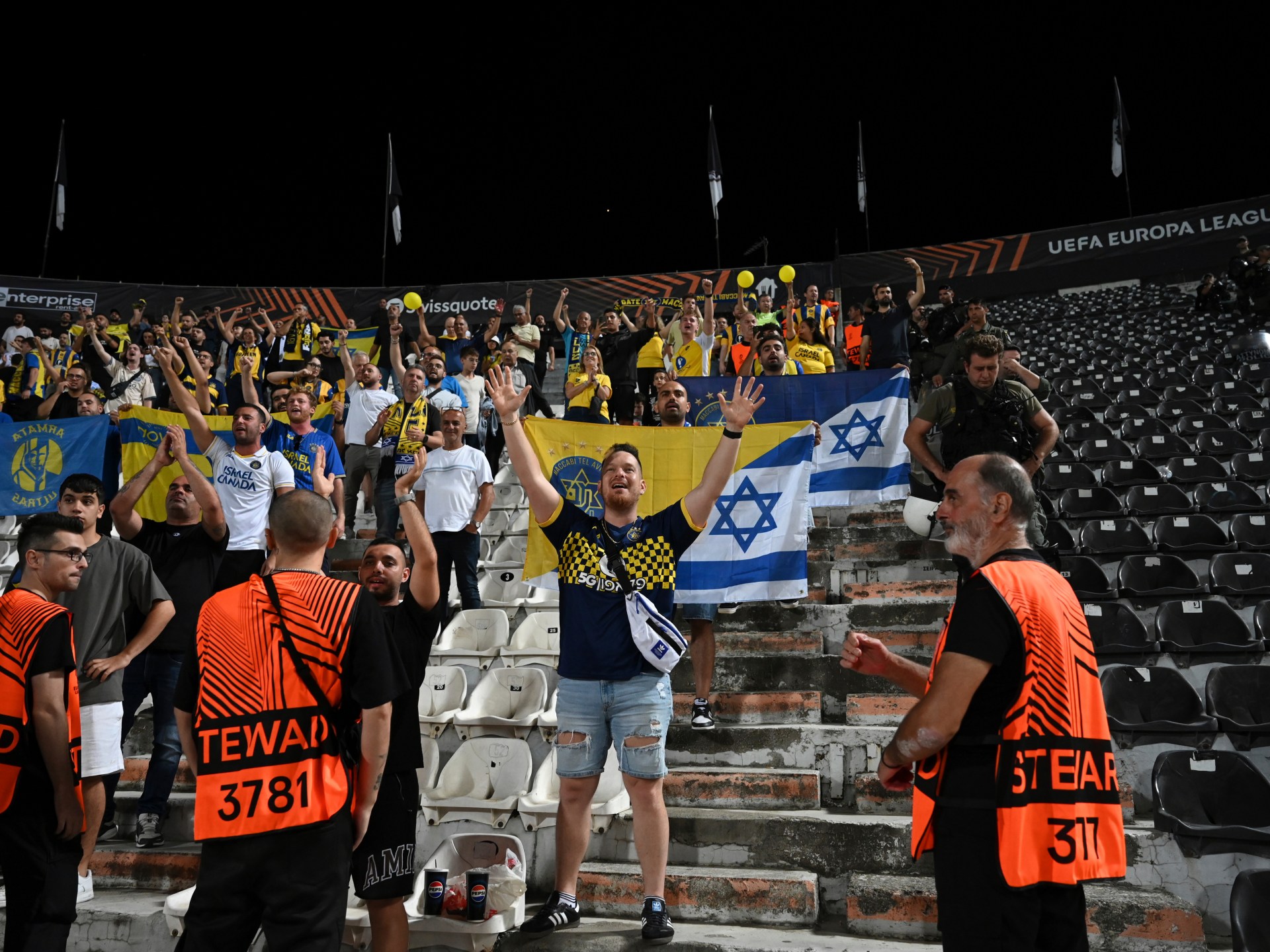
Fans of Israeli soccer team Maccabi Tel Aviv have been banned from attending a Europa League match at Aston Villa.
Pressure is mounting on police authorities in the British city of Birmingham to lift a ban on Maccabi Tel Aviv soccer fans attending next month’s Europa League match at Aston Villa over security concerns.
British Prime Minister Keir Starmer said the police recommendation to bar fans of the visiting team from the November 6 match was the “wrong decision” and said: “The role of the police is to ensure that all football fans can enjoy the match without fear of violence or intimidation.”
Recommended stories
list of 4 itemsend of list
Geraint Ellis, Starmer’s spokesman, said on Friday that “the prime minister is furious at this decision” and the government was working urgently to reverse it.
The decision drew condemnation from other politicians, sports organizations and Jewish groups.
Birmingham councilor Simon Foster, who is responsible for overseeing and holding local police to account, also called for an “immediate review”, while local mayor Richard Parker called on authorities to find a “workable solution” that could see some of the police costs covered by the government.
Security concerns for games
Premier League side Aston Villa announced on Thursday that police had informed the club that it had “the ability to deal with security concerns outside the Stadium Bowl and the possibility of protests on the night”.
West Midlands Police said the match was deemed to be high risk “based on current information and past incidents”, including incidents of violence and hate crimes when Maccabi Tel Aviv played Ajax in Amsterdam last season.
While fan suspensions are not unheard of in European football, they are rare and are usually based on a history of violence between fans of rival clubs. There is no history of violence between Aston Villa and Maccabi fans.
However, Maccabi fans have received increasing attention over the past year or so, partially related to Israel’s war in Gaza. Most notably, Maccabi fans clashed violently with city residents in Amsterdam last season, when the team visited Ajax in the Europa League. Dozens of people were arrested and five people were treated in hospital after the night’s violence.
Italy hosted a World Cup qualifier between Italy and Israel this week, with a heavy police presence, including snipers, on the roof of the stadium as authorities classified the match as the most dangerous category. Approximately 10,000 people participated in the pro-Palestinian march that took place early in the morning. About 50 people with their faces covered later clashed with police who tried to disperse them using water cannons and tear gas.
The match at Villa Park will be Maccabi’s first away match in the Europa League, the second tier of European football, since their match against PAOK on September 24 sparked pro-Palestinian protests at a stadium in Thessaloniki, Greece. About 120 Maccabi fans traveled to Greece for the match and were detained inside a police cordon before entering the venue.
European football governing body UEFA was considering a vote this month before passing a resolution to suspend Israeli teams from the competition due to the Gaza ceasefire. Israel is not part of Europe, but its national team and clubs participate in UEFA competitions.
UEFA insists Maccabi fans should be allowed into Villa Park
Following Thursday’s ban, UEFA called on British authorities to ensure fans of the Israeli team were allowed to attend matches.
“UEFA wants fans to be able to travel and support their teams in a safe, secure and welcoming environment and encourages both teams and the competent authorities to agree on the implementation of the appropriate measures necessary to achieve this,” it said in a statement.
Maccabi Tel Aviv CEO Jack Angelides expressed “regret for what this potentially indicates.”
Meanwhile, Emily Damali, a dual British-Israeli citizen who supported Maccabi and English Premier League side Tottenham Hotspur, was held by Hamas for more than a year before being released in January, who also criticized the ban.
“Football is a way to bring people together regardless of faith, color or religion, and this abhorrent decision does exactly the opposite,” she said. “It’s a shame. I want you to come to your senses and reconsider.”
