

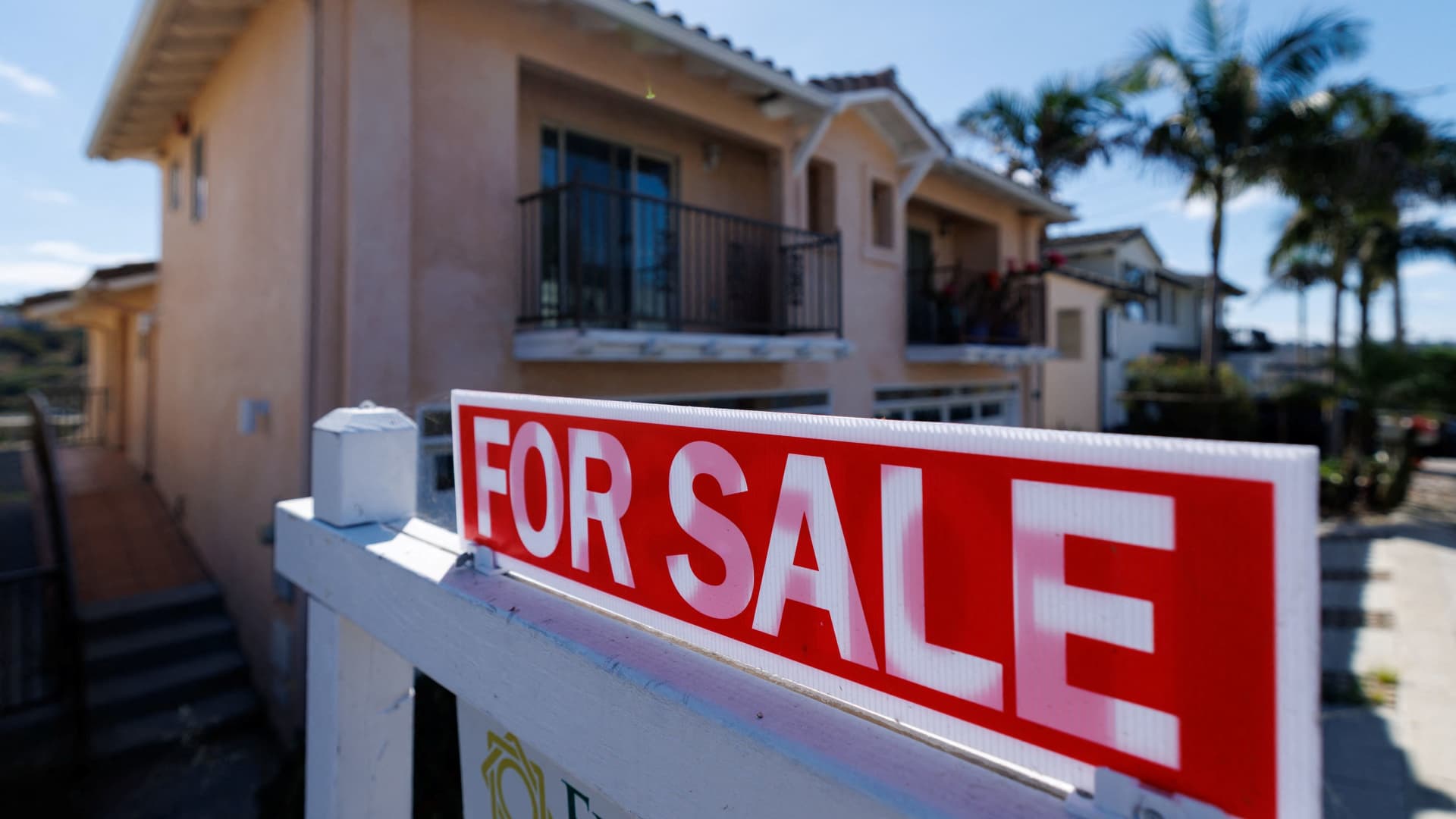
President Donald Trump announced Wednesday his intention to block large institutional investors from acquiring additional single-family homes. It remains to be seen whether it had the intended effect, but it certainly depressed the stock prices of companies that had invested heavily in single-family homes and other companies in the housing business. For example, Invitation Homes, the nation’s largest owner of single-family homes, was the No. 9 worst-performing stock on the S&P 500 on Wednesday, and private equity firm Blackstone (BX), another company that bought up homes as home prices and interest rates fell after the credit crisis, was the 12th-worst performer. The White House’s proposal targets private equity firms, real estate investment trusts, and major investors such as Blackstone, Invitation Homes (INVH), and Progress Residential (owned by Premium Partners), which have built significant portfolios of single-family rentals since the 2008 financial crisis. These companies have taken advantage of foreclosure opportunities and rising real estate values, especially in the Sunbelt region. Regulatory efforts to limit profit opportunities for investors in residential real estate, such as through rent controls and mandating new construction of “affordable housing,” have had a fairly poor track record of increasing housing stock or reducing costs. This is because they tend to make residential real estate uneconomical and inhibit new construction. The old idea that “the best solution to high prices is high prices” suggests that high prices encourage new supply. As many cities with ill-fated rent control policies have learned, curbing supply while demand persists actually raises housing costs. Trump’s idea, in theory, is to reduce demand from institutional investors and drive prices down. But it does little to solve the housing shortage, which is not caused by institutional home ownership (renting out homes), but instead by rising construction costs due to inflation and rising interest rates over the past few years, creating a disconnect between median incomes and median home prices. Regardless of whether President Trump succeeds in blackmailing Blackstone out of home purchases, the real estate assets managed by the company are divided into three segments: Core+, Opportunistic, and Debt, and their share of total assets has shrunk year-over-year from 2024 to 2025, from approximately 29.4% in 3Q24 to 25.8% in 3Q25 (see chart below from presentation accompanying the latest quarterly earnings call). Blackstone is an impressive asset gathering machine, and the biggest challenge ahead of President Trump’s announcement Wednesday was “making it happen.” In other words, it’s time to actually make a profit on your investment and exit, but with interest rates rising from 2022, PE firms saw this as too late. Typically, companies with sales and earnings growth forecasts of 20% or more at about 24 times forward earnings look very convincing, but not so much when the government picks up the punch bowl. The stock is likely to remain range bound as investors decide whether this latest threat is real, which could make BX an interesting candidate for a squeeze sell for yield by selling a put on the downside and a call on the upside. For example, a 140/170 strangle in February would collect about $4.35 per share in about six weeks, or about 2.8% of today’s closing price. Of course, the risk is going long the stock at a near 12% discount or short the stock at a 13.5% premium. Coincidentally, Blackstone was range-bound around these levels throughout the entire fourth quarter of 2025. Disclosure: None. All opinions expressed by CNBC Pro contributors are solely their opinions and do not reflect the opinions of CNBC, its parent or affiliates, and may have been previously disseminated on television, radio, the Internet, or another medium. The above is subject to our Terms of Use and Privacy Policy. This content is provided for informational purposes only and does not constitute financial, investment, tax, or legal advice or a recommendation to purchase any securities or other financial assets. The Content is general in nature and does not reflect any individual’s unique personal circumstances. The above may not be appropriate for your particular situation. Before making any financial decisions, you should strongly consider seeking the advice of your own financial or investment advisor. Click here for full disclaimer.
