

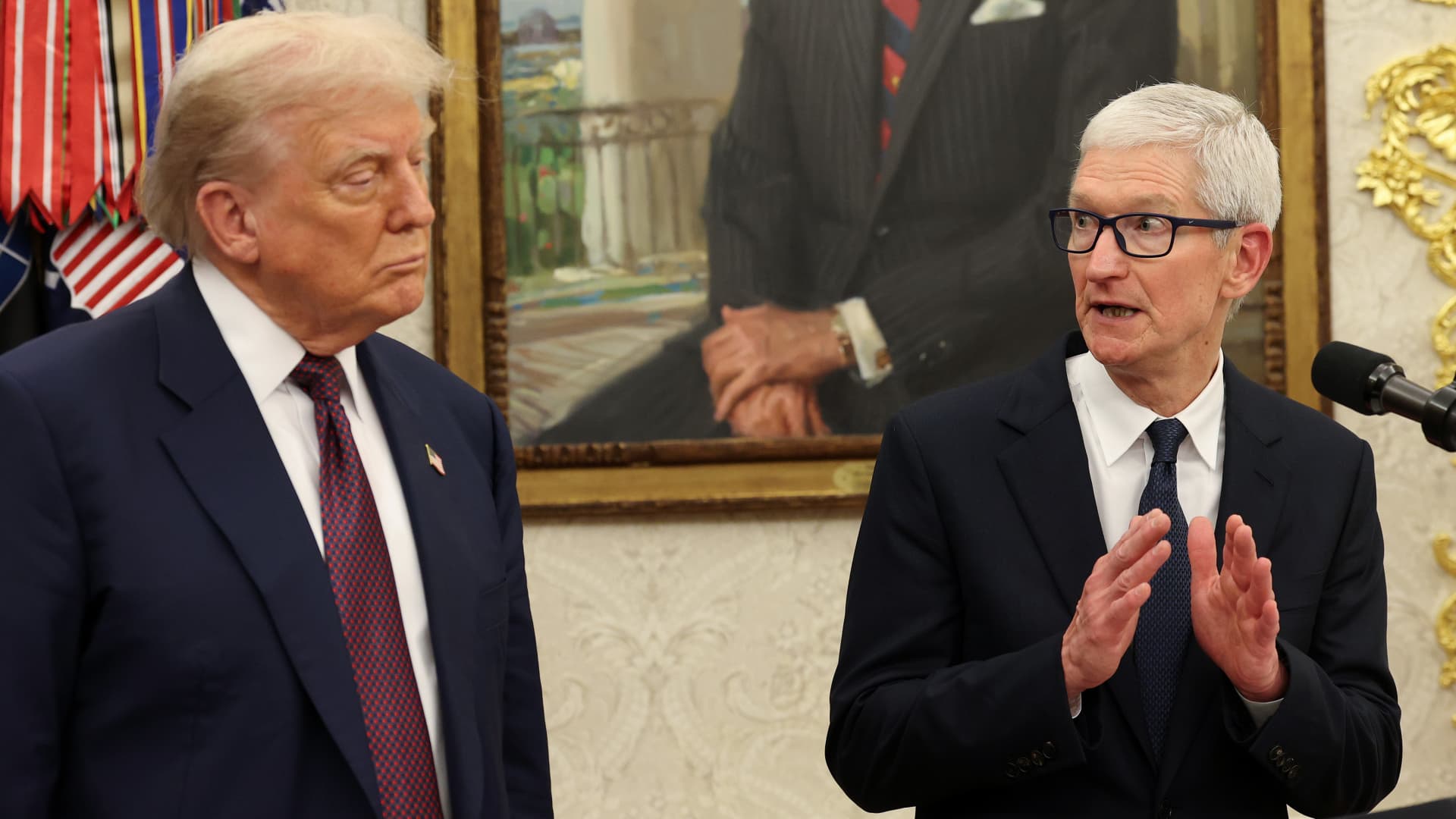
Apple CEO Tim Cook (R) speaks as US President Donald Trump looks on at an event in the Oval Office of the White House on August 6, 2025 in Washington, DC.
Win McNamee | Getty Images
apple announced that it will move production of some Mac Mini computers to the United States later this year, aiming to strengthen domestic manufacturing.
The iPhone maker last year announced plans to invest $600 billion in the United States, and in August CEO Tim Cook appeared at the White House with President Donald Trump to announce a $100 billion investment. The company also said it would buy parts and expand relationships with U.S. suppliers.
“As part of a $600 billion initiative, Mac mini will be produced in the U.S. for the first time later this year,” Cook wrote in a post about X on Tuesday. “We are further accelerating our progress, producing more AI servers and opening an all-new Apple Advanced Manufacturing Center for hands-on training.”
The Mac Mini is Apple’s compact, more affordable desktop computer, with prices starting at about $600, according to the company’s website. Production will begin later this year at a new factory in Houston, where Apple began producing AI servers last year, the company said in a statement.
“We have begun shipping advanced AI servers out of Houston ahead of schedule, and we are excited to further accelerate that effort,” Cook said in the release.
Apple has been hit hard by tariffs imposed by the Trump administration, paying about $3.3 billion since the president began imposing them last year. Apple sources half of its iPhones for the U.S. from India, and most of its other products for the U.S., including Macs, AirPods and watches, from Vietnam.
The Supreme Court on Friday struck down most of President Trump’s far-reaching tariff policies, but uncertainty remains as the president denounced the decision.
Apple announced that its 20,000 square foot advanced manufacturing center in Houston will open later this year. The company said it will provide training in advanced manufacturing techniques to students, supplier employees and U.S. companies, teaching them “the same innovative processes used to make Apple products.”
WATCH: How the Supreme Court’s tariff ruling could change Apple’s supply chain

