

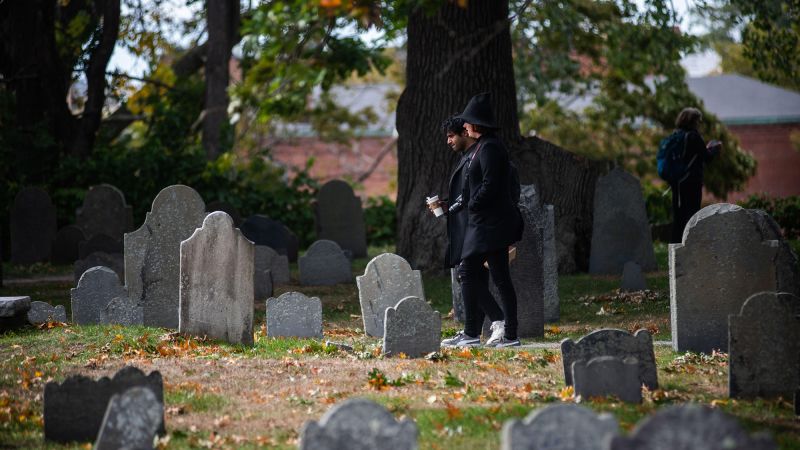
Some regions of the United States claim to be king when it comes to Halloween. But three in particular: Savannah, Georgia. New Orleans and Salem, Massachusetts have an unforgettable history of winning true titles.
The three historic cities, each at least several centuries old, have cobbled streets, well-preserved centuries-old buildings, and other remnants of the past, creating an inviting and inviting atmosphere when illuminated by light.
But at night, when the wind blows through the empty streets, these cities take on a dark spell. For many tourists and year-round residents of these three cities, their eerie history is part of their appeal.
“Getting to know the supernatural beings of a place and becoming a transmitter of the supernatural lore of a place is a way of weaving oneself further into the story of a place and proclaiming one’s belonging to that place,” said Lowell Brower, an instructor in the Folklore Program at the University of Wisconsin-Madison.
Savannah and New Orleans both claim to be America’s most haunted cities, but each is spooky in its own unique way. I’ll leave that decision to the people who know these cities best, perhaps ghosts.
“There’s great value in sharing (and researching) what bothers us,” Brouwer said. “It may be the best way to understand what people are afraid of, what they want, what they want to remember or not forget, what they are capable of, and what they will become.”
The personification of Southern Gothic.
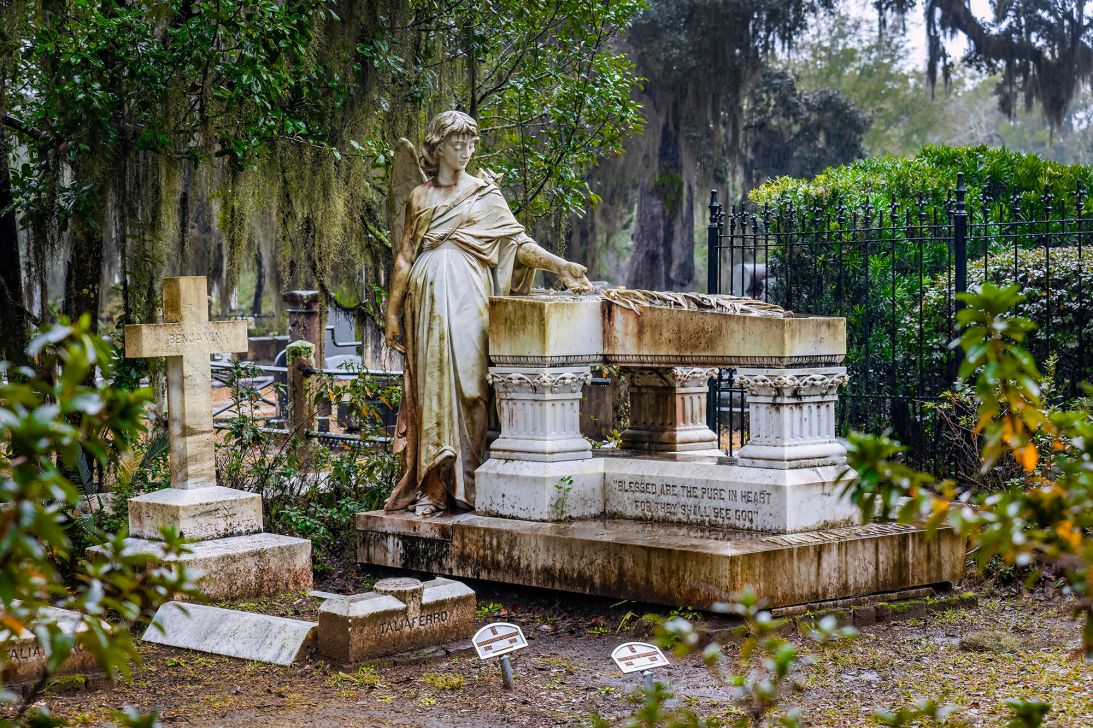
Founded: 1733
Spooky fame: The 1994 book Midnight in the Garden of Good and Evil put Savannah’s spooky bona fides on the national map, but locals have long witnessed ghost sightings and paranormal encounters in this historic town. Almost any building that is over 100 years old has the potential for former patrons to claim to have felt a ghostly presence there.
Some spooky spots:
The Mercer Williams House is known to “Midnight” readers and movie viewers as the house where Danny Hansford and Jim Williams died. But even before their deaths, visitors have reported seeing a boy in the window – perhaps the boy who died there in 1969, they think. The house is now a museum, where visitors can try out the ghostly presence for themselves.
The historic downtown is home to several reportedly haunted hotels and B&Bs, including the Marshall House, a former Civil War hospital, and the Hamilton Turner Inn, rumored to be the inspiration for Disneyland’s Haunted Mansion. If you don’t mind hearing the screams of ghostly children running through the hallways or encountering the ghost of a cigar-smoking man, you can book an (expensive) stay.
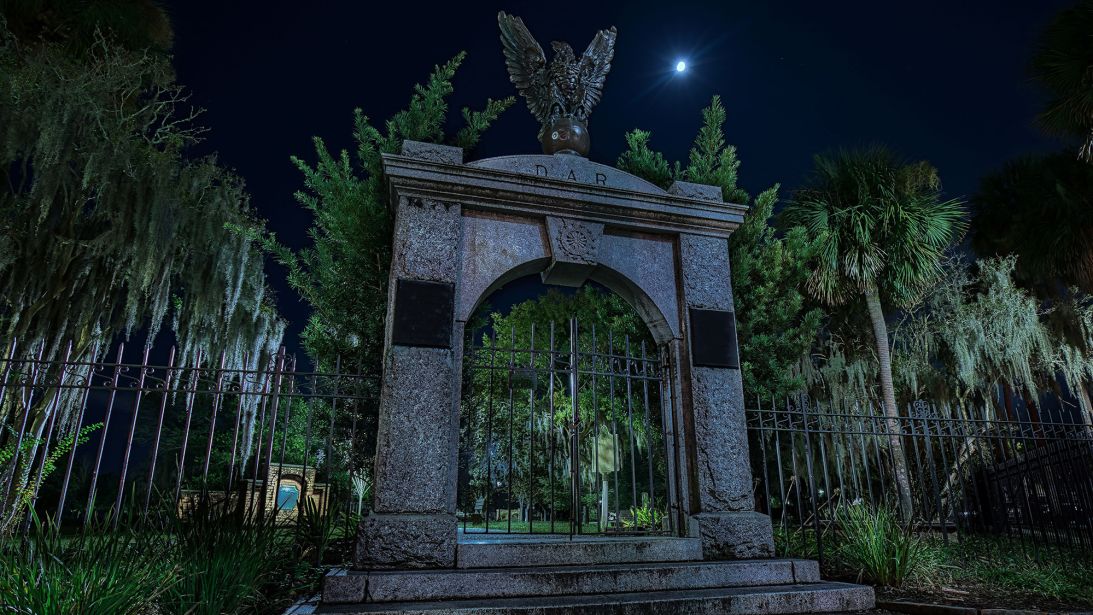
Established in the 1750s, the old Colonial Park Cemetery is home to an estimated 12,000 people, but only 700 headstones remain. According to the Savannah Morning News, many of the graves were paved over to create what is now Abercorn Street. The cemetery filled up after yellow fever struck the city in the 19th century, but now visitors are claiming to have seen a “shady figure” flying around the grounds. (And of course, Abercorn Street is home to what several ghost tours tout as one of the city’s most haunted mansions.)
But much of Savannah’s haunted reputation is built on a legacy of racism and slavery. Two of the city’s many squares are said to have been built over unmarked graves for enslaved people. One of them, Calhoun, was renamed after Susie King Taylor, a nurse and teacher and the only black woman to publish a memoir of her Civil War experiences.
Brower said there is value in confronting the upsetting and violent history of some “haunted” landmarks. “Ghosts allow ineffable histories to be brought back to the present. Ghosts invite, and sometimes force, us to see not only the places and people who are here today, but also the places that were and the people who stood here before us.”
A place where witches were hunted and now honored.
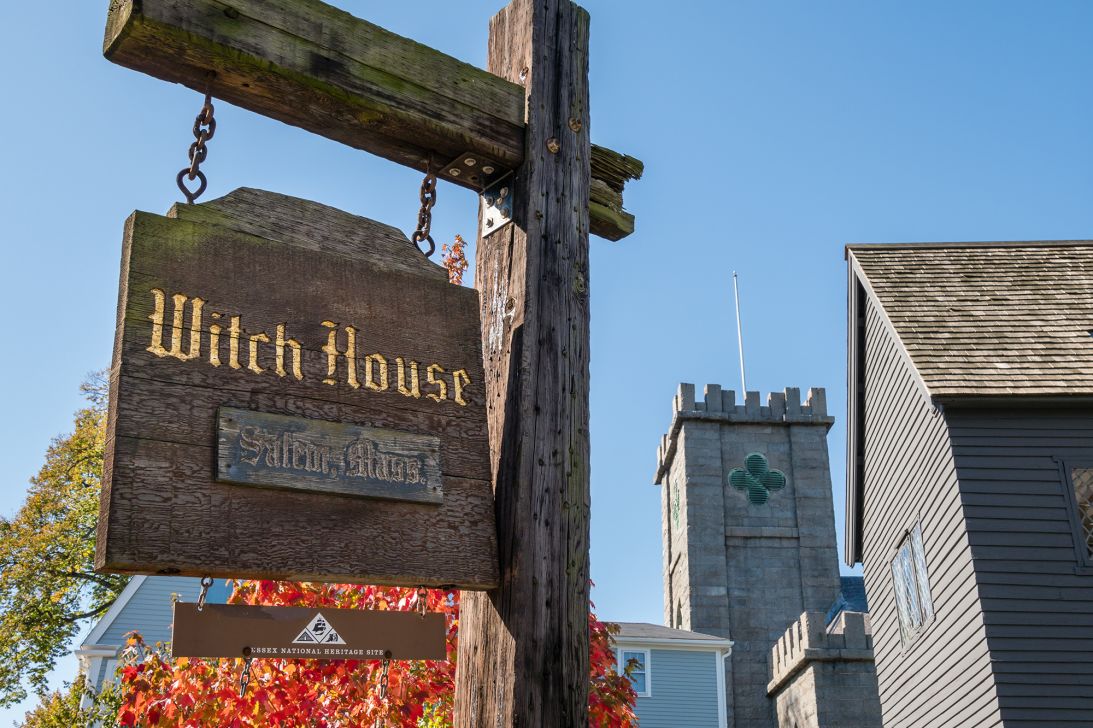
First settlement: 1626
Creepy Fame: The “witches” of them all. In Salem in the 1690s, more than 200 people, many of them women, were accused of “witchcraft” and allegiance to the devil. The accusers had little evidence for these charges, but the testimony of a few vocal townspeople, driven primarily by the hysteria and religious paranoia that permeated the town. Of those convicted of witchcraft, 19 were hanged and four others died in prison.
It’s a strange episode in American history, and the city of Salem today honors it by memorializing the innocents killed in the trial and educating visitors with a healthy dose of entertainment and occult intrigue.
Some spooky spots:
The House of Witches was the home of Judge Jonathan Corwin, who presided over several interrogations of people accused of witchcraft, but who, according to the Salem Witch Museum, “showed no remorse” for his involvement in the trials. This is Salem’s only surviving structure directly related to the witch trials, and is open to visitors who want to see what Salem was like during colonial times.
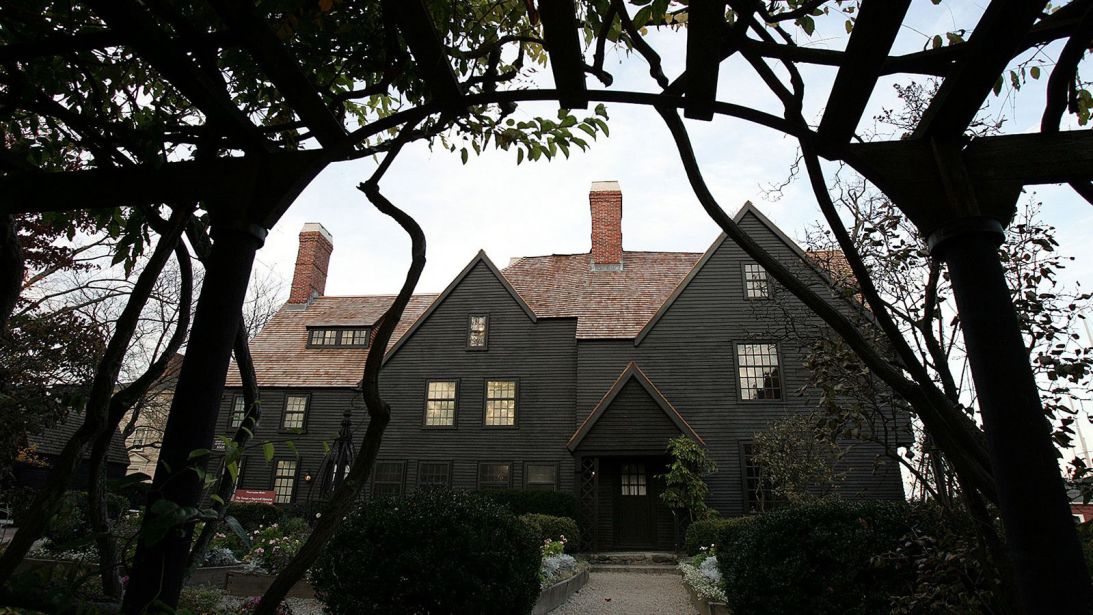
Nathaniel Hawthorne’s book The House of the Seven Gables was inspired by a real house in Salem that you can visit. Hawthorne’s novel highlights suspicious happenings involving witchcraft in the home, but if you want a more comprehensive explanation of Salem’s witches, the Salem Witch Museum and the Peabody Essex Museum offer tours and year-round exhibits.
Several trial reenactments are being held around town, including one that casts the audience as jurors deciding the fate of Bridget Bishop, one of the first to be executed in the Salem witch trials.
There are two memorials to the victims of the trial. The Salem Witch Trials Memorial commemorates the victims with granite benches inscribed with their names and methods of execution. Another is the Proctor’s Ledge monument, believed to be the place where 19 convicted “witches” were hanged.
A place where ghosts walk among the living in (relative) harmony.
Founded: 1718
Creepy Fame: The Big Easy is steeped in its haunted history. The city has its own version of Voodoo, which was brought to Louisiana by enslaved West Africans in the 18th century. Voodoo practitioners were once considered royalty, like the legendary Marie Laveau and Dr. “Bayou” John. Although it has a sinister reputation, the “New Orleans Voodoo” religion is primarily an attempt to connect its followers to the spiritual world, and is also incorporated into Roman Catholic practices.
New Orleans is also home to self-proclaimed vampires and witches, and according to many residents and guests, there are plenty of spirits living there. Basically, if you don’t strictly identify as a living, breathing human being, your community will be in NOLA. It’s no wonder it’s been the setting for projects like “True Blood,” “American Horror Story” and “Interview with the Vampire.”
Some spooky spots:
Even a ghostly legend can’t stop regular performances at Le Petit Theater du Vieux Carre in New Orleans. According to the city, the ghost of an actress named Caroline, who performed at the theater in the 1930s and is said to have fallen to her death while wearing a wedding dress, regularly haunts the grounds.
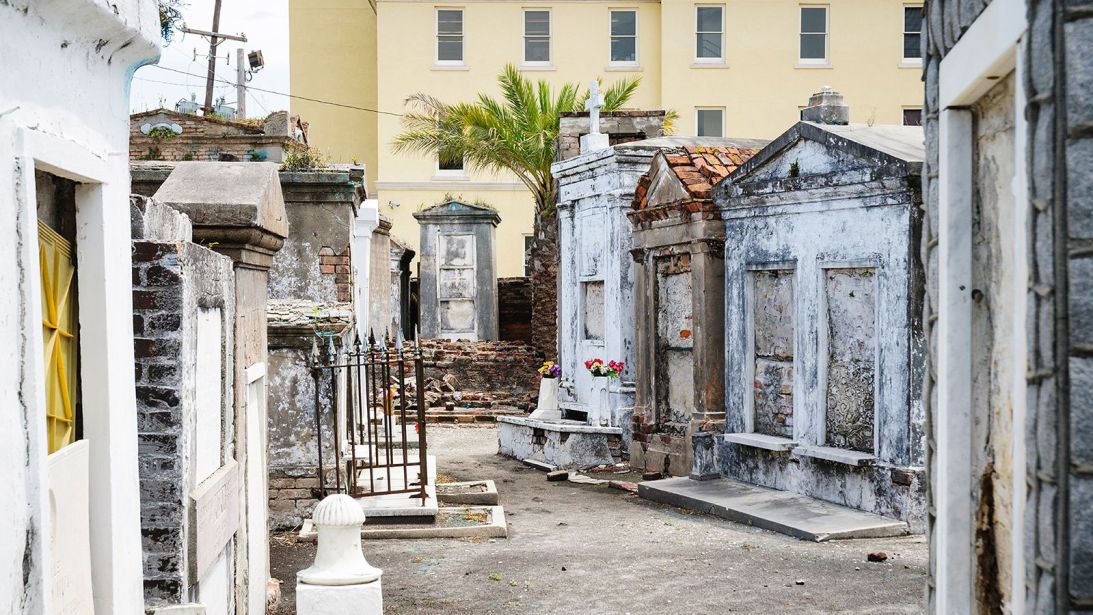
St. Louis Cemetery has an elaborate crypt and above-ground tombs where New Orleans legends, including Laveau, are buried. But some of the ghosts are now known by name, like the sailor Henry Vigne, whose height and piercing blue eyes let you know it was him, and apparently some spirits never took up residence.
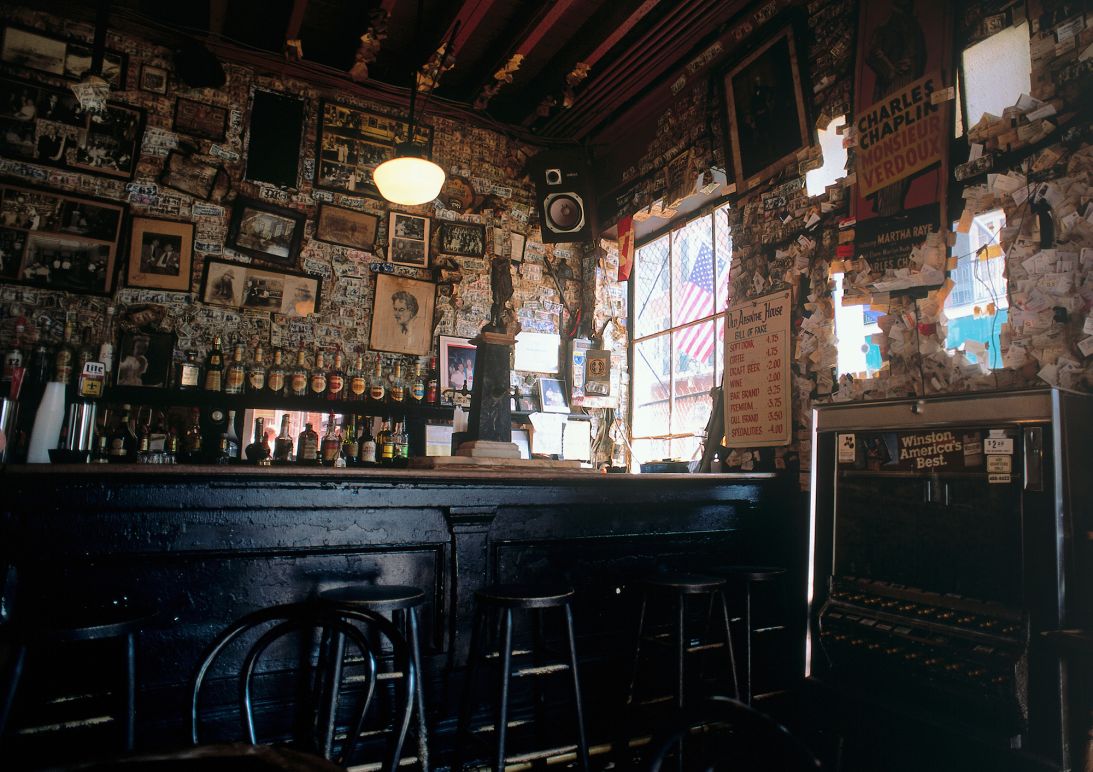
For more famous ghosts, visit the Old French Opera House, said to be home to a madame named Marguerite who died there many years ago, or the Old Absinthe House, a bar that’s been open for more than 200 years and is a favorite drinking spot for famous ghosts. Even the world-famous Café du Monde is staffed by ghosts from time to time.
Editor’s note: This story was originally published in 2022.
