

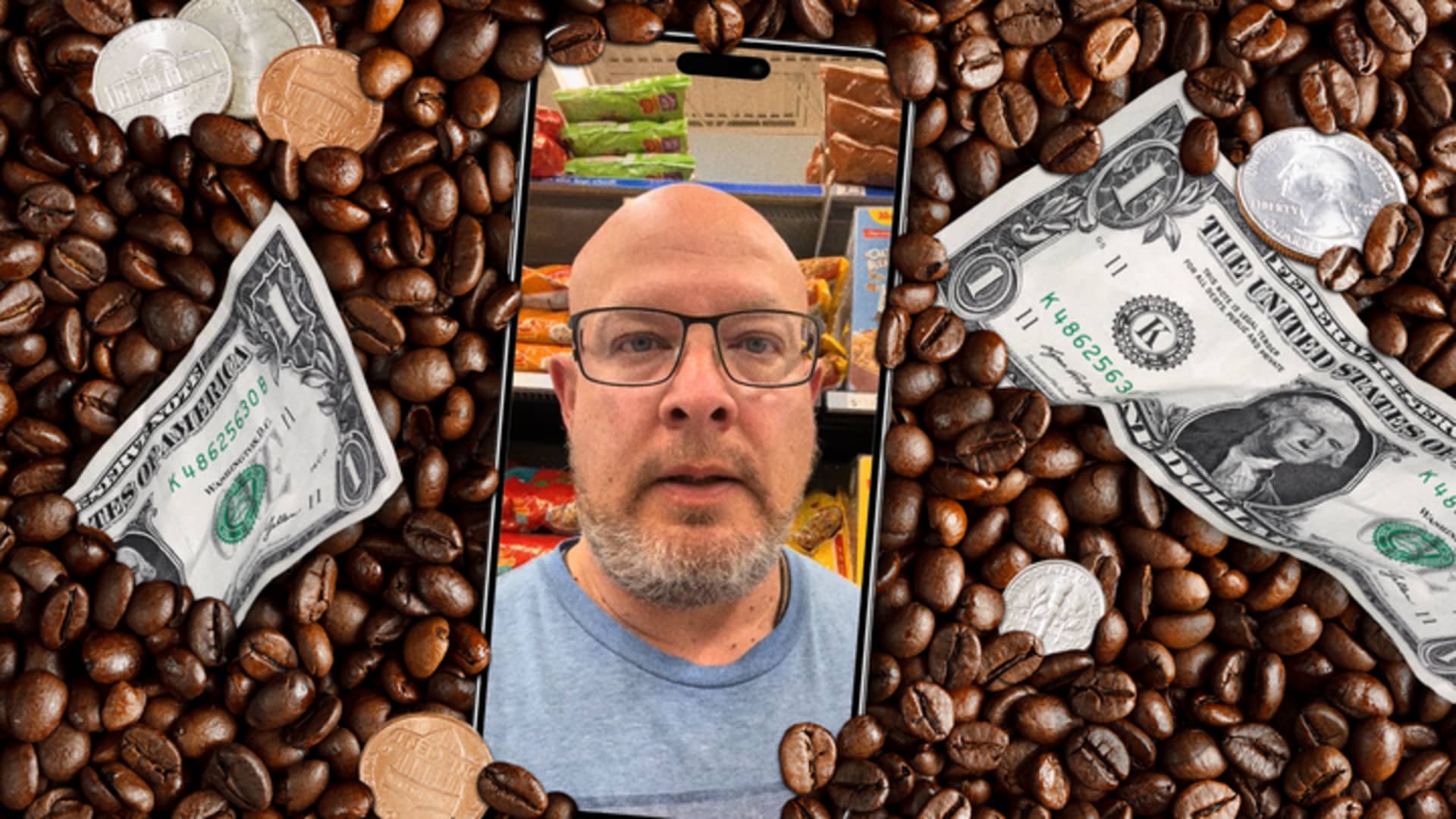
In August 2025, Chuck Smith went to a Walmart in Rochester, Indiana to buy coffee. But something seemed off.
“I bent down to pick up the coffee and happened to notice the price,” he told CNBC Make It. “I thought, ‘Do I spend that much money every time I buy a coffee?’” It really caught me off guard. ”
When he checked his receipt on the Walmart app, he found that the 38.2-ounce Maxwell House he had been buying for years cost $21.44. That was nearly double the $12.94 he paid less than a year ago, in October 2024.
“This is ridiculous,” Smith, 52, shot a short TikTok video comparing two prices in a Walmart aisle, saying in the video. Within days, it had tens of thousands of views.
Walmart did not respond to a request for comment, and Kraft Heinz, the maker of Maxwell House, had not issued a statement by the time of publication.
“It wasn’t meant to be a political statement,” Smith said. “That’s just how I felt in that moment. I think it captures what a lot of people are feeling.”
The price hikes Smith has seen are not unusual. Coffee has become significantly more expensive over the past year, with retail prices rising 41% since September 2024 alone due to poor harvests and higher import duties.
Why coffee prices are rising
Coffee prices have soared over the past year as droughts and heavy rains have reduced harvests in major producing countries such as Brazil and Vietnam.
Arabica futures, the global coffee benchmark, hit an intraday high of $4.38 per pound in October, up about 50% since August, according to Intercontinental Exchange data.
Those pressures are filtered onto store shelves. The average retail price of freshly ground coffee sold in stores in the United States reached $9.14 per pound in September, up 41% from a year earlier, according to data from the U.S. Bureau of Labor Statistics.
The Trump administration’s new tariffs have added to the costs. According to the National Coffee Association, imports from Brazil currently face a 50% tariff, while other major supplier countries such as Vietnam and Indonesia face tariffs of 20% and 19%, respectively.
Coffee prices have increased 9.6% since April, when the tariffs first took effect. It was the sharpest mid-year price increase in at least a decade, although the average price increase over that period was less than 1%, according to data from the Bureau of Labor Statistics.
Where high coffee prices are hitting customers the hardest
For shoppers like Smith, relief is unlikely to come soon. Futures prices suggest retail costs could remain high for months.
Additionally, coffee producers across the market are increasing prices. Nestlé has increased prices across its coffee portfolio, including Nespresso products, this year to offset rising bean costs, the company said. JM Smucker, the maker of Folgers, has raised coffee prices twice so far this year in response to rising procurement costs, according to prepared remarks on the company’s latest earnings call.
It’s not just supermarket coffee that’s going up in price. The price of a regular cup purchased at cafes and restaurants has increased about 8% from $3.26 to $3.52 since February 2024, just before the recent increase in wholesale prices, according to data from Toast, which tracks sales at tens of thousands of coffee shops and restaurants nationwide.
However, price increases for cafes and restaurants often lag behind wholesale market prices. That’s because operators typically buy beans on a contract basis or adjust menus incrementally to avoid alienating price-sensitive customers. Many companies are relying on food sales and expensive beverages to offset the rising cost of beans, according to trade publication Coffee Intelligence.
Poor harvests have pushed prices up, but “supply is likely to increase next year, which will alleviate some of those pressures,” said Michael Kramer, founder of specialty coffee retailer Lardera Coffee Roasters.
“But the tariffs will remain and consumers may end up paying more for their coffee, unless calmness prevails and people realize that coffee is not a strategic industry that needs evacuation and that it is not in the country’s best interest to impose tariffs on its imports,” he says.
Want to level up your AI skills? Sign up for CNBC Make It’s new online course, “How to use AI to better communicate at work by Smarter by CNBC Make It.” Get specific prompts to optimize your emails, notes, and presentations for tone, context, and audience.
Plus, sign up for the CNBC Make It newsletter for tips and tricks to succeed at work, money, and life, and request to join our exclusive community on LinkedIn to connect with experts and colleagues.

