

Last weekend, North Korean state media accused the United States and Israel of launching a “war of aggression” against Iran, but did not report on Khamenei’s death, along with dozens of members of Iran’s supreme leadership.
That omission was no accident. North Korea’s political system is built around the near-mythical authority and invulnerability of its leaders. Publicly broadcasting the violent removal of another supreme leader would set a dangerous precedent. It would remind North Koreans that even the most powerful people in a tightly controlled state can be tracked, targeted and eliminated. It’s not a story that North Korea has an incentive to propagate domestically.
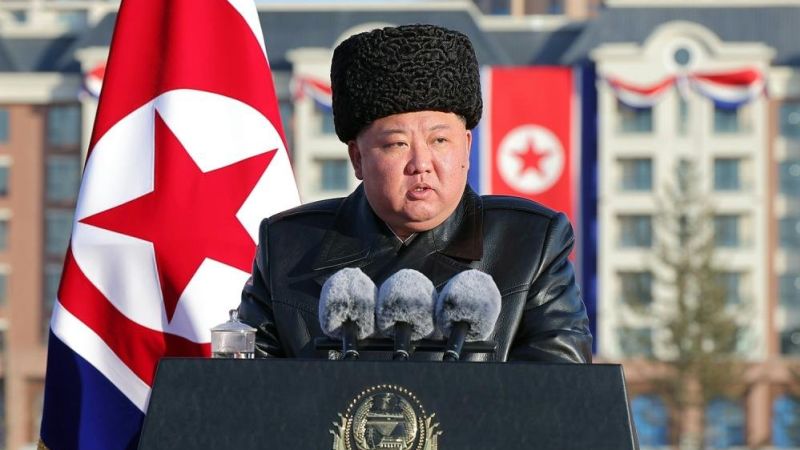
In fact, North Korean leader Kim Jong Un may be asking himself if it’s time to pick up the phone and call US President Donald Trump. As the United States and Israel move forward with military operations that have plunged the Middle East into crisis, there is no doubt that Mr. Kim and a small group of party and military officials who oversee national security are analyzing every aspect of American military operations. And they certainly note President Trump’s ability to pivot quickly from diplomacy to force.
President Trump is expected to return to Asia later this month for a summit with Chinese President Xi Jinping. There has been no word on plans to meet with Kim during his stay in the region, but Chad O’Carroll, founder and CEO of the Korea Risk Group, a research group that closely tracks North Korea, and publisher of NK News, said he would not rule out the possibility.
“(If I were Kim Jong Un), I would feel very strongly that it would be in my interest to have some sort of meeting with President Trump this year, even if it was superficial,” O’Carroll said.
O’Carroll says the logic is more for Kim to manage President Trump’s unpredictability.
Kim and his inner circle will never forget the shocking capture of Venezuelan President Nicolas Maduro by U.S. special forces just over two months ago. At the time, North Korea quickly responded with a missile launch, which some analysts speculated could be related to Maduro’s arrest. On Wednesday, Kim oversaw a cruise missile test ahead of the commissioning of North Korea’s new destroyer Choi Hyun, but it remains unclear whether the show of military force is linked to the Iran war.


After the United States invaded Iraq in 2003 and former President George W. Bush placed North Korea on the so-called axis of evil, then-leader Kim Jong-un disappeared from public view for several weeks. When he resurfaced, most of his public appearances were in military settings.
“My impression[of 2003]was that there was some fear at first,” Chad O’Carroll says.
“I think the current situation is fundamentally different,” O’Carroll said. “Kim Jong-un has already appeared in public, so he clearly has no intention of hiding.”
North Korea’s security command and internal security agencies will now analyze all aspects of Iranian operations to ensure that Kim does not throw in the fate of Khamenei.
South Korean and U.S. intelligence assessments have long described North Korea as maintaining one of the most elaborate leadership protection systems in the world, and the country has spent decades refining its layered protection. Recent state media footage of Kim’s public outings shows security guards standing close together around him, some carrying distinctive ballistic briefcases designed to deploy and serve as shields in the event of gunfire.
When I covered the country, I saw first-hand how Mr. Kim’s movements were closely monitored until the last moment. Despite passing through hours of thorough security checks, Kim remembers his chair remaining empty at official events. Observers say Mr. Kim’s security has been beefed up with familiar tactics, including decoy convoys, sudden venue changes and multiple layers of security. Hidden deep beneath Pyongyang and in North Korea’s vast mountains are believed to be extensive underground facilities and alternate command posts built to ensure security and continuity of leadership in moments of crisis.
There are many reasons why Kim is more confident today than his father was in 2003. North Korea is widely believed to have assembled dozens of nuclear warheads, a reality that fundamentally changes the strategic equation. Unlike Iran and Venezuela (and Libya, for that matter), North Korea claims to have operational nuclear weapons and delivery systems capable of reaching anywhere in the continental United States, although they have not been fully tested. Several years have passed since North Korea legislated the right to first use nuclear weapons and declared its nuclear situation “irreversible.” North Korea’s aging but formidable artillery remains aimed squarely at Seoul, as it has for decades.
O’Carroll said North Korea’s ability to load missiles with “tactical and even strategic nuclear warheads” fundamentally changes an adversary’s risk calculus. But he added that deterrence does not guarantee immunity. Recent conflicts have shown how deeply modern intelligence agencies can penetrate adversaries, target leaders, disrupt communications, and quickly suppress defenses.
Events surrounding Iran may also bring back unpleasant memories of Hanoi for Mr. Kim.


In February 2019, we watched as Mr. Kim arrived in Vietnam by armored train for his second summit with President Trump, smiling confidently in what, in hindsight, seemed almost naive. Sources I spoke to at the time said North Korean officials believed a deal was close. One source said Kim “didn’t have a backup plan.” Intensified domestic propaganda positioned the summit as a breakthrough even before it began.
The lunch table has been set. Snowfish and banoffee pie were on the menu. But when Trump and his team abruptly left without an agreement or a joint statement, the lunch table was empty and Kim left Hanoi empty-handed.
Last year, the New York Times reported that during the same high-level engagement period, U.S. Navy SEALs allegedly conducted a secret mission to install listening devices inside North Korea ahead of the summit. The operation reportedly failed and resulted in civilian casualties. The US government has not publicly confirmed this account, nor has CNN independently verified it.
If accurate, it would underline a harsh reality: diplomacy does not suspend intelligence gathering or contingency planning. Iran appears to be experiencing a similar pattern, with negotiations proceeding even as military pressure mounts and intelligence is secretly gathered about the movements of Iran’s top leadership. As negotiations stalled, overwhelming and deadly force followed, appearing to take the Iranians by surprise. The lesson for Mr. Kim is that diplomacy does not eliminate the risk of conflict.
After Hanoi, Kim regrouped and readjusted. Engagement with Washington gradually waned and weapons testing eventually resumed, accelerating during President Joe Biden’s term in office. Kim then made a decisive turn toward Moscow. With Russia’s war in Ukraine rebuilding alliances and Moscow’s growing isolation in the West, North Korea seized the opportunity and Kim met twice with Russian strongman President Vladimir Putin to strengthen what the two countries now call a mutually beneficial and transactional “strategic partnership.”
Kim agreed to supplies artillery shells and rockets and sent thousands of troops to support Russia’s war effort. In return, analysts say, North Korea received food, fuel and potentially sensitive military technology, as well as battlefield data that could help North Korea improve its weapons.
Formal partnerships also have their limits. Officially, North Korea has mutual defense treaties with Russia and with China, with which it maintains long-standing economic ties. But the Iranian regime also fostered strong ties with both nuclear powers. Tehran has formally signed long-term strategic agreements with both Beijing and Moscow. However, neither country intervened militarily during the latest crisis.
Looking at the reality, some believe that Mr. Kim may at least consider re-engaging with President Trump. Their relationship has always been unusually personal. In Singapore in 2018, Kim and Trump strolled through private gardens and even compared rides in armored limousines. President Trump then spoke passionately about the “beautiful letter” Kim had sent him, and famously said at a rally, “We fell in love.”

Kim has evolved from “little rocket man” to “my friend” in Trump’s rhetoric. In their last known meeting in April 2019, President Trump became the first sitting U.S. president to set foot on North Korean soil in the Korean Demilitarized Zone. For a time, Kim featured prominently in President Trump’s foreign policy narrative, as part of a diplomatic style that often puts personal relationships at the center of state affairs. However, President Trump’s recent State of the Union address did not mention North Korea. For a president who often frames foreign affairs in personal terms, being outside that narrative could pose a different kind of uncertainty for Kim.
At North Korea’s 9th Workers’ Party Congress in late February, Kim left little room for negotiations with the United States, linking a reset in relations to Washington accepting North Korea’s status as a nuclear-armed state. Kim said there was no reason the two countries “couldn’t get along” but only if the United States abandoned what he called “hostile policies” and respected North Korea’s nuclear status as enshrined in the constitution.
In the days that followed, South Korea’s Ministry of Foreign Affairs announced that the White House had reaffirmed the United States’ openness to dialogue with North Korea without preconditions. No one knows if or when talks will resume. But in the wake of recent events, Mr. Kim must be asking himself which option is riskier: calling President Trump or choosing to remain silent.
