


London
–
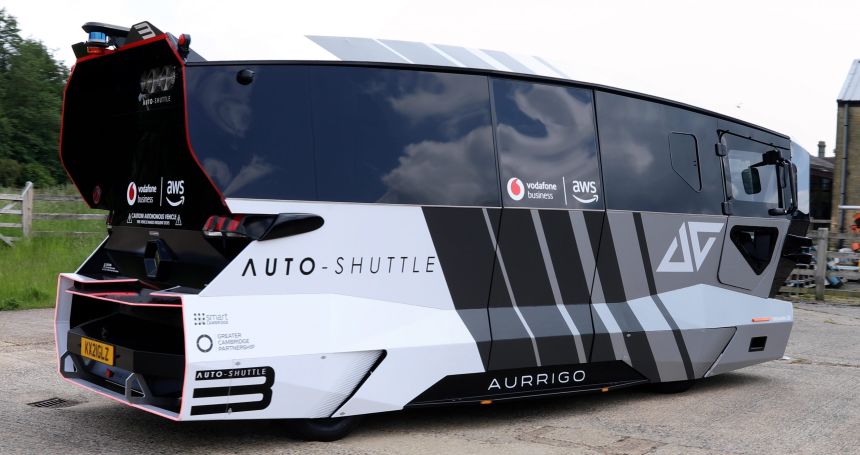
If you find yourself at Schiphol Airport in Amsterdam, Changi in Singapore, or at international airports in northern Cincinnati/Kentucky, you may find vehicles with an unusual, futuristic look.
The three airports are one of the places where British company Aurrigo, a pioneer in autonomous vehicles for airports, is testing its products.
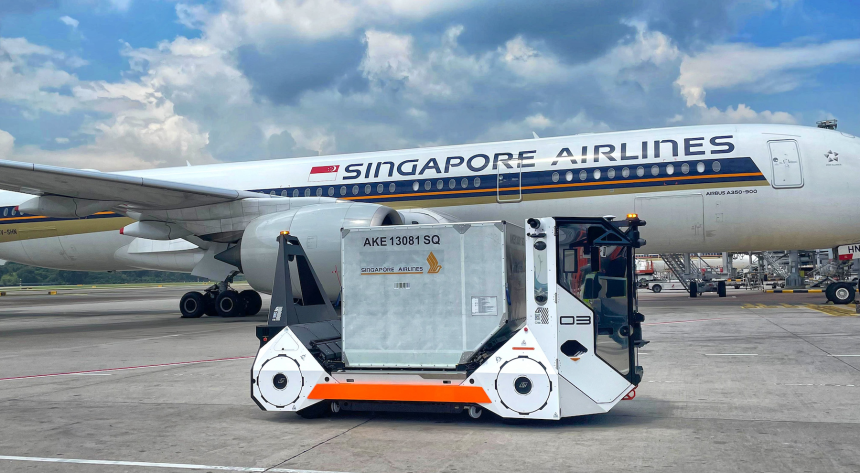
After delivering the prototype to British Airways in 2019, Aurrigo deployed its first autonomous ground vehicle, Auto-DollyTug, at Changi Airport in 2022.
With a safety driver, Auto-DollyTug can autonomously pick up containers and transport them directly to the aircraft. It can rotate 360 degrees in situ or rear, forward or sideways, a convenient feature in crowded airports where other vehicles transport fuel, water, catering and people.
“We have the vehicle and technology that can operate from the baggage hall to the aircraft side, allowing us to automatically load and load containers,” said David Keene, CEO of Aurrigo, who is also a visiting professor at Coventry University. He founded over 30 years ago as an automotive parts supplier before becoming interested in automation.
Automotive Business continues. Electronic systems are being provided and feature developments for Jaguar Land Rover, Aston Martin, Bentley and Rolls Royce continue. However, Aurrigo’s focus is now on the airline, particularly the airport area beyond Airside or airport security checkpoints, where planes are loaded and loaded.
“There’s a big hole in the market,” Keene says of the relatively slow adoption of autonomous technology in aviation.
The switch to autonomous electric vehicles is a major change for most airports where the current fleet runs mostly on diesel fuel. “Electricity at an airport is not as easy as it sounds at first,” Keene said. “Not only do you need to replace your diesel vehicle with an electric vehicle, you also need to be able to charge it. Sometimes the grid doesn’t have enough capacity to support it.”
Secondly, there is the regulatory issue as there is no standard for bringing automated vehicles to the airport. “We must work with each airport and local government, so we can reach a consensus on the safest ways to implement those vehicles,” Keene said.
This is one reason why the Aurrigo still includes the driver’s seat and steering wheel.
Earlier this year, the Federal Aviation Administration (FAA) issued guidance on what is called the “autonomous ground vehicle systems” (AGVS), saying, “We sincerely welcome the innovative implementation of this new participating technology, but above all, we need to ensure that it is safely integrated into an active airport environment.”
Some guidance requires that self-driving cars at US airports can only be used in tests or “non-mobility areas.”
Keene believes there is a strong business case for autonomy and could ultimately be a driving force for regulatory breakthroughs. “The amount of passenger and cargo operation that airports and airlines are currently experiencing is at a historical Covid level,” he said. “There’s growth in the industry, but there’s not enough people to serve. Automation helps people already there. We’re not redundant. We’re adding: we can move people, move luggage, move cargo without having to move people, move luggage or need it today.
Keene said switching from traditional diesel fleets to electric vehicles could reduce carbon emissions by up to 60%, but could also bring about other benefits. As airports get busier, more vehicles tend to withstand aircraft, and ground damage (when vehicles collide with each other or collide with aircraft) is a serious problem. The International Air Transport Association (IATA) estimated that the global costs of these accidents could reach $10 billion a year by 2035.
Keene said so far, the Aurrigo vehicle has not been involved in the accident and must report human driver intervention when being tested at the airport. He added that the number of interventions reported was “very, very low.”
Currently with around 120 employees, Aurrigo has two other vehicles in the test phase: Auto-Cargo. This is the higher version of the Auto Dritug for cargo manipulation that has attracted interest from the UPS.
“With partners like Aurrigo, we believe we are focusing on an airport with self-driving cars at the heart of its operations,” Jan Zekveld, head of innovation at Royal Schiphol Group, which manages Schiphol Airport, told CNN. “Autonomic technology will help shape safer, cleaner, more resilient airport operations and are extremely keen to explore ways to build towards this expected future.”
Earlier this year, Aligo announced it would be testing its vehicles and systems with a contract with Swiss port, which manages more than 270 airports around the world. The company also deploys its car and automotive systems at Teesside Airport, a small international airport in northern England. At the moment, Aurrigo vehicles are not working on commercial flights. Keene believes that the initial commercial deployment could occur as early as 2026.
The number of autonomous systems at airports is increasing, and testing programs are appearing around the world. Since 2024, KLM has tested a small autonomous bus in Schiphol Airport by New Zealand company Ohmio. A self-driving vehicle, which includes a Chinese manufacturer’s bus and luggage tractor, has been under test at Hamad International Airport in Doha, Qatar, since February. In July, Autonomy Company EasyMile deployed a fleet of six electric luggage tractors at Dubai’s Al Maktoum International Airport.
Increased passenger traffic and openness to FAA autonomy suggest the sector has the potential to grow, according to Piotr Grobelny, an aviation analyst at consulting firm IBA. He claims that the airport environment is best suited for self-driving cars. “The regulated nature of airports, often cited as a barrier, could paradoxically provide a comparative advantage,” he said in an email.
“Unlike urban roads characterized by unpredictable human behavior, airports showcase highly structured, monitored environments with fixed routes and known operations. This predictability reduces the variability of the scenario and, if precisely tuned, allows it to be moderately and reliably carried out within a tightly controlled corridor.”
Grobelny shows that the preliminary results of Aurrigo’s testing across various airports are encouraging, but it should be noted that technical challenges remain, especially in the bad weather. Snow, fog and rain are known to undermine the perceptual systems of autonomous systems, and no technology has been proven to counter this.
Next is the issue of regulations. “FAA safety standards explicitly point out that self-driving vehicles introduce operational complexities that are not initially considered by existing standards, highlighting the ongoing needs of rigorous assessments and integrated protocols,” he said.
Aurrigo says it is tackling weather-related challenges with software that can distinguish between rain and object droplets and housing critical sensors in housings designed to protect against heavy rain and snow.
“We’re a bit of a destroyer because handling of luggage and cargo hasn’t really progressed in the last 30 or 40 years,” Keene said.
