

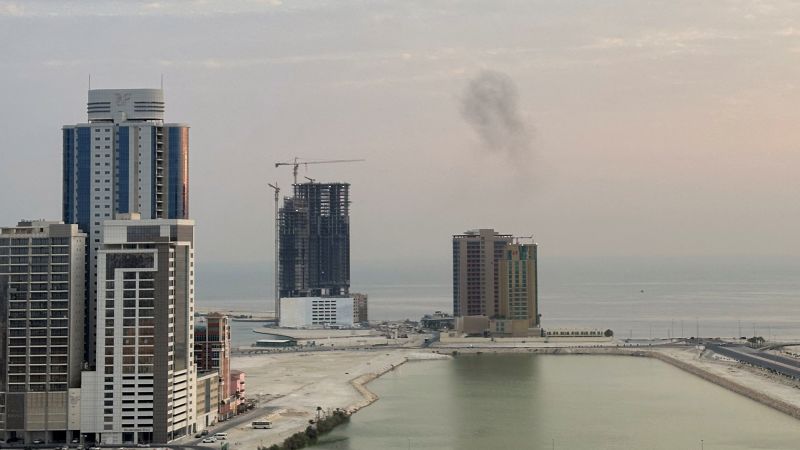

Global oil prices rose to a one-month high on Tuesday after the United States launched repeated attacks on Iran, bringing traffic in the Strait of Hormuz to a near standstill.
Brent crude, the global benchmark, rose 1.5% to $84.56 per barrel as of 12:15pm local time in Hong Kong, trading at its highest since June 12. U.S. crude oil futures rose 1.9% to $79.51 a barrel, adding to Monday’s 9% rise.
According to data from Kpler, which tracks ship movements, only five commercial vessels were passing through the Strait of Hormuz on Monday local time, and none carrying crude oil could be tracked. This appears to be the lowest level of activity since May 30, before the US signed a deal with Iran to try to end the war. However, early data does not yet reflect vessels that may have passed by while their transponders were switched off.
One-fifth of the world’s oil supplies pass through the Strait of Hormuz, and prices have soared on expectations of an unprecedented global supply shortage due to the Strait of Hormuz’s de facto closure during the Middle East war.
But buyers have found workarounds to the tight supply, limiting further price increases for now. Major oil consumers are relying on emergency reserves while buying more energy from the United States, the world’s largest producer of oil and natural gas.
China is exporting record levels of clean energy technology as countries seek to reduce their dependence on fossil fuels in the wake of the Iran conflict. China’s crude oil imports in June fell 41.3% from a year earlier, according to customs data released on Tuesday.
Gulf states are considering rapid construction of pipelines to bypass the Strait of Hormuz, which Goldman Sachs analysts predict could displace about half of pre-war Gulf exports by the end of 2027.
CNN’s Sandy Sidhu contributed reporting.
