

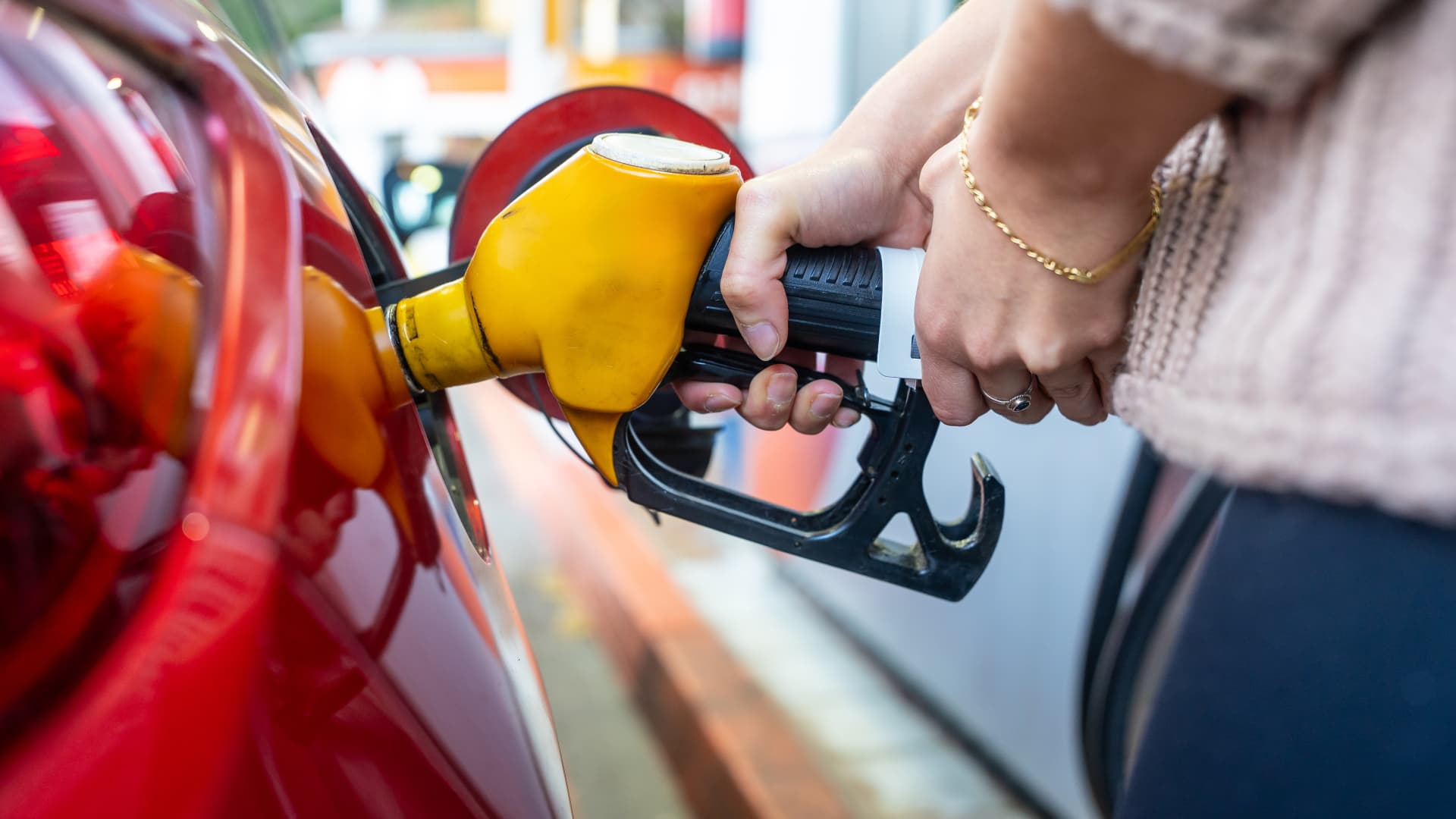
Gasoline prices could rise after President Donald Trump said the ceasefire between the United States and Iran was over and threatened another attack.
According to AAA, the national average for regular gasoline is about $3.80 per gallon, well below the $4.56 peak in May of this year. But Patrick de Haan, head of oil analysis at GasBuddy, says new tensions could reverse the recent decline.
“The end of the Iranian ceasefire is putting upward pressure on oil prices, which could push the national average toward $4 a gallon in the coming days,” De Haan said in a July 8 post on X. “We note the possibility of price increases soon.”
At its peak in May, the average driver was expected to spend about $70 a month more on gas than before the Iran war began on February 28, according to calculations by the Richmond Fed.
For budget-conscious drivers, with the risk of gas prices rising again, it may be a good time to reevaluate your monthly spending, a certified financial planner tells CNBC Make It.
Start by resetting your budget
Alvin Carlos, a certified financial planner with District Capital Management, says when regular expenses like gas go up, it’s a good time to “reset your budget” each month.
Start by tallying everything you’ve spent over the past two months in a notebook, spreadsheet, or budgeting app. Sort your expenses into three categories.
Fixed expenses like rent, insurance, and mortgage payments; essential variable expenses like groceries and gas; and discretionary expenses like eating out, subscriptions, and entertainment.
Once you’ve determined where your money will go, set new goals for variable and discretionary spending based on your current costs.
“If it costs you an extra $30 or $40 a month for gas, find roughly that amount elsewhere in your budget,” Carlos says.
It’s often easiest to start a subscription.
“Cut your subscriptions before you cut anything else,” says Mark Sanaiha, a certified financial planner with McAllen Capital in Phoenix. “The average household is paying for streaming services, apps, and memberships they forgot they signed up for.”
Spending on restaurants is also worth noting.
“It doesn’t have to be zero,” Carlos says. “Reducing your restaurant spending from twice a week to once a week isn’t such a bad thing.”
The idea is not to eliminate all non-essential expenses. Instead, Carlos says, you should prioritize the expenses that are most important to you and cut back where they are least wasteful.
Find easy savings at the pump
Carlos recommends using comparison shopping apps like GasBuddy or AAA to find the cheapest stations near you. Drivers who already belong to warehouse clubs like Costco, Sam’s Club, or BJ’s may find that gas prices there are below average, while grocery fuel perks and gas station loyalty programs could save them a few cents per gallon.
Some gas rewards credit cards offer great cash back on fuel purchases. If you use it, Carlos says, be sure to pay off your balance in full each month. If you don’t, the interest can quickly outweigh the rewards you get at the pump.
It also recommends consolidating errands into one trip and keeping tires properly inflated for fuel efficiency.
“The cheapest gasoline is the gallon you don’t burn,” Carlos says.
Do you want to get ahead at work? Next, you need to learn how to make effective small talk. In CNBC’s new online course, “How to Talk to People at Work,” expert instructors share practical strategies for using everyday conversations to increase visibility, build meaningful relationships, and accelerate career growth. Sign up now!

