

london —
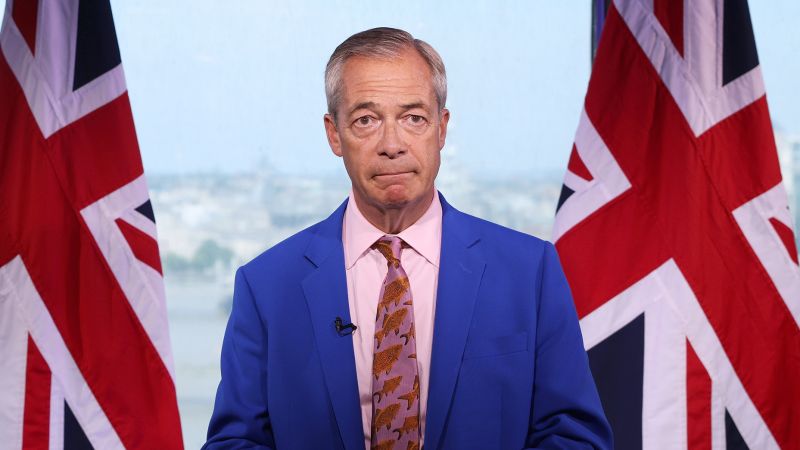
Nigel Farage, leader of the populist right-wing party Reform UK, plans to resign from parliament and stand again in a special election amid mounting controversy over donations.
Mr Farage announced on his YouTube channel on Tuesday his decision to resign as MP for Clacton-on-Sea in Essex in order to force a by-election and run again.
The surprise move appears to be an attempt to counter recent negative publicity about the source of his personal wealth, which is also the subject of an investigation by the parliamentary standards watchdog. The investigation will be put on hold until he is re-elected. If he loses the by-election, the Standards Commissioner will decide whether to reopen the investigation, according to official protocol.
Mr Farage denied any wrongdoing in a speech on Tuesday. “To be clear, I have done nothing wrong. I have not broken any laws in any way,” he said, adding that he believed he had “complied” with Parliament’s rules on “proper legal advice”.
“I have decided that the people of Clacton should judge my actions,” Mr Farage added. “I will fight to win. I will fight to continue the political revolution that the reforms started.”
His decision will spark another upheaval in British politics, following Prime Minister Keir Starmer’s resignation last month. The ruling Labor Party is expected to appoint a new leader within two weeks, with that candidate likely to be former Manchester mayor Andy Burnham.
Mr Farage, the chief architect of Brexit, has long been one of the main spokesmen of Britain’s populist far right and could be a potential future prime minister given the party’s recent success in local government elections.
He is arguably Britain’s most loved and most hated politician, but recent revelations about the source of his personal wealth threaten to tarnish his distinguished political career.
The latest allegations came over the weekend, when the Sunday Times reported that Mr Farage had failed to disclose gifts and payments from controversial British businessman George Cottrell, potentially breaking parliamentary rules.
Cottrell was indicted by U.S. authorities in 2016 on charges of money laundering, wire fraud, racketeering and conspiracy to commit racketeering. He served an eight-month prison sentence and reached a plea deal with prosecutors.
Mr Farage insisted on Tuesday that parliamentary ethics rules only apply to MPs’ public lives and do not seek to regulate their private lives. “Making money is not a crime,” he said, adding that he had been “doing well” financially for the past 10 years, including promoting financial products and working as a social media influencer. But that economic success “should not be considered a crime in itself,” he noted.
The Sunday Times investigation comes less than three months after the Guardian reported that Mr Farage had received a £5 million ($6.7 million) gift from British billionaire Christopher Harbourne shortly before he announced he would stand for parliament in the 2024 general election.
He is under investigation by the parliamentary standards watchdog over whether he should have declared his gifts before becoming an MP, and was referred again to the agency over the allegations in Sunday’s report.
Mr Farage described Harborn’s personal financial gift as “winning the lottery”.
Increasing scrutiny of Mr Farage’s personal finances has drawn attention to the unusually high income he earns outside of his role as an MP.
MPs are allowed to have second jobs unless they provide paid parliamentary advice, but publicly available records show Mr Farage has declared more than 2 million pounds ($2.7 million) in “other” income since becoming an MP in 2024. According to official statistics, this is more than 20 times the basic annual salary of a member of parliament.
