

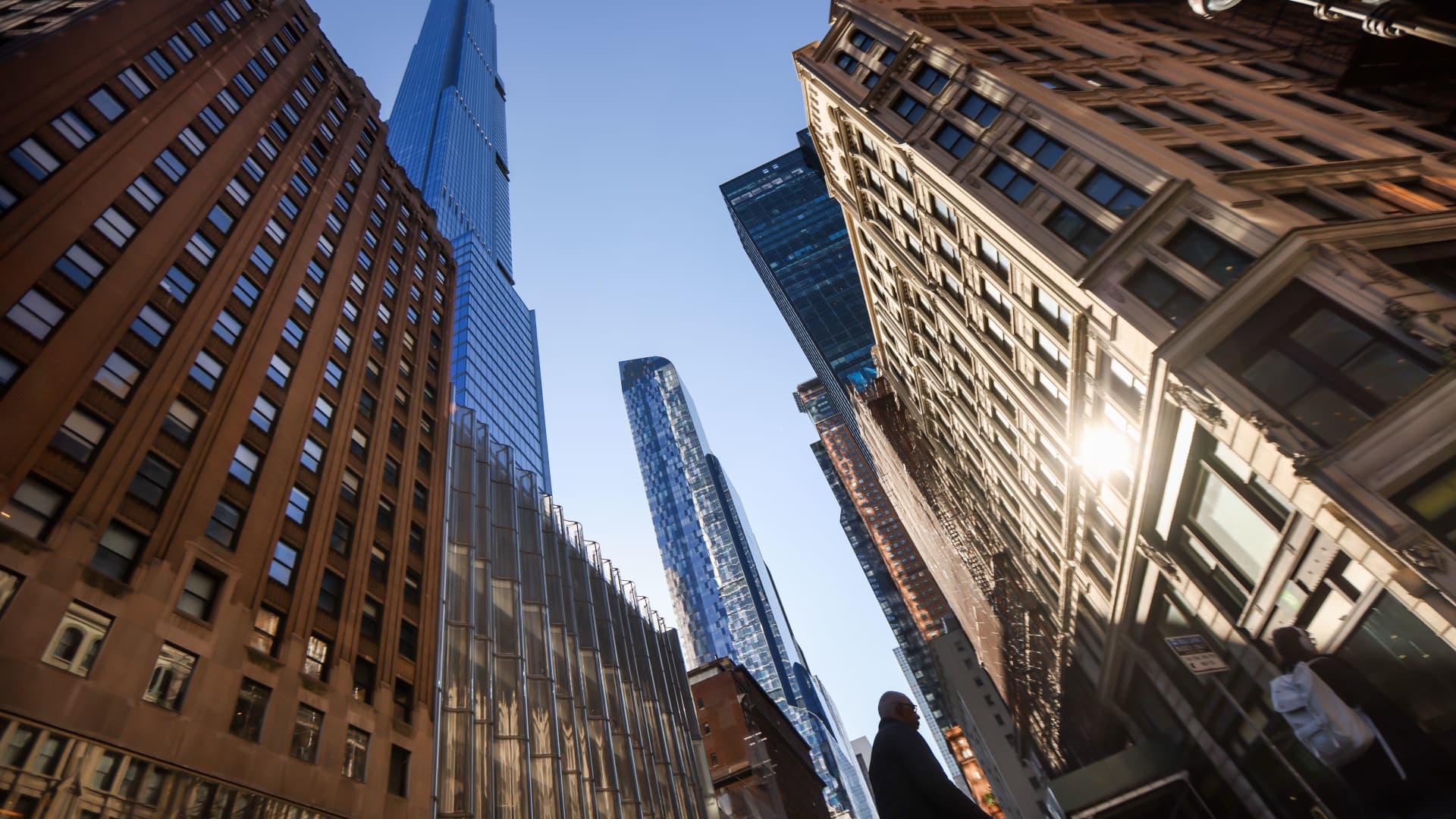
Central Park Tower (left) and One57 (center) along Billionaire’s Row in New York on May 1, 2026.
Michael Nagle | Bloomberg | Getty Images
A version of this article first appeared in CNBC’s Inside Wealth newsletter by Robert Frank, a weekly guide for high-net-worth investors and consumers. Sign up to receive future editions directly to your inbox.
A month after New York City’s second home tax was passed, luxury real estate sales remain strong and inventory is declining, brokers and analysts say.
When New York Gov. Kathy Hochul and the state Legislature approved the so-called pied-a-terre tax on May 27, real estate agents and developers predicted an immediate impact. Brokers said wealthy New Yorkers would flee to Florida, developers said they would cancel new projects and real estate lobbyists predicted job losses. Many cited what they called the “Mamdani effect,” pointing to New York City Mayor Zoran Mamdani and the potential flight of wealth from taxes.
“Taxing second homes would slow market activity, lower real estate values, negatively impact new development, and weaken the city’s economy,” the New York City Real Estate Commission said in a statement shortly after the bill was passed.
However, sales of luxury condominiums show little sign of slowing down. According to Olshan Realty, 126 apartments valued at $4 million or more went under contract in June, up from 124 in the same four-week period last year.
The average price of an apartment in Manhattan reached its second-highest level on record in the second quarter, rising 5% over the past year to about $2.2 million, according to Brown Harris Stevens. Sales of condominiums priced between $10 million and $20 million soared 55%, according to Compass. Sales of condos over $20 million rose 33%, and the average asking price rose 14%, according to the real estate brokerage.
June deals included an $80 million duplex penthouse in a new condo near Manhattan’s West Village, a $26 million condo downtown and a $22 million co-op on the Upper East Side. Brokers said the tax initially scared some buyers, but a flood of liquidity from recent initial public offerings and soaring asset prices outweighed the fears.
“The amount of money that’s out there is insane,” said Lauren Mass of Douglas Elliman, who closed on a $17.5 million condominium property in June. “Every day we see big things coming our way, and it’s only going to get stronger.”
Of course, it’s too early to tell what the long-term impact of the tax will be. And real estate lawyers say litigation related to assessments, cooperative boards, residency and other issues related to the new tax will continue for years. Hochul and Mamdani say the tax would raise $500 million a year, but the New York City Comptroller estimates it would raise about $340 million to $380 million.
But top brokers said concerns about the pied-à-terre tax were quickly subsiding. The surcharge, which would be imposed on non-primary homes valued by the city at $1 million or more, was first proposed in April, approved in May and officially took effect this week. This applies to homes that meet the tax threshold as of January 5, 2026. So anyone who buys expensive pied-à-terre this year will be subject to tax.
When the tax was first proposed, some buyers initially paused transactions, the agency said. Scott Hastis of Compass Paradigm Advisory said he listed a $16.5 million penthouse duplex in Madison Square Park Tower on April 8. One buyer was immediately interested and was about to make an offer, but when Hochul announced his tax proposal a week later, the buyer backed out.
But by late May, as tax details began to emerge, buyers returned to the market. Penthouse signed a contract on June 6th.
“There’s a lot of confidence in that,” Hastis said. “The market is strong. We’re seeing more buyers from New York.”
Mr. Hastis declined to comment on the buyer of the $16.5 million penthouse or whether it would be his primary residence. Otherwise, based on the city’s assessed value, the apartment would be subject to a pied-à-terre tax bill of more than $98,000 this year on top of property taxes.
But Hustis said ultra-wealthy buyers were more concerned about buying at the right time in the market cycle than paying additional taxes.
“Now they see things going into contract and the price doesn’t come down and they decide to go for it,” he said.
Inventory shortages are putting pressure on buyers. Jonathan Miller, CEO of appraisal and research firm Miller Samuel, said luxury goods inventories are down 40% compared to last year and are now at their lowest levels since the company began tracking them in 2004.
Mark Palermo of Douglas Elliman is listing a 4,700-square-foot apartment at 565 Broome Street for $19 million. Tennis great Novak Djokovic is among the buyers of the glass tower. Uber Co-founder Travis Kalanick and niece of President Mary Trump. From the fall of 2025 to early 2026, the listing received multiple offers at 20% or 25% below the asking price, Palermo said. But the building lived up to its price.
By late spring, the Manhattan market had regained its strength, brokers said, as the market got over fears of war with Iran and SpaceX’s IPO and other products created large liquidity events. Palermo said he received a “strong offer” for the $19 million apartment and reached out in late June. He declined to comment on the buyer, but said he already owns a unit in the building and is looking to expand. Since the buyer is not a New York tax resident, he or she will likely pay pied-à-terre tax.
“People held their breath, settled into the new reality, and the smart ones charged in,” Palermo said.
He said two other companies that had made initial bids for the Broome Street property had also recently completed bids for other apartments. One has a $15 million apartment and the other has a $17 million apartment. He said virtually all luxury buyers in Manhattan are paying cash without a mortgage.
In addition to the stock market rally and financial boom, so-called large-scale wealth transfers are also driving demand for Manhattan. Mr. Palermo said he has done a number of high-end transactions with buyers under the age of 40, where the buyers are parents, family offices or trusts.
“I get a lot of gifts from my parents,” he said. “If you’re under 40 and shopping in New York City, chances are you don’t have enough income to buy it yourself.”
