

Published June 1, 2026
Football’s international self-regulatory body announced a new set of laws will come into force during the World Cup, weeks before the tournament begins on June 11.
The International Football Association Board (IFAB) announced on Sunday a number of changes to the Laws of the Game that will apply not only to the World Cup but also to the 2026-2027 season and beyond.
“The IFAB has approved a series of ground-breaking changes to the Laws of the Game, and the 2026 FIFA World Cup will be the first major tournament where those rules will apply,” FIFA referee Pierluigi Colina told reporters.
“These amendments aim to tackle discrimination, reduce wasted time, increase the tempo of matches and improve the experience for both players and fans.”
A summary of the rule changes is as follows:
Players covering their mouths during matches
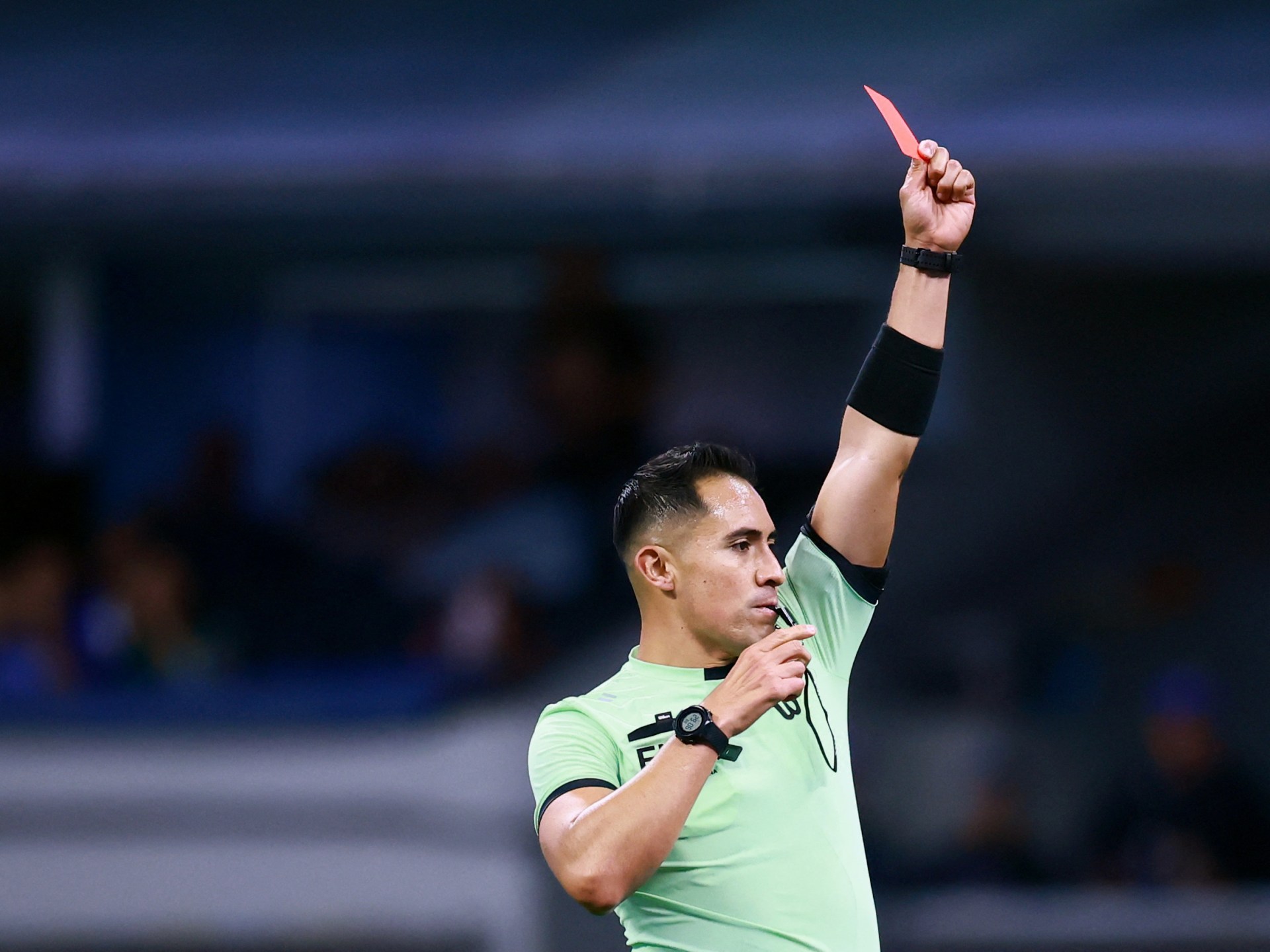
A player who covers his mouth with his hand, arm or shirt in a confrontation situation will receive a red card. However, for example, a player who covers his mouth while having a friendly conversation with a teammate from an opposing national team will not be penalized.
The new rules came into effect after Benfica’s Gianluca Prestiani was accused of using a discriminatory slur against Vinicius Junior while covering his mouth. Prestiani was handed a six-match ban by UEFA, with the ban extended worldwide.

leave the stadium in protest
Players who leave the field in protest of the referee’s decision will be shown a red card. This rule also applies to team officials who incite players to leave the playing field in protest.
The team that causes the match to be stopped will forfeit the match.
The rule change was made after Senegal ran off the field in protest after being awarded a penalty in the Africa Cup of Nations final against Morocco.
Throw-in and goal kick countdown
The referee raises his hand to begin a visual five-second countdown. For throw-ins, IIf the ball is not in play when the countdown ends, the opponent is awarded a throw-in. If a goal kick has not been taken by the end of the countdown, a corner kick is awarded to the opponent.

replacement protocol
Once the substitution board is displayed, players must leave the field within 10 seconds. They must leave the field at the nearest point on the boundary line.
If the substitute does not leave the field of play within 10 seconds, he may only enter at the first stoppage after one minute has passed after the restart and after the referee’s signal.
Exceptions will be made for player injuries or safety concerns.
Off-field treatment
Outfield players must leave the playing field for one minute after play resumes if medical staff enter the field for treatment.
The exceptions are injuries to the goaltender, collisions between goaltenders and outfield players, collisions between teammates that require attention, serious injuries (such as concussions or other head injuries), or if the injured player is scheduled to receive a penalty.
VAR protocol
Video Assistant Referee (VAR) protocols will be expanded.
VAR was first used at a FIFA tournament in 2017, and the 2018 World Cup in Russia was the first time the technology was used.
But from now on, it will also be used to confirm when a red card is issued after a clearly incorrect second yellow card, or when a card is issued due to mistaken identity.
Corner kicks awarded incorrectly may also be subject to VAR intervention if the decision can be corrected immediately without delaying the restart.
VAR can also intervene if a foul is committed before play has restarted. For example, if an attacker fouls a defender before the ball is in play from a set piece.
IFAB said: “VAR will recommend an on-field review, after which, if the referee determines that a foul has been committed before the ball is played, appropriate disciplinary action will be taken and the corner kick or free kick retaken.”

hydration break
There will be a three-minute hydration break between each half of each game.
The break will take place at the midway point (22 minutes) between each half.
Referees are given some flexibility in the timing of breaks. For example, if a player is injured and requires treatment within 20 minutes, the referee can signal a rehydration break.
goalkeeper injury
If a goalkeeper is receiving treatment on the pitch, players from both teams will not be allowed to leave the field and will take a “time-out” with their respective coaches.
