

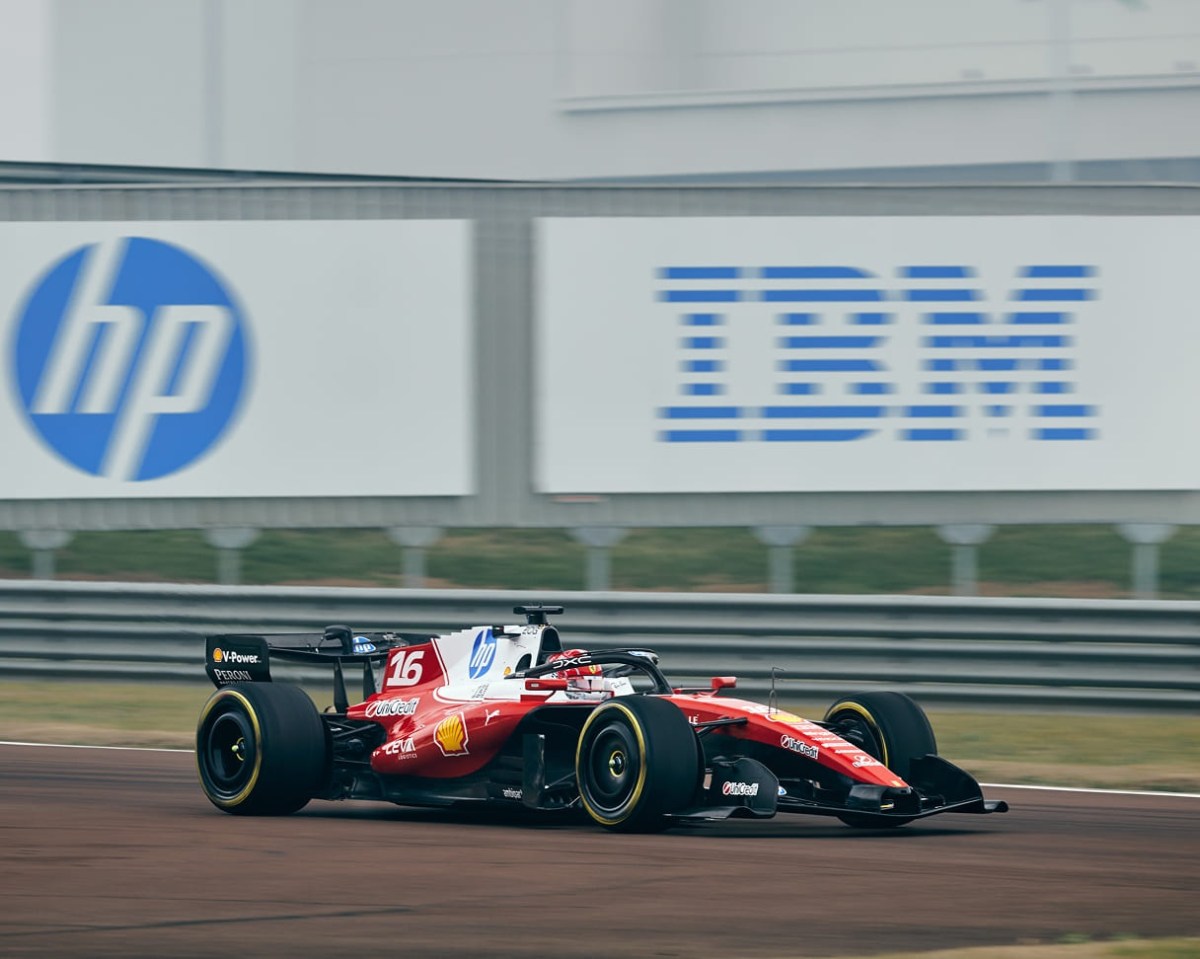
Two years ago, IBM noticed one glaring gap in its roster of sports partnerships. That’s F1.
F1 has become one of the most popular sports in the world, especially in the US, where Netflix’s Drive to Survive chronicles the working lives of F1 drivers and turned them into mainstream celebrities. This tech-centric sport has also become a hot topic for technology companies like AWS, Oracle, and Anthropic, who partner with teams for sponsorship visibility and provide data analytics and AI tools to improve their competitiveness.
So when IBM started looking for its next major sports partnership, it’s no wonder it chose Formula 1 and one of its most iconic teams, Scuderia Ferrari HP.
“They’re the winningest team in history,” Kameryn Sternhouse, IBM’s vice president of sports and entertainment partnerships, told TechCrunch.
But at the heart of this partnership is what has inspired other teams to start collaborating with the tech giant: access to more sophisticated technology solutions that can take full advantage of artificial intelligence, among other things. In fact, one of the best things about sports is how much data is available and can be used to help people become familiar with AI, Sternhouse said.
“They’re really seeing how AI can help them,” she said of how AI is used in sports storytelling.
The IBM and Ferrari partnership focuses on the idea of storytelling and will enhance fan engagement by overhauling the technology behind the Ferrari Fan App. To support this, Ferrari has hired Stefano Parrado to a new role with the title ‘Head of Fan Development’. He said the challenge the team wants to address is not just reaching fans, but “making each fan feel like we know them.”
“It starts with taking the data you get from your trucks and turning it into content that’s easy to track and engaging,” he told TechCrunch.
Teams process millions of data points every second during each race, capturing every movement of drivers and cars. Turning this into content that fans can engage with is just one way advanced enterprise AI is helping companies better interact with consumers.
Of the 11 teams, Ferrari is one of the few (along with the likes of McLaren and Williams) to have an independent fan app strategy, rather than relying on social media or official F1 platforms, demonstrating how the sport is gradually beginning to tap into its growing global fandom.

Some of the changes to the Ferrari app were simple, like offering it in Italian. Ferrari is an Italian company and many of its fans are Italian, but until the partnership with IBM, the Ferrari fan app was not available in Italian.
Mr Sternhouse said the old Ferrari fan app was a place people went to find race details and then left. The new app includes games that fans can play with others within the app, new AI-generated race summaries, behind-the-scenes stories about teams and drivers, a place to make predictions, and an AI companion for fans to ask questions.
“There are two drivers, but did you know it takes 24 people working at the same time every two seconds to change a tire?” Sternhouse added that storytelling allows fans to feel closer to the team.
Unlike other sports apps developed by IBM, the main focus of the Ferrari app is storytelling, Stanhouse said, because the company wants fans to stay involved in the game year-round, rather than just a few weeks a year like they do for tournaments like the Masters. Stanhaus said the app’s engagement data has been on the rise since IBM came on board, citing a 62% increase in race weekend engagement as an example.
Parrado said the team uses AI to analyze engagement signals within the app, such as the content users want to read and the sentiment of messages fans send.
“It helps us understand what resonates most with the tifosi (Ferrari fans’ nickname), and that directly informs how we shape our storytelling and how we deliver content,” he said.
The team wants to dig deeper into personalization and create a more immersive fan experience.
The app developers also took into account Ferrari’s fan base, which is much more diverse than it was five years ago. Statistics released by F1 last year showed that 75% of new fans were women, many of whom were from Gen Z. Particularly appealing to women is F1 Academy, an all-female racing series aimed at developing the next generation of female drivers. But these new fans, just like the old ones, want one thing and more.
“They want more data, more insights, more functionality, and we have to be able to provide that,” Parrado said. “At IBM, our vision for the next five years is to make every fan feel like the experience was built for them, whether it’s 30 years or 30 days. That’s how we build lasting loyalty.”
If you buy through links in our articles, we may earn a small commission. This does not affect editorial independence.
