

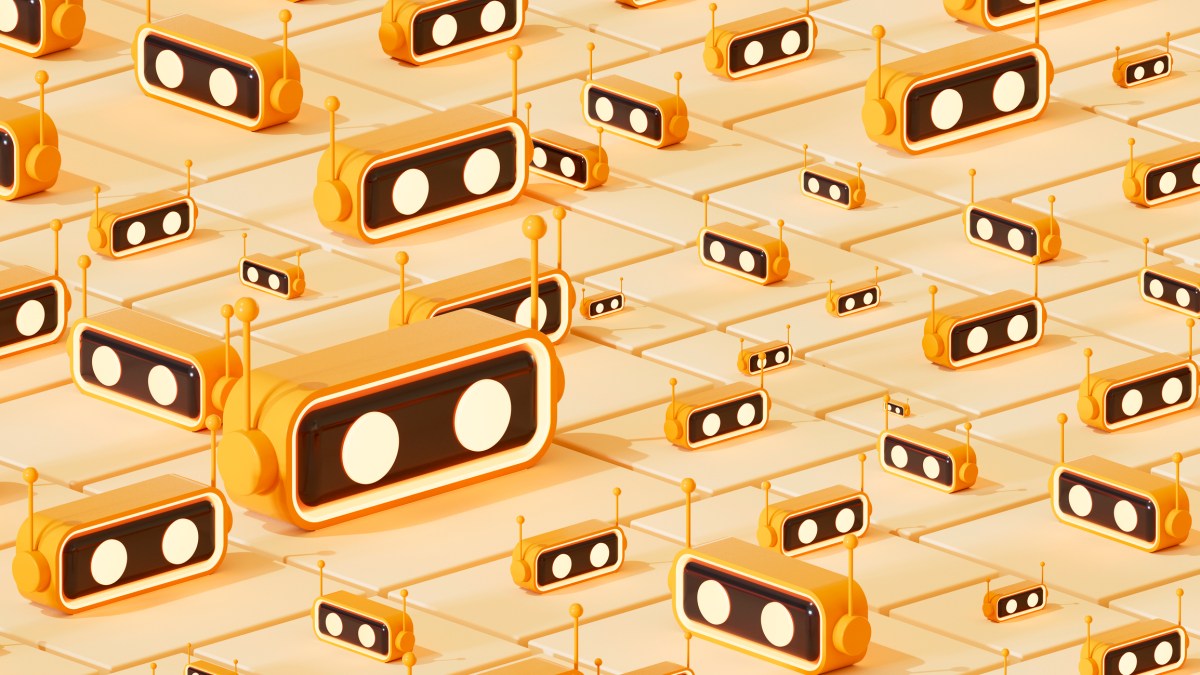
One of the most promising announcements at Google’s I/O developer conference on Tuesday was AI agents, a new way for consumers to interact with the web. Unfortunately, it was also the most confusing.
Google has reinvented the old Google Alerts service and taken the wraps off its AI-infused Information Agent. These AI agents are designed to work in the background 24/7 to help users stay up-to-date on topics of interest, such as market trends, price tracking, and severe weather alerts.

Then there’s Gemini Spark, a “personal” AI agent that can help you navigate your digital life by integrating with Google products like Gmail, Google Docs, and Google Workspace. The company says the assistant can handle everyday tasks like finding themes from newsletters, organizing your home inventory and keeping track of what needs restocking, and helping you plan and manage group trips with friends.
Or, as Google demonstrated in a very engineering-minded example, you could use it to host a neighborhood block party, as if you needed more than just group chats and email to manage.

Another way to track notifications from Spark is “Android Halo.” (I don’t know why Android features need their own branding, but my guess is that Google’s internal product teams are pretty competitive and want to highlight their accomplishments at the risk of confusing users.)

Next, Gemini’s app introduces an AI agent that can compile personalized digests from your Gmail inbox, calendar, and tasks and provide updates called Daily Briefs.

Many of these products have not yet shipped, or at least will not be widely available to the public anytime soon. Instead, Google is currently targeting heavier users, the “AI-immersed” subscribers of its new Gemini Ultra plan, which costs just $100 a month.
Google Pro and Ultra subscribers in the US will be able to use the Information Agent starting this summer, and Spark will be available to Ultra subscribers “soon.” Halo will ship to Android users “later this year.” Daily Brief is rolling out to Ultra, Pro, and Plus subscribers in the US.

As a result of all these releases, there will soon be so many entry points to using AI agents that it can be overwhelming to know where to start. (Did we also forget to mention the increasingly agentic Chrome web browser? Google just showed off how you can interact with Chrome when shopping for a car online to set different options and trim levels without a single tap or click on your keyboard. Yeah…maybe?)
Google said in a press conference ahead of I/O that it intends to make its agent capabilities, including Spark, available to free users “at the appropriate time.” But for now, the company is interested in repeating conversations with groups of people like Ultra subscribers who are pushing the boundaries of what Spark and AI agents can do.

Meanwhile, Google is likely moving away from the real-world improvements that AI offers, such as agenttic coding and the use of AI-enabled computers, further deepening the divide between those who have already embraced the promise of AI (literally!) and the average consumer who uses Google’s free tools.
Rather, today’s consumers primarily think of AI as a chatbot alternative to traditional Google search. They see AI photo and video models not as impressive creative leaps, but as tools for creating “AI slop” that clutters social feeds and results in unnecessary data centers being built in backyards.
Google didn’t help its reputation on this front, flashing goofy AI images between each presenter during the event. It also played a corny AI-generated animation featuring a Cinnamon Toast Crunch-esque talking Tensor chip. Google also demonstrated in its Android Glasses demo how the device (which will later support photo-taking) uses AI to transform a photo you take into something else.

In this demo, the presenter took a photo of the audience’s perspective, modified it to show a blimp floating overhead, and sent it to an Android Watch. That’s nice, but is it worth demolishing someone’s house through a prominent domain to build new power lines for a data center?
It will take more than clever party tricks to get people to accept such dramatic social changes.

Over the past few years, Google has announced new consumer electronics devices like the Pixel smartphone and Nest Hub, along with new Android features like the restaurant and salon reservations service that took everyone by surprise in 2018. These technologies were assembled as an attempt to smoothly solve the hassles of daily life.
Now, the tech giant is showing off new models (aside from Gemini Pro 3.5, which wasn’t ready yet) alongside its developer platform, and it’s almost forgetting who it’s developing all this for: the general public. People who don’t want to think about where they’re going to use it, whether it’s Gemini or Spark or Halo or Information Agent.
These people have real problems they want to solve. They struggle to pay bills and rent, or buy gas and groceries, trying to find jobs in the face of AI recruiting systems that reject resumes over trivial technical details. They are people trying to balance stressful lives that have recently become burdened by advances in technology, especially as social media eats up screen time, makes children addicted, and turns social connection tools into giant online shopping malls.
Rather than tools to solve problems, the average tech-savvy consumer watching this year’s Google I/O saw the tech giant bring more AI into everything they use, from documents and email inboxes to glasses and even search, which is now an AI-first experience.
If Google had tapped into real consumer sentiment, it might have found that its AI agents used less screen time. This means that instead of spending time researching, organizing, tracking, and monitoring information and news, agents can take over those daily tasks, allowing you to go offline and live your real life, away from your computer.

This is a message that may resonate with consumers, especially young people. Today, they’re embracing nostalgic retro technology, adopting “old man” hobbies and crafts to relieve stress, and rediscovering the power of real-life connections by eschewing dating apps for in-person events and experiences.
In other words, Google couldn’t sell how good its AI agents were because it didn’t demonstrate the problems its agents would solve for everyday users and paywalled these tools to limit their reach.
Meanwhile, messaging-first AI startups like Poke, Poppy, RPLY, and Wingman are touting themselves as a more natural way to interact with AI agents through text messaging, a feature we all use every day.
Will you be able to send messages to Spark? A Google I/O representative vaguely stated that it will happen at some point in the future.
This is a sharp departure from Google’s earlier strategy, which introduced innovative products like Gmail, a free email service that vastly improved existing options, and Google Search itself, which freed up the early web and made it more accessible to everyone.
Google I/O may have been the breakthrough moment when AI agents became available to everyone through a simple, free consumer product (under one brand name!). This product may make some people lament the way they used to beg for Gmail invites. Instead, Google’s new AI agents, tools that work for us and meet our individual needs, are out of reach for most people.
If you buy through links in our articles, we may earn a small commission. This does not affect editorial independence.
