

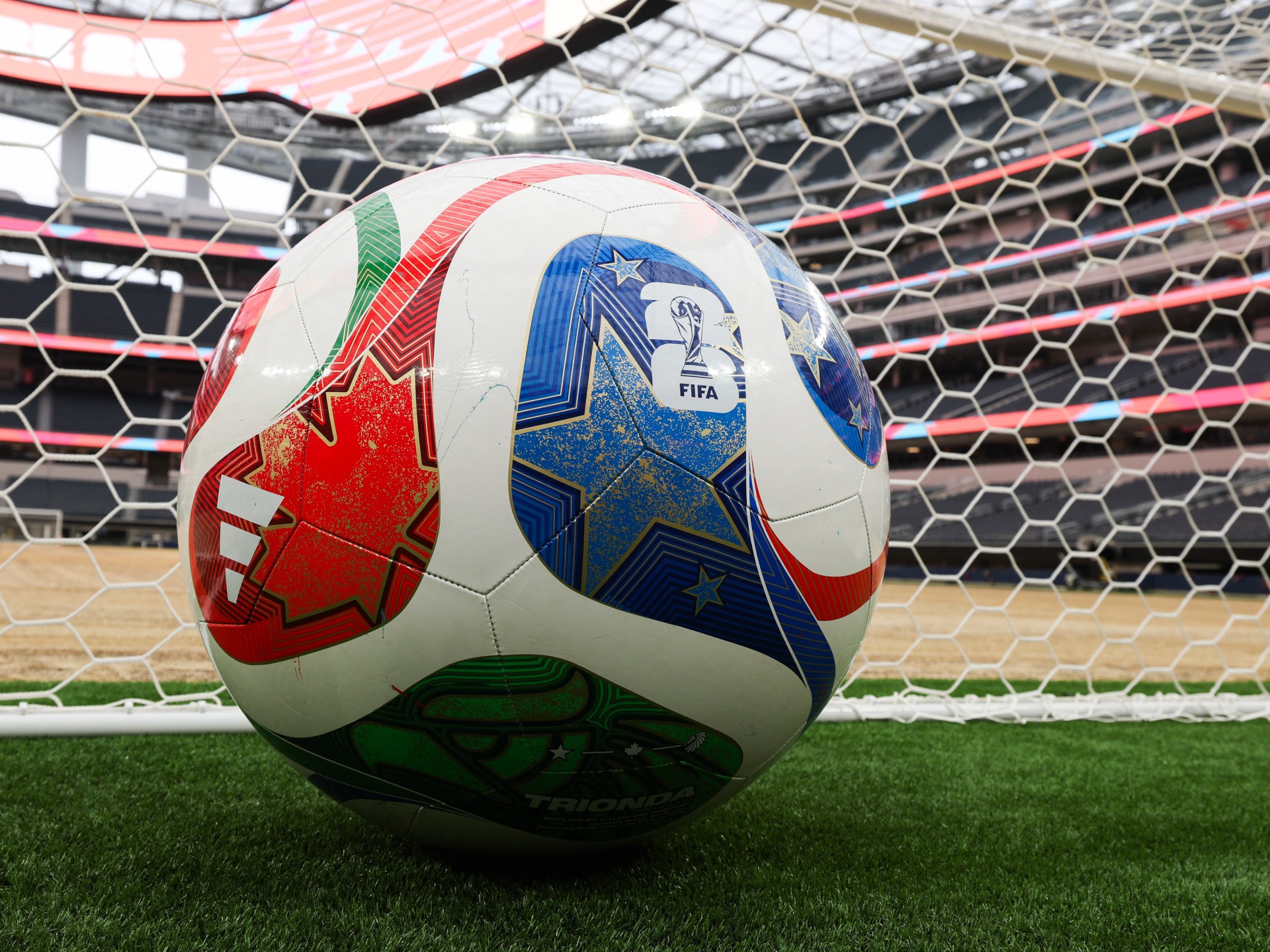
The 2026 FIFA World Cup will be like never before.
The tournament, which will feature 48 teams from six federations, will be the largest in the competition’s 96-year history.
Recommended stories
list of 4 itemsend of list
What once began as a World Cup with just 13 teams has now nearly quadrupled in size.
From minnows to giants, there’s a place for everyone in the newly expanded format, but what benefits does it bring to the global game, and what are the potential downsides to opening it up to more teams?
Here’s what you need to know about the new format before the tournament begins on June 11th:
48 team system structure
Participating countries will be divided into 12 groups of four teams each, replacing the previous 32-team, eight-group format.
The top two teams in each of the 12 groups and the top eight teams in third place will advance to the Round of 32.
From there, it will be a simple knockout format, with rounds of 16, quarterfinals, semifinals, and finals.
Former Arsenal manager Arsene Wenger, now FIFA’s head of world football development, believes expanding the competition is a step towards making soccer “truly global” and raising standards.
Almost a quarter of FIFA’s 211 national member associations around the world will be represented at the 2026 World Cup.

“This is a natural evolution. We want to make football global, all over the world. And if you look at the evolution since 1930, the next World Cup in 2030 will be the 100th anniversary of the World Cup (existence),” Wenger said at a press conference in December.
“We started with 13 teams and then we went to 16… 1982 was the first time we had 24 teams. 1998 was the first time we had 32 teams. So the evolution is always that more teams want to participate and now I believe 48 teams is the right number,” added the Frenchman.
According to a FIFA announcement in mid-April, the World Trade Organization (WTO) estimated that the expanded tournament would generate $80.1 billion in gross output, including $30.5 billion to co-host the United States.
The impact will be felt throughout the U.S. economy, while the $11 billion in FIFA World Cup revenue that the international soccer body expects to generate this year will be funneled into the game, FIFA President Gianni Infantino said.

“This will allow soccer projects, academies, stadiums, arenas, women’s and men’s competitions to be held and organized in 211 countries around the world, more than the United Nations,” he said at the CNBC America Investment Forum in Washington, D.C., on April 15.
“Three-quarters of them probably wouldn’t be able to organize the sport without the advances they get from tournaments like the World Cup,” Infantino added.
Expansion brings more opportunities for small countries
This expanded format opens new doors for countries that had little or no chance of qualifying under the old 32-team format.
This includes four countries participating in North America for the first time. Curaçao, the smallest country in history to qualify for the World Cup, fellow minors Cape Verde, and Asian newcomers Jordan and Uzbekistan.
The appearance of four debutants falls just short of the record of six set in the inaugural tournament in 1930 and 2006, but up to nine potential new players were vying for a spot in the World Cup ahead of the playoffs in March.

The men’s World Cup was expanded this year, but the women’s tournament was also expanded from 24 countries to 32 participating countries three years ago. The idea of expanding the Women’s World Cup was initially met with skepticism, but Australia 2023 will feature eight new players, with many young players pulling off the upset.
Tokyo 2020 Olympic champions Canada, former world champions Germany and powerhouse Brazil all lost in the group stage, but Jamaica, South Africa and Morocco made history by advancing to the finals for the first time.
The tournament also reminded fans how the accuracy of FIFA rankings can be skewed, as some of the lower-ranked teams don’t play as many international matches as their more prominent opponents.
Risks of low-stakes, one-sided matches
The expansion of the 2026 tournament gives more teams a chance, many of whom would not have qualified under the previous format, but could also create new problems. That means lower stakes and potentially more one-sided matchups.
It doesn’t take long to take a quick look at the group stage matches and identify those that may be lopsided. Iran, one of Asia’s strongest teams, is set to play New Zealand, the lowest-ranked team in the tournament, raising the possibility of a mismatch that will have little competitive appeal for the average soccer fan.
Elsewhere, group stage matches between the small island of Curaçao and tournament powerhouse Germany, and Cape Verde’s match against UEFA Euro 2024 champions Spain, risk turning these matches into a route for European countries.

In the big picture, these potentially uneven battles risk diluting the intensity and quality of group stage matches that have traditionally defined the World Cup, turning the first half of the 39-day tournament into predictable, poorly attended games.
Additionally, expanding the format could make the route to the knockouts easier and more boring.
For example, a team can tie all three of its group games and still advance to the next round. At the very least, expanding from 32 teams to 48 teams risks changing the competitive dynamics of the group stage.
Recovery period for players after the World Cup is short
FIFA announced that the 56-day total, including rest days, release days, and tournament days, will be the same as the 2010, 2014, and 2018 FIFA World Cup tournaments. But what about the post-tournament recovery period?
Most of Europe’s top leagues will start the 2026-27 season just a month after the World Cup final, so players will have a short offseason to relax and recover from injuries.
A report by the Football Benchmarking Group using data from the FIFPRO Men’s Player Workload Monitoring (PWM) platform further highlights this issue.

“The move from 32 to 48 teams will increase the total number of matches from 64 to 104, with finalists having to play up to eight matches in 38 days. Being located immediately after the European club season and after major international and club competitions in the summer also creates additional logistical demands, such as long distance travel, multiple time zones, and varying climatic conditions in the host city,” the analysis reads.
“Furthermore, there is a limited period between the World Cup final and the start of the next domestic season, with 34 days between the final and the start of the Premier League season, reducing the time available for rest and pre-season preparation.”
