

Jeff J. Mitchell | Getty Images
President Donald Trump’s decision to eliminate a 10% tariff on Scotch whiskey exports to the United States could bring relief to the beleaguered industry and give a much-needed boost to premium cask investment, a niche part of the industry.
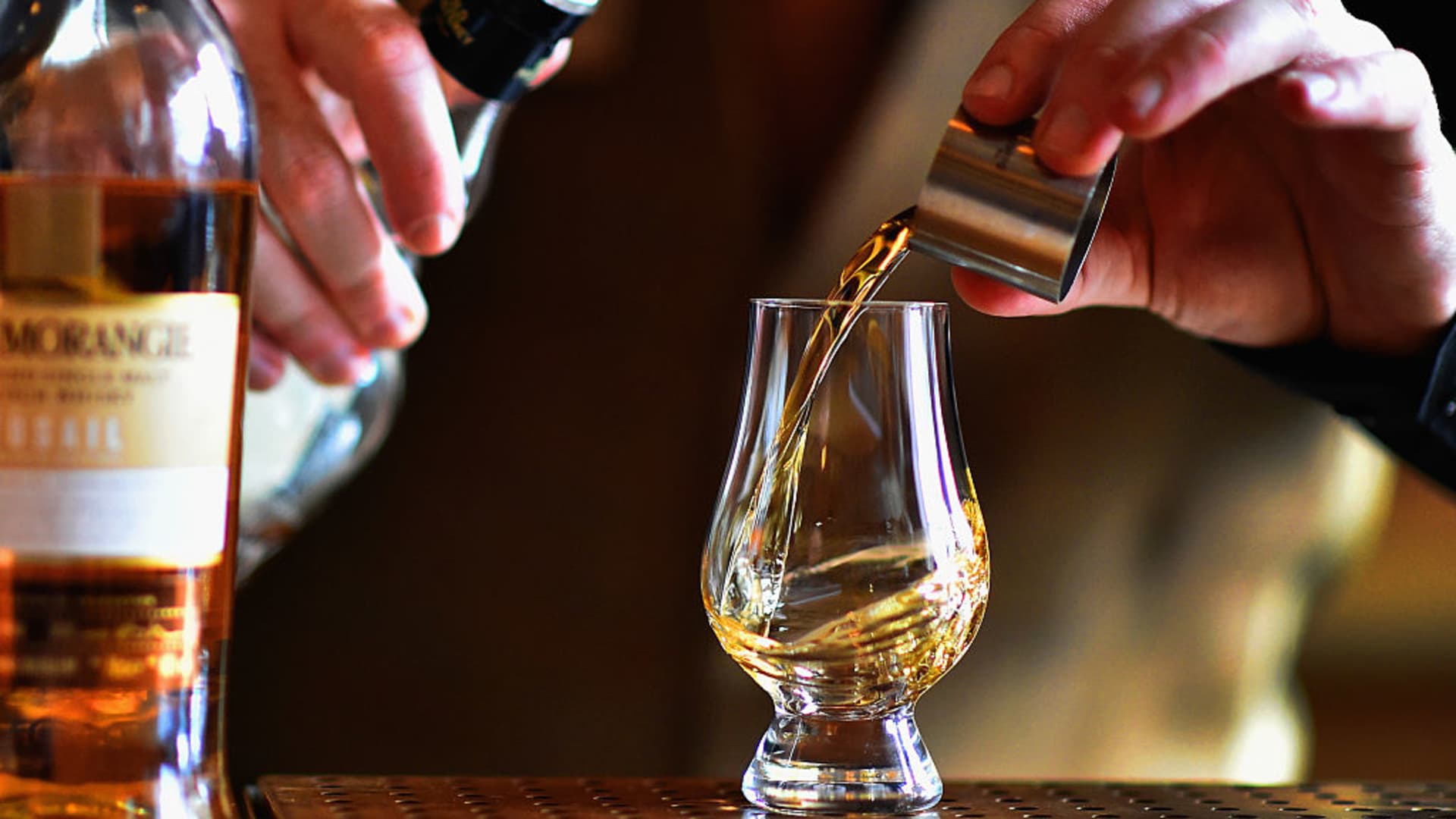
Cask investing involves purchasing oak barrels filled with Scotch, either immediately after the spirit has been distilled or already aged, and allowing the contents to age for 10 to 20 years before selling.
Barrels are typically traded within the industry through separate contracts between blenders and distillers, often involving barrel exchanges rather than money, or through specialist Scotch whiskey brokers. Private investors can also purchase barrels of freshly distilled Scotch whiskey or aged Scotch whisky, either for personal use or as a speculative bet with the intention of selling it at a profit on the secondary market.
Similar to other collectible alternative assets such as fine art, rare watches, and classic cars, cask investing is a high-risk, speculative, long-term bet on illiquid assets that are largely unregulated. Although often seen as a hedge against inflation, the value of such assets depends entirely on secondary market demand.
President Trump’s decision to eliminate import duties could improve exit valuations for cask investors, said John Kennedy, managing director of Decant Index, a trading platform for investors to buy and sell alternative collectibles, including fine whisky.
The United States will be Scotch’s single largest export market, worth around 933 million pounds ($1.27 billion) in 2025, according to the Scotch Whiskey Association, an industry group.
Mr Kennedy said the removal of tariffs would reduce friction for importers, distributors and independent bottlers sourcing stock from Scotland, while also strengthening long-term confidence across the industry.
“The biggest impact is likely to be felt at the higher end of the market,” he said. “American consumers have historically demonstrated a strong desire for aged, collectible, premium Scotch whisky.”
Kennedy said this means an improved long-term exit environment for cask investors.
“Increased demand for aging stock from the world’s largest premium whiskey market should increase the liquidity of mature barrels and support long-term reputations, especially for established distilleries with strong international demand,” he told CNBC via email.
“Water of life”
President Trump’s decision, announced on May 1 following King Charles III’s state visit to the United States, applies to all whiskey tariffs, including Irish whisky, the British government confirmed to CNBC earlier this month.
Mark Kent, chief executive of the Scotch Whiskey Association, said the partnership was a “huge boost” for the industry.
Hard data on the cask investment sector is hard to come by, but data from Whiskeystats shows the broader Scotch market has lost nearly a third of its value over the past three torrid years.
The monthly market weighted index of Scotland’s 500 most traded whiskeys has fallen by 29.74% over the period, while the benchmark ending in April has fallen by around 5.2%.
However, there are signs that investor appetite is improving.
British drinks giant’s shares diageo Brands such as blended whiskeys Johnnie Walker and Bells and single malts Talisker and Cragganmore have soared in the wake of President Trump’s decision.
Diageo has fallen about 28% over the past year after the White House imposed a wide range of “Emancipation Day” tariffs that imposed 10% duties on most British exports to the United States, including spirits.

Diageo.
Mr Kennedy said entry-level investments for young spirits from start-up distilleries start at around £2,000, but casks from more established brands such as Macallan, Dalmore and Springbank “could command six-figure prices” depending on vintage, age and type of cask.
He said the increased accessibility of the U.S. market due to tariff removal would increase demand for U.S. whisky, known as Uisge Vita, which means “water of life” in Scottish Gaelic, and support higher valuations in the long term.
“Over time, we expect this to support continued demand for aged stock, independent bottling and collectible releases, all of which are positive indicators for the cask investment sector.”
Liquid gold?
However, like other collectibles markets, buyers face many risks in this off-piste asset class.
Scotch whiskey casks are not traded as a commodity on a centralized exchange and are not regulated by the UK Financial Conduct Authority.
Each year, approximately 2% of the spirit evaporates naturally during the aging process in porous oak barrels. This loss is known as the “angel’s share.” Over time, the effect can reduce the alcohol content to less than 40%, removing the legal right to be called Scotch whisky.
There are also strict rules governing bonded warehouse storage and ownership structure.
“Unlike on the open market, barrels are not sold instantly, and price transparency can vary widely by distillery and vintage,” Kennedy said.
He added that historically scarcity and aging have supported value creation in the whiskey market. “This remains a specialist, long-term alternative asset and investors should approach it with caution. The biggest risks relate to provenance, ownership structure, custody, insurance and unrealistic return expectations.”
The Scotch Whiskey Association did not respond to CNBC’s request for comment.
However, the industry group warns on its website that anyone considering investing in kegs needs to be aware of the risks “both in terms of the potential value of the investment and the opportunity to sell it.”
The report said: “There is no regulated market for mature and aging casks of Scotch whisky, no officially published list of buying and selling prices for casks from different distilleries and different ages, and no established sales mechanism.”
It also warns consumers about the risks of fraud in the cask investment market.
