

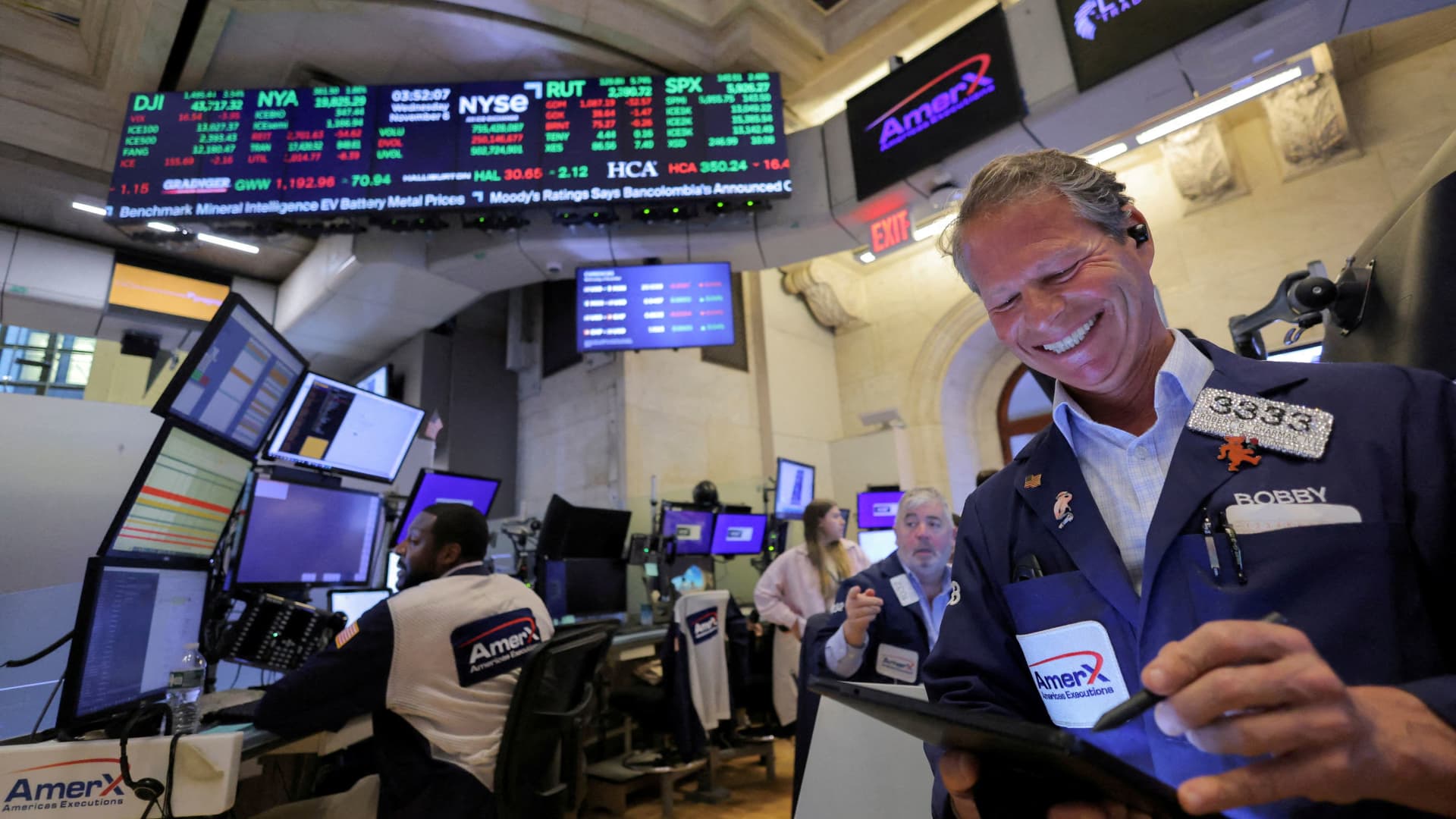
It was another record week for stocks. It was another historic week on Wall Street, thanks to strong first-quarter earnings and high oil prices due to the war. Investors also took stock of the flurry of economic data and the Federal Reserve’s latest interest rate decisions. The S&P 500 and Nasdaq Composite have risen 0.9% and 1.1%, respectively, over the past five sessions. Both indexes closed at record highs three times (Monday, Thursday, and Friday). Thursday also marked the last day of trading for April, the best month since 2020 for the S&P 500 and Nasdaq. Both indexes have increased for the fifth consecutive week. The blue-chip Dow Jones Industrial Average rose 0.55% for the week, but all of that gain occurred on Thursday. The other four days ended in the red. It’s unclear whether stocks will be able to sustain this impressive rally into next week, with a more diverse set of companies reporting earnings next week, risking disappointment. Until then, here are three takeaways from the past five trading sessions. Oil did not scare investors into buying stocks Oil prices soared as Wall Street monitored the latest developments in the Middle East. In the first weeks of the war, the two sides had an almost inverse relationship. But concerns over the closure of the Strait of Hormuz and supply disruptions haven’t driven investors away from stocks as much as they did in March. Let’s take a look at Monday’s trades. International benchmark Brent and U.S. oil standard West Texas Intermediate both rose after President Donald Trump withdrew plans to negotiate a ceasefire with Iran over the weekend. The S&P 500 and Nasdaq managed to close at record highs on Monday as well. Thursday is another example. Brent rose to a four-year high after media reports said the US military would brief the president on potential action against Iran. On the same day, both indexes set their second record closing price of the week. But it was corporate profits that really captivated Wall Street. Many clubs’ names were in the news last week, but Wednesday’s story stood out. Meta Platforms, Microsoft, Alphabet, and Amazon all announced results on the same night. Strong Earnings, Mixed Reactions Although each company reported growth in sales and bottom line profits, the reaction in stock prices told a different story. Microsoft’s quarter did not dispel concerns about the viability of its sheet-based business model for its Office suite. Shares fell nearly 4% after Thursday’s results. This is not surprising since Microsoft has been involved in “software sales” deals, which also weighs on the club’s name, Salesforce. Jim Cramer said there’s no need to buy Microsoft’s decline, calling the quarter “not fun.” It wasn’t all bad, so I’ve stayed longer so far. Microsoft’s Azure growth forecast looked solid. Microsoft recouped some of Thursday’s losses on Friday, rising 1.6%. Amazon stock rose a modest 0.8% on Thursday. It belies the strength of its results. The company is firing on all cylinders. The e-commerce and cloud computing giant achieved the highest operating margin in all its segments to date. Amazon Web Services posted its highest growth rate in the past 15 quarters. We raised our price target to $300 from $250 and maintained a 1 rating, the equivalent of a “buy,” 1.2% above Friday’s closing price. Meta plunged 8.55% on Thursday after Instagram’s parent company raised its capital spending outlook by $10 billion at midpoint. The stock fell 0.5% on Friday as well. Meta has already spent billions of dollars on generative AI, and the market doesn’t like the additional spending as investors question whether the company has a strong enough track record to justify it. Unlike Microsoft, Amazon, and Alphabet, Meta does not have a public cloud service. Nevertheless, Jim said the subsequent decline in profits was not a sufficient reason to exit the stock. He still trusts CEO Mark Zuckerberg. Additionally, Meta has posted the highest revenue growth in the past five years, but its advertising business is killing it. Alphabet did exactly what Meta couldn’t do. Google’s parent company proved just how profitable its large-scale generative AI investments can be, sending its stock up nearly 10% after earnings. It rose another 0.2% on Friday. Google Cloud’s revenue increased 63%, and the division’s operating profit tripled. It was “an unusual call,” Jim said Thursday. We raised the price target to $400 from $350 and reiterated our rating of 1. Jim ranked Alphabet as the top performer among Wednesday’s four technology reports, followed by Amazon and Microsoft. Meta was last. Rounding out this week’s Big Tech earnings was Apple’s earnings on Thursday night. The iPhone maker posted an impressive set of results, sending its stock up more than 3% on Friday. The stock is about $6 off its all-time high of $286.19, set on Dec. 2. A strong economy Last week brought the latest Fed policy decisions, lots of data, and encouraging comments from two companies close to consumer spending: Visa and Mastercard. They painted a rather resilient picture of the U.S. economy, despite all the uncertainties of the war. The central bank announced on Wednesday that it would keep interest rates unchanged. That was largely expected. Fed Chairman Jerome Powell’s comments at a subsequent press conference gave us hope. “Growth across the economy is really strong,” Powell said. “Part of that is because consumer spending is doing pretty well.” Visa Quarterly reaffirmed Powell’s view on consumers. Wall Street often looks to financial services and banking sector earnings as a barometer of consumer health. And it was a really great quarter. The payment processor’s profits and revenue beat expectations, and Chief Financial Officer Christopher Hsu said U.S. payment volumes reflected “the resilience of consumer spending.” The next day, Mastercard CEO Michael Miebach struck a similar tone. “Looking at the macro situation, the economic base remains generally supported by healthy primary consumer spending and corporate spending,” he said at an earnings conference. Meanwhile, Thursday’s employment report showed stability in the labor market. The number of new unemployment insurance claims has fallen to the lowest level since 1969. Also Thursday, the Commerce Department said gross domestic product (GDP) expanded at a seasonally adjusted annual rate of 2% in the first quarter. This is lower than the expected 2.2% growth, but still higher than the 0.5% growth in the last three months of 2025. (See here for a complete list of Jim Cramer Charitable Trust stocks.) As a subscriber to Jim Cramer’s CNBC Investment Club, you will receive trade alerts before Jim makes a trade. After Jim sends a trade alert, he waits 45 minutes before buying or selling stocks in his charitable trust’s portfolio. If Jim talks about a stock on CNBC TV, he will issue a trade alert and then wait 72 hours before executing the trade. The above investment club information is subject to our Terms of Use and Privacy Policy, along with our disclaimer. No fiduciary duties or obligations exist or arise from your receipt of information provided in connection with the Investment Club. No specific results or benefits are guaranteed.
