

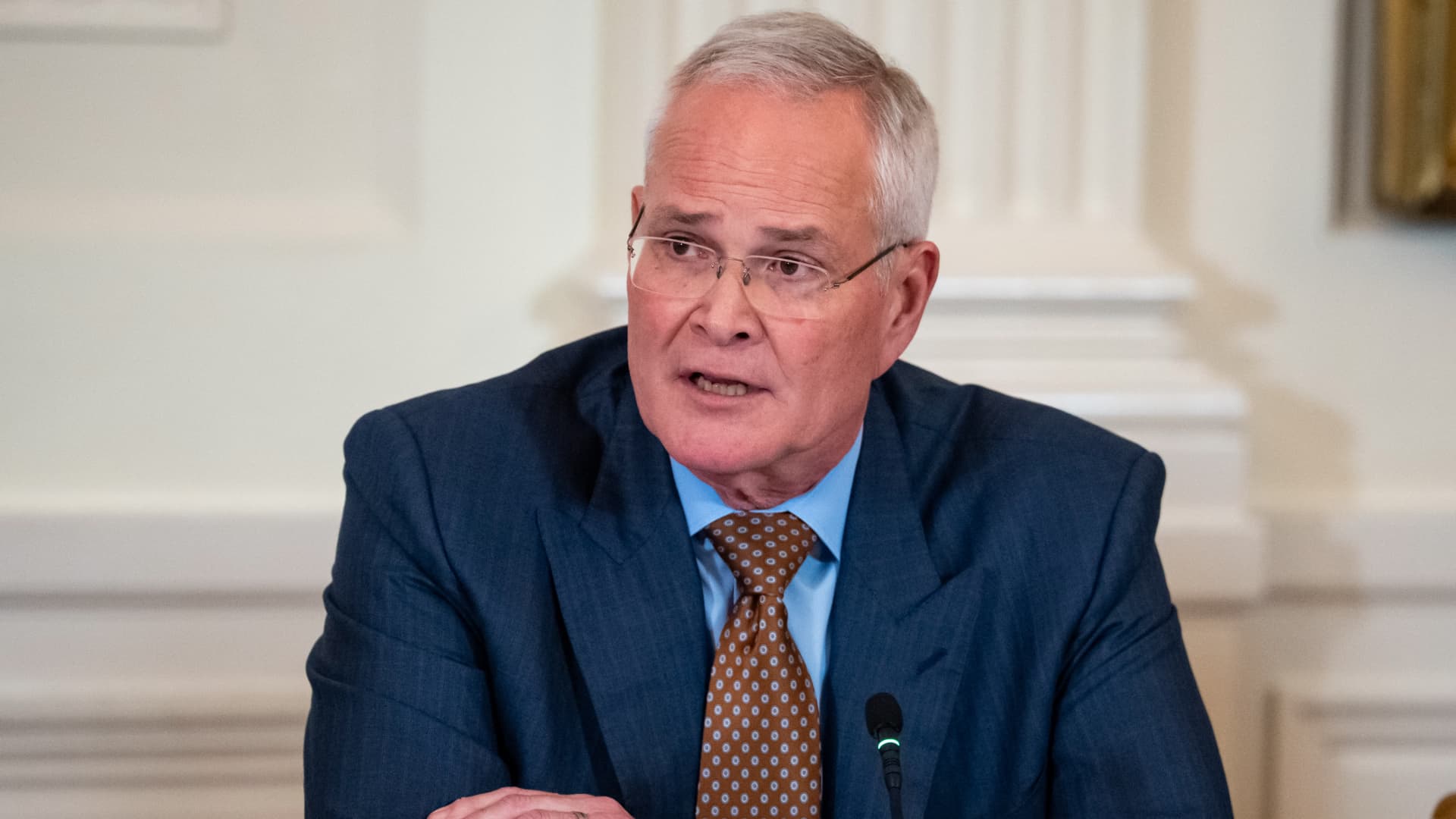

exxon mobil Chief executive Darren Woods warned on Friday that the market has not been able to fully absorb the impact of the unprecedented oil supply disruption caused by the Iran war and the closure of the Strait of Hormuz.
Mr. Woods told investors at Exxon’s first-quarter earnings conference that the disruption was alleviated by the large number of oil tankers in transit that had been loaded during the first month of the war. The CEO said strategic oil reserves had also been released and commercial stocks had been canceled.
Woods said that as the conflict drags on, one of those sources will become depleted. He said oil prices would rise as the strait remained closed.
“Given the unprecedented disruption in global oil and natural gas supplies, it is clear to most that the market has not yet seen its full impact,” Woods said.
“More things will happen if the Straits remain closed,” he said.
During the war, oil futures trading was volatile. Prices soared on the risk of escalation, then plummeted on hopes of peace, repeating the cycle. usa crude oil It fell more than 3% to $101.38 a barrel on Friday, while international benchmarks brent It fell about 2% to $108.
Woods said these prices are more in line with historical levels over the past decade than with the scale of the Middle East turmoil.
Woods expects oil flows from the Persian Gulf to normalize within one to two months after the strait reopens. The CEO said tankers had to be repositioned and supply backlogs had to be dealt with, adding to the time it took for ships to reach their destinations.
Woods said governments and industry will need to replenish strategic and commercial stocks if stockpiles are depleted at the end of a conflict. This will increase demand in the market and put upward pressure on prices, he said.
Exxon warned on Friday that production in the Middle East would be 750,000 barrels per day lower than in 2025 if the strait remains closed into the second quarter. Throughputs to refiners worldwide are expected to decline by 3% compared to the fourth quarter of 2025.
Woods told CNBC on Friday that about 15% of Exxon’s total production was affected by the strait closure.
An Iranian attack on a liquefied natural gas export site in Qatar damaged two production lines owned by Exxon, according to a report filed with the Securities and Exchange Commission in early April. The line accounted for about 3% of Exxon’s upstream production in 2025.
Exxon shares fell about 1% in intraday trading. While oil prices have risen about 57% since the start of the war through Thursday’s liquidation price, Exxon’s stock price has remained flat over the same period.
