

Asal, a 30-something freelance designer living in Tehran, was always receiving projects from abroad.
But after about two months without internet, she told CNN by phone: “No new projects, no replies. It’s like everything stopped overnight.”
On the verge of tears, she said her income was not enough to cover even basic living expenses. She and others interviewed by CNN for this article asked that only their first names be used for privacy reasons.
Assal is one of the millions of Iranians for whom Iran’s conflict with the United States and Israel is deeply personal. They lose their jobs and are pushed into poverty.
Few sectors have survived. Those newly unemployed include refinery and textile factory workers, truck drivers, flight attendants and journalists.
Before the conflict, Iran’s economy was in a dire state. Per capita national income has fallen from about $8,000 in 2012 to $5,000 in 2024, ravaged by inflation, corruption and sanctions.
The outlook worsens further. According to the United Nations Development Program (UNDP), the conflict could push up to 4.1 million more people into poverty.
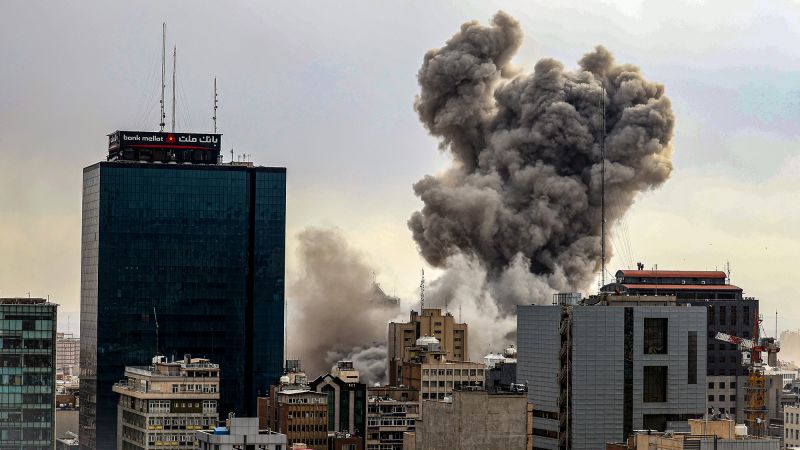
Physical damage from thousands of airstrikes has led to widespread displacement, according to UNDP. Media outlet Eco-Iran reported that more than 23,000 factories and businesses were damaged.
Iran’s Deputy Labor and Social Security Minister Gholamhossein Mohammadi says this is directly costing 1 million jobs. And Iranian publication Etemad Online estimates that an additional 1 million people have lost their jobs as a result.
The disruption to shipping and, by extension, imports has also disrupted Iran’s already fragile economy, putting “50% of Iran’s jobs at risk and pushing another 5% of its population into poverty,” said Hadi Kaharzadeh of the Quincy Institute, a foreign policy think tank.
“Many companies have ceased operations under the stress of war, inflation, recession, and demand collapse,” Kaharzadeh writes.
Official data showed annual inflation reached 72% in March, but essential goods were even higher.

Israel’s bombing of a giant petrochemical complex last month forced thousands of workers to take unpaid leave. Iran’s largest steel mills were also attacked, but two of them, Mobarakeh Steel and Khuzestan Steel, deny that they have fired any workers.
Still, the severe damage to heavy industry is having ripple effects throughout the economy. Trailer manufacturer Maral Sanat, headquartered near the border with Azerbaijan, has laid off 1,500 workers, citing a steel shortage. Boljerud, one of Iran’s largest textile companies, has laid off 700 employees.
Many dairy factories have shut down due to a lack of essential packaging materials, said Qaharzadeh of the Quincy Institute.
“I was about to leave for my flight when a colleague called me and told me that everything had been cancelled. Our contract ended in March, so we won’t be paid until flights resume,” Soheila, a senior flight attendant, told independent news site Faral on February 28.
This pattern is repeated across the country and industry. Official data shows the number of people applying for unemployment insurance has increased sharply, with 147,000 applications in the past two months, almost three times as many as last year.
“The burden is greatest on undocumented workers and low- and medium-skilled workers in the formal sector, who have the least protection and political influence,” Kaharzadeh said.
Iranian media reported that the country’s largest e-commerce company Digikara has begun a wave of layoffs across multiple departments. State news agency ILNA reported that “the companies and workers who depend on the internet, which could have provided strategic support for controlling the post-war unemployment crisis, have themselves been significantly weakened.”
Jafar, a data analyst, told Faral that his company had completely shut down and more than 50 employees lost their jobs. “Right now, I’m thinking about working for a ride-hailing service just to survive. I have rent, debt, and no idea what’s going to happen next,” he was quoted as saying.
Lack of internet access is a particular problem for women who work from home.

Somae, a 50-year-old from Isfahan, has been teaching German online for years. Her classes used to be full, but without internet access, she had to switch to a less reliable national app.
“Nothing works properly anymore,” she told CNN by phone. “Not all students can be online at the same time. The platform keeps crashing.”
Since the war began, women have accounted for a third of all unemployment claims.
As state revenues dry up, the number of unemployed people is putting further pressure on an already strained social security system.
But Etemade said without immediate government support, such as tax and insurance deferrals, low-interest loans and special support for small and medium-sized enterprises, the wave of unemployment is likely to grow even larger.
The economic crisis has increased criticism of the government’s economic policies.
Said Tajik, a member of the Tehran Chamber of Commerce and Industry, said in an interview with Faral: “The government has ordered a 60% increase in the salaries of employees, while allowing many of them to work remotely with full salaries. Meanwhile, economic enterprises cannot afford to pay wages and are laying off employees.”
The Chamber of Commerce said preserving jobs must be the country’s top economic priority and called on businesses to stand by workers “with compassion and sacrifice” during this crisis.
The government claims that this hardship is the result of an unjust war waged by the United States and Israel against the Iranian people. It is reported that the country plans to expand monthly vouchers that help the poorest people with basic necessities.
Inflation, unemployment and shortages have created a “dire and complex situation”, the conservative Ettelerat newspaper wrote on Monday. “These problems cannot be ignored with polite words or general statements. Governments may soon need special programs for the wartime economy.”
Even before the war began, hardship and inflation sparked nationwide protests that were brutally suppressed.
The outlook is dire, with the war reaching an unresolved stalemate in nearly every class across Iran.
“Loss of income is bad, but what’s worse is this constant uncertainty. We don’t know what’s going to happen next,” Somayeh, a language teacher in Isfahan, told CNN.
