

Lee este artículo en español
With less than two months until the 2026 World Cup, one of Mexico’s host cities is facing an alarming trend.
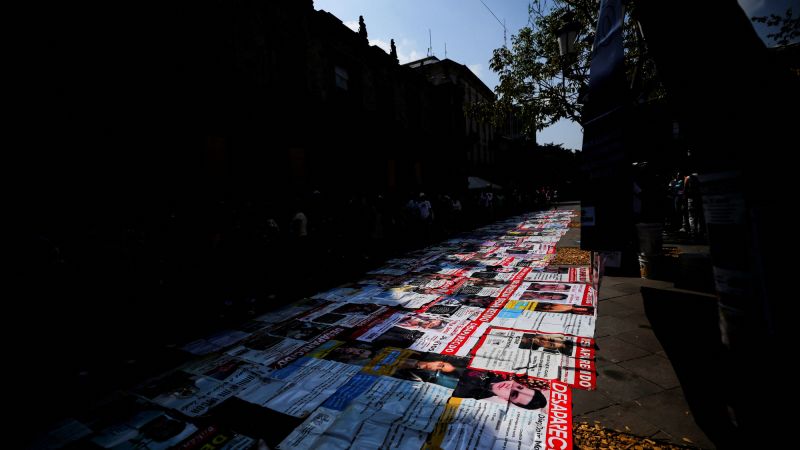
Residents of Guadalajara, a city in Jalisco state plagued by drug violence and thousands of disappearances, are worried about their safety.
According to a national public security survey released Friday by the National Institute of Statistics and Geography (Inegi), nine out of 10 residents, or 90.2%, consider the situation in their area to be unstable.
Inegi said this was an increase from 79.2% of those surveyed in December 2025, calling the increase a “statistically significant difference.”
Security in Mexico, one of three North American countries hosting the World Cup, is a major concern heading into the tournament. Concerns have been heightened in the Guadalajara metropolitan area since February, when federal forces carried out an operation in Jalisco state to arrest Nemesio Oseguera Cervantes, also known as “El Mencho,” the leader of the Jalisco New Generation Cartel (CJNG).

Car damaged and windows smashed after ‘El Mencho’ murder in Guadalajara, Mexico

The group is considered one of the “most powerful and ruthless criminal organizations” in Mexico, according to the U.S. Drug Enforcement Administration. It was designated a terrorist organization by the United States just weeks into President Donald Trump’s second term.
“El Mencho” suffered serious injuries during the surgery and died on the way to the hospital. His death sparked a wave of chaos and violence in various regions of Jalisco, including Guadalajara, Zapopan, and Puerto Vallita.
There is also growing awareness of insecurity in Zapopan, a city in the Guadalajara metropolitan area where the stadium that will host World Cup matches is located.

In the city’s latest survey, interviews were conducted from February 23, just one day after El Mencho’s death, and 70% of respondents said they felt unsafe.
This number is more than 16 points higher than in December, when more than 54% of respondents said they felt unsafe. In the first quarter of 2025, this number was 44.6%.
Meanwhile, in Puerto Vallarta, views of the city as unsafe are below the national average of 61.5%, but Friday’s survey still showed a significant increase.
In fact, the popular resort city saw the biggest increase in the nation, increasing almost 28 points from 32% last December to 59.9%. This means that the number of people who feel less safe has effectively doubled.
With 90.2% of people feeling unsafe, Guadalajara ranks second in the nation as the city most people feel is unsafe. It was followed only by Irapuato (92.1%) in Guanajuato, another state plagued by organized crime. So far in 2026, Guanajuato leads the nation in recording violent deaths, with 413 victims of intentional homicide and 5 victims of female homicide.

In Mexico City, perceptions of deteriorating security remain relatively stable in the two municipalities closest to Banorte Stadium, which will host the World Cup for the third time.
More than 44% of those interviewed said they felt unsafe in Coyoacán, down from 47.2% in December. Tlalpan Autonomous Region recorded a slight increase, rising from 55.7% in December to 57.9% in the survey released Friday.
The third World Cup venue in Mexico is Monterrey, the capital of the state of Nuevo Leon. In the city, 59.7% of those interviewed said they felt unsafe, a notable decrease compared to 67.4% in December.
Guadalupe City, where Monterrey Stadium is located, also saw a decline in perceptions of insecurity, dropping from 44.2% in December to 37% in April.
