


A looming jet fuel shortage could be a huge blow to Americans’ summer travel plans, especially those flying internationally. But travel experts say there are some steps consumers can take to isolate themselves and minimize disruption.
The Iran war and resulting disruptions to global oil supplies have raised concerns that jet fuel stocks in some parts of the world may soon begin to dwindle. The International Energy Agency announced Thursday that Europe, for example, may have just six weeks’ worth of jet fuel left.
Potential shortages and rising jet fuel costs are causing some airlines to reduce flight schedules, potentially upending plans for people who may have to find alternative flights or choose to postpone or cancel their trips.
And while flight reductions have been largely modest so far, they could worsen as the peak summer travel season approaches.
“It’s almost like a timer is going off,” said Katie Nastro, a travel expert at the travel trading site Going. “It’s like the SAT. Once the timer runs out, it’s over and you can’t fly anymore,” she said.
Iran war, jet fuel shortage due to Strait of Hormuz
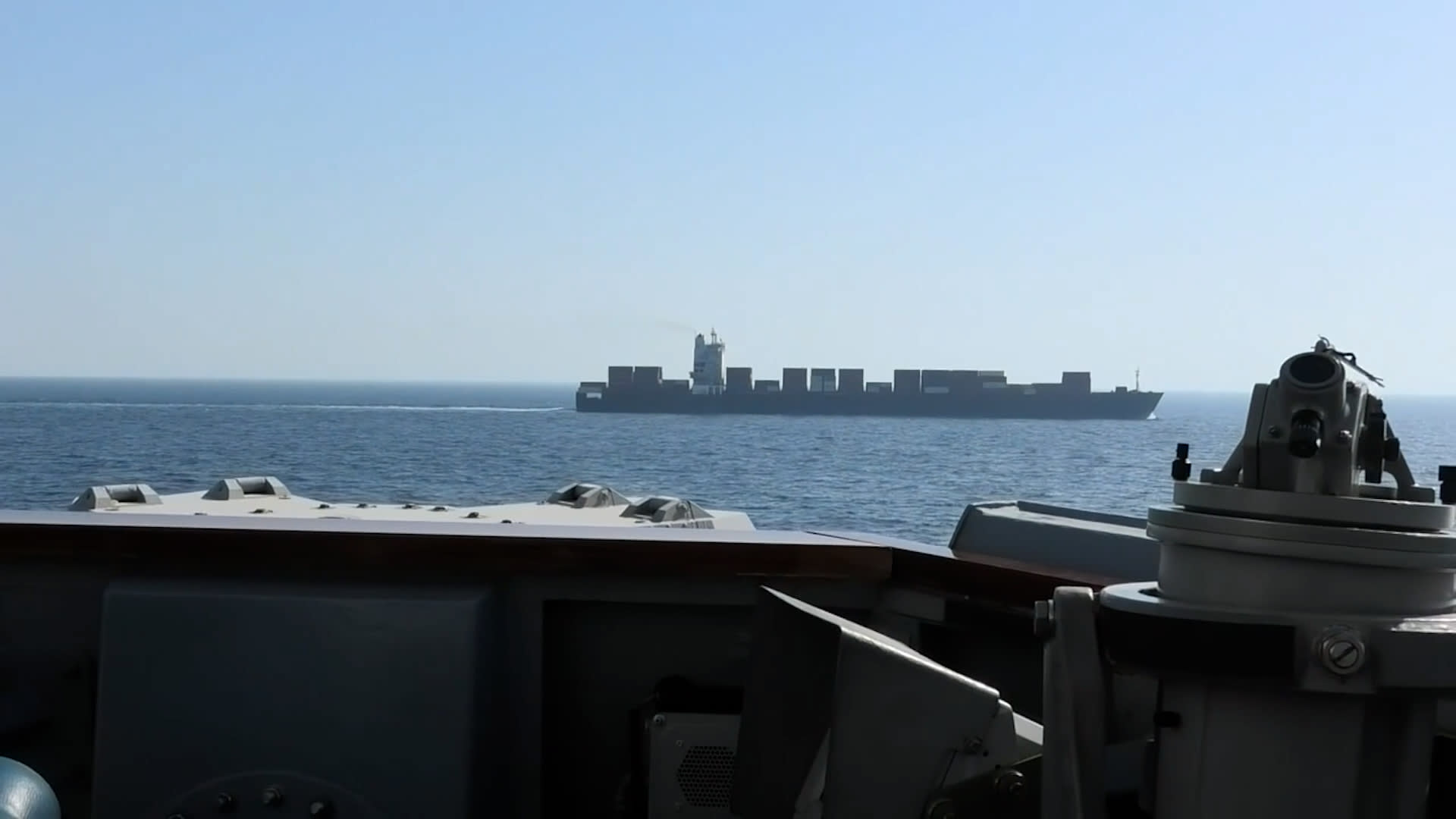
This screenshot from a video released by U.S. Central Command shows U.S. forces operating in the Arabian Sea imposing a naval blockade on an Iranian-flagged cargo ship attempting to sail toward an Iranian port in the Arabian Sea on April 19, 2026.
U.S. Central Command | Getty Images
The ongoing Middle East conflict has led Iran and the United States to blockade Iranian ports in and around the Strait of Hormuz, a maritime route through which about 20% of the world’s oil supplies pass.
About 25 to 30 percent of the world’s jet fuel refined from petroleum flows through waterways, said Stephen Rooney, chief economist at Tourism Economics.
Looney said the United States is somewhat insulated from potential jet fuel shortages because it produces a significant portion of its jet fuel inventory domestically compared to other parts of the world. But airlines in Europe and Asia are more at risk because they rely heavily on fuel imports.
“What do you do if you don’t have as much fuel as you can buy?” Rooney said. “It’s a pretty unprecedented situation.”
“I don’t think we’ve reached a full crisis situation yet,” he said. “Six weeks is a long time, so we hope something gets resolved. There’s still time to get jet fuel back on.”
Looney said that while the U.S. would not experience any potential shortages in the coming weeks, inventory shortages in other parts of the world would likely “put significant upward pressure” on jet fuel prices for U.S. airlines.
Jet fuel is one of airlines’ largest operating costs, and airlines are taking a variety of steps to cushion the financial impact of higher prices, including raising airfares, increasing baggage fees, adding fuel surcharges and cutting capacity.
“Capacity for non-U.S. airlines to and from U.S. markets is expected to contract by 2.3% year-on-year in the June 2026 quarter, compared to the same period last year… Rising fuel prices and possible restrictions on jet fuel availability could significantly reduce supply,” Deutsche Bank analysts said in a research note on Sunday.

So far, only a handful of airlines have announced cuts to their schedules, and most have done so at the last minute, rather than drastically, experts say.
Going’s Nastro gave several examples.
Vietnam Airlines plane seen at Bangkok’s Suvarnabhumi Airport. Wednesday, January 2, 2020, Suvarnabhumi Airport in Bangkok, Thailand. (Photo credit: Artur Widak/NurPhoto, Getty Images)
Null Photo | Null Photo | Getty Images
For airlines to reduce capacity by perhaps 5% or less is “not a big deal in the grand scheme of things,” Nastro said.
“So while there is certainly a risk of flight cancellations due to reduced frequency (or cancellation), that is not necessarily bad news for any particular trip,” she said.
President Donald Trump told CNBC on Tuesday that he thinks the United States will “eventually come to a big deal” with Iran to end the nearly two-month war. But Trump also said the U.S. military is “ready” to bomb Iran if a deal is not signed by the two-week cease-fire deadline that expires on Wednesday.
“The longer this (conflict) drags on, the more likely there will be further capacity cuts, which could make the situation even worse,” Nastro said.
What travelers can do
Travelers wait in line for security at Terminal 5 at John F. Kennedy International Airport in New York on March 27, 2026.
Michael M. Santiago | Getty Images
Experts say there are things travelers can do to minimize potential distress. Here are some tips.
1. Know your rights
Each airline has its own policy regarding liability for passengers facing delays and cancellations.
To help you choose your options, the U.S. Department of Transportation has compiled a summary of services that U.S. airlines agree to provide to customers to alleviate passenger inconvenience in the event of a flight cancellation or delay due to circumstances under the airline’s control.
According to the Department of Transportation, federal regulations require airlines to promptly issue refunds to ticketed passengers if they cancel a flight or significantly change their itinerary for any reason, even if they have a non-refundable ticket. In order to receive a refund, the passenger must not accept any alternative offered by the airline, such as rebooking on another flight.
A worker refuels a Delta Airlines plane at Salt Lake City International Airport on April 9, 2026 in Salt Lake City, Utah.
Justin Sullivan | Getty Images
Experts say airlines typically offer alternative flights when travelers cancel or make significant changes to their flights, and may automatically rebook passengers on another flight.
But travelers don’t have to accept that alternative. Nastro said that even when there is a difference in fares, passengers usually don’t have to pay extra to choose a different option.
Sarah Lassner, a travel expert at NerdWallet, said if flights are affected, for example, passengers may be eligible for meal vouchers or hotel room vouchers, so don’t be afraid to ask your airline for those.
She said it’s a good idea to document your transactions and keep your receipts so you can claim them later.
To see what options are available to you for refunds, meal and lodging vouchers, or frequent flyer miles, depending on the airline, the DOT has a dashboard outlining its policies for U.S. airlines.
2. Verify contact information
Nastro says make sure the airline has your correct contact information on file in case you need to contact them about a change to your flight.
If you book your flight online, please make sure your phone number and email are up to date. Also, make sure the airline hasn’t issued any notices or messages, she said.
“The worst thing that can happen is you don’t know anything and you show up at the airport and your flight gets cancelled,” Nastro said.
3. Act quickly
NerdWallet’s Lassner said if an airline contacts you about a flight cancellation or itinerary change, “act quickly.”
“The sooner you contact your airline, the more options you will have,” she said. “I don’t want to sit in this for too long.”
Similarly, if you’re planning a trip, don’t ignore emails, texts or other messages you receive from your airline in the lead up to your flight, she said.
If your flight is canceled or significantly delayed while you’re at the airport, she said, “take every step available to you” to understand your options. Ratner said customers must wait in line to speak to a gate agent, either by calling the airline’s customer service line or using an app.
3. Fly non-stop
Flying direct to your destination is usually more expensive than booking a flight with a connecting flight.
But experts say it’s a good strategy for travelers who can afford to travel and want to minimize disruption.
“Right now, I think it’s better to fly non-stop if you can,” said Going’s Nastro.
4. Consider travel insurance
Travel insurance or a credit card with travel benefits may help cover unpaid expenses caused by an interruption in your itinerary.
However, covered costs vary by policy, so consumers should read the details, NerdWallet’s Lassner said.
Certain policies, such as “cancellation for any reason” or “interruption for any reason” coverage, offer passengers more flexibility, but they typically come with caveats, such as higher upfront costs.
