

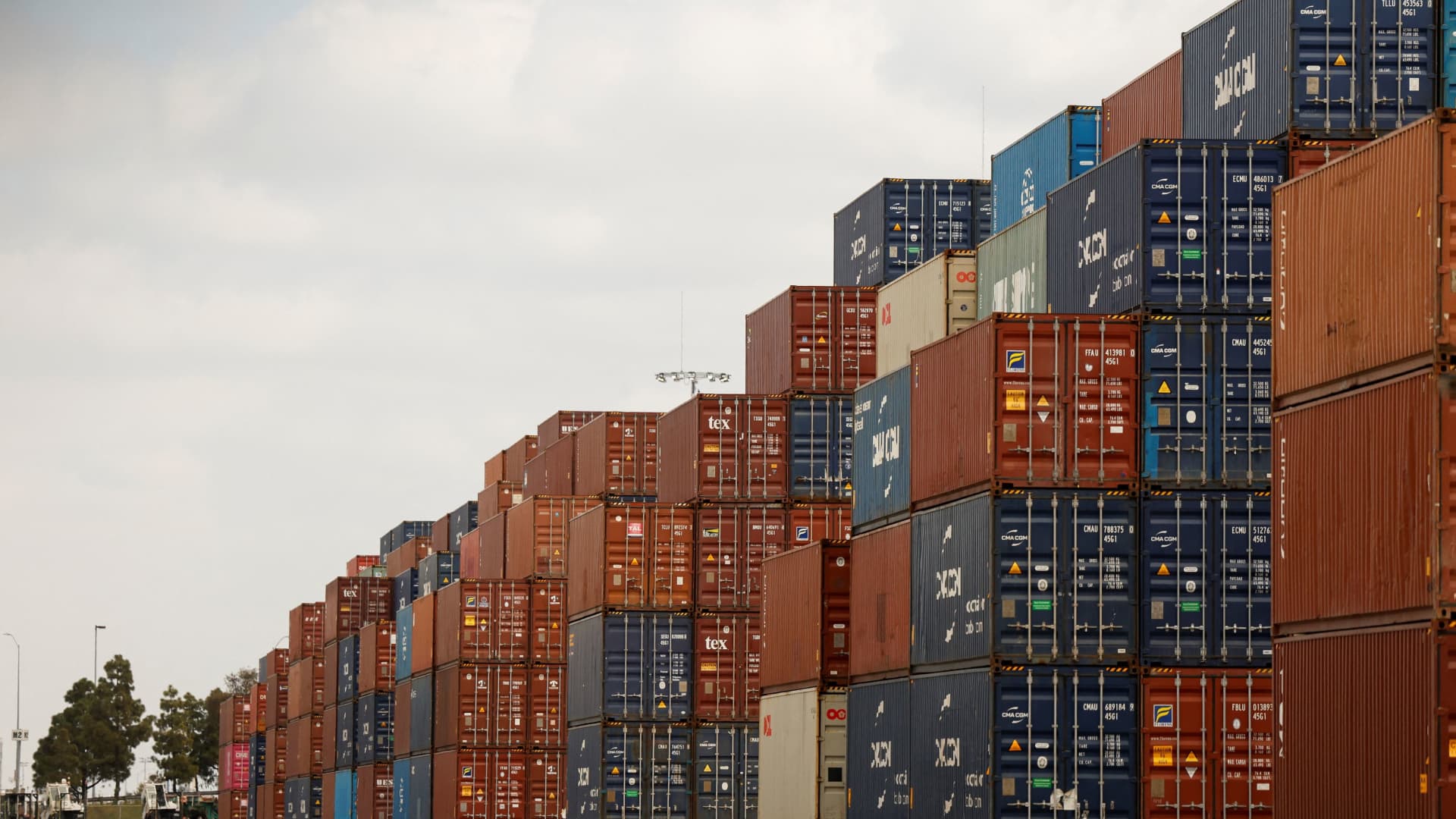
Shipping containers stacked at the Port of Los Angeles in Long Beach, California, USA on March 10, 2026.
Caroline Breman | Reuters
Retailers have warned that the Middle East conflict is raising costs and could lead to higher prices if the war continues in the short term.
Instability in the Middle East could not only constrain growth in the region but also have knock-on effects on costs, selling prices and consumer demand for other businesses, UK retailers have warned. Next on Thursday.
The company assumed that the disruption would last for three months and included 15 million pounds ($20 million) in additional costs that could arise from the conflict, including fuel and air transport. It added that the cost increases are offset by savings in other areas and therefore do not impact guidance.
“If these costs are expected to continue beyond the next three months, we will begin to pass them on as cost increases,” the company said early Thursday when reporting its financial results for the fiscal year ending in January. The Middle East accounts for approximately 6% of Next’s total sales.
A prolonged war in the Gulf could be a double whammy for retailers, as it could increase inflationary pressures, disrupt supply chains and raise the overall cost base. It could also have a negative impact on demand, as rising costs of living put more pressure on consumers and reduce spending on discretionary items.
The Iran war and the de facto closure of the Strait of Hormuz have sent oil and gas prices soaring since the first airstrikes on February 28, upending inflation expectations in Europe and beyond.
Philip Lane, the European Central Bank’s chief economist, said on Wednesday that business expectations for price increases and new hire wages are some of the key inflation indicators monitored by the European Central Bank.
cost pressure
H&M said on Thursday: “The prolongation of the current geopolitical instability in the Middle East could result in some additional cost pressures.”
The Swedish retailer has relatively low involvement in the Middle East, with around 3% of its stores in the region and a low proportion of air freight in its supply chain.
“On a global scale, we don’t see a significant impact on consumer behavior right now, but we are very aware that consumers have been under high inflationary pressures for a long time and higher energy prices will have a knock-on effect,” H&M CEO Daniel Herbert said on a call with analysts after Thursday’s first-quarter results.
But if the dispute continues, there could be a “significant impact” on consumer behavior, Elbert added, without elaborating on when that impact is expected.

Analysts say retailers that value discretion are likely to be negatively affected by the war, as it adds uncertainty to already weakened consumers.
H&M will invest in improving quality, in-season purchasing and competitive pricing to remain competitive and relevant to customers, the company said.
Analysts at Jefferies said that while H&M’s announcement does not yet appear to signal a major shift in consumer behavior outside the region, it “preempts the potential for a more permanent impact on consumer disposable income if energy costs continue to rise.”
H&M reported early Thursday that first-quarter local currency sales fell 1%, but the company said profitability exceeded expectations due to good cost management. The report said it was “a quarter marked by cautious consumption and the impact of large currency fluctuations.”
Shares fell 2.2% in late morning trading, partially offsetting earlier losses.
Meanwhile, Next shares rose 5% after the London-listed fashion brand increased its pre-tax profit forecast for next year by £8m to £1.21bn.
“We view this latest information as reassuring of strong UK trade and potential cost-shifting capabilities, in contrast to the well-known (Middle East) turmoil,” Jefferies analysts said in a statement on Next.
