

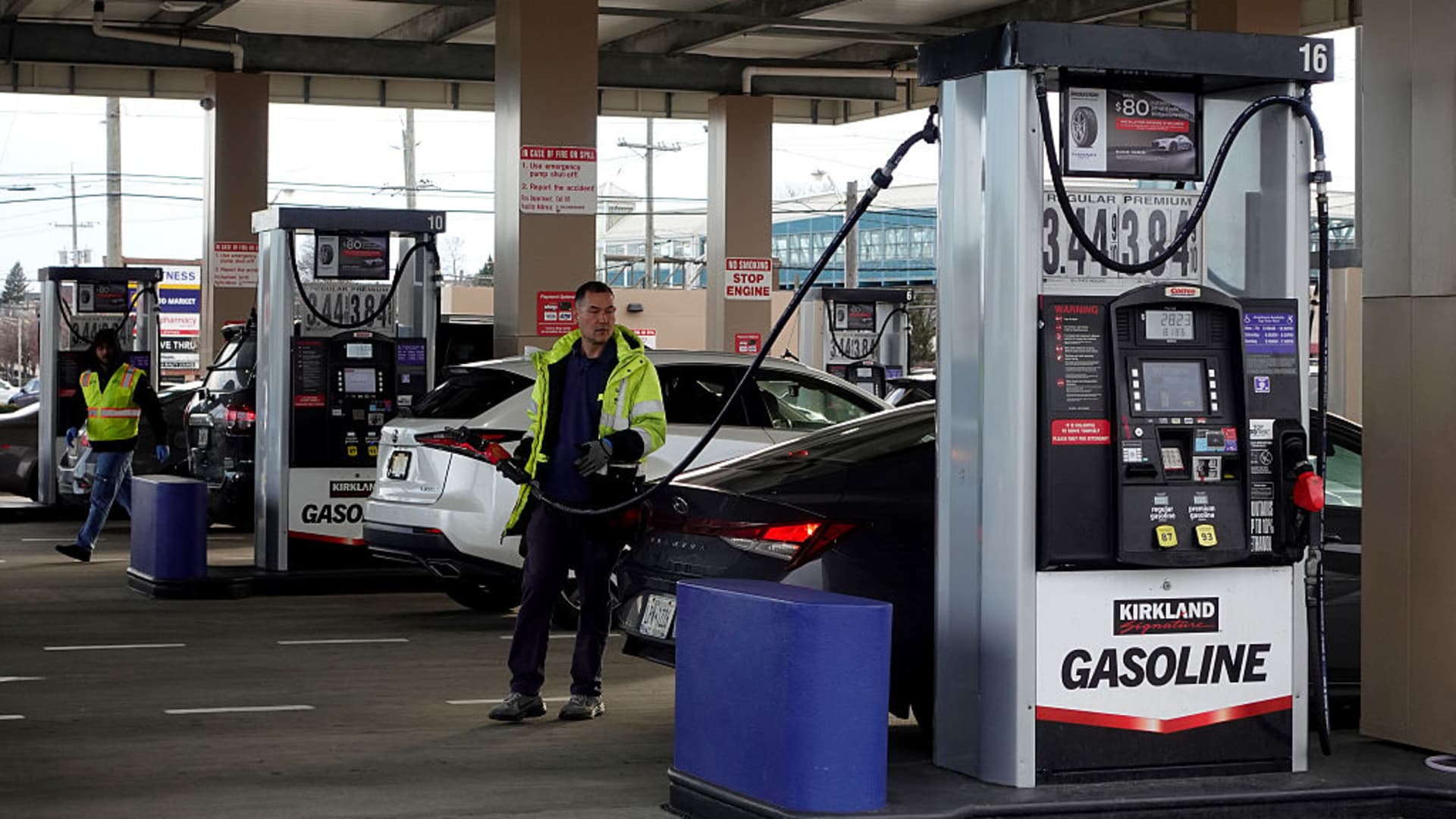
A vehicle fills up its gas tank at a Costco wholesale store on March 21, 2026 in Bayonne, New Jersey.
Gary Hershawn | Corbis News | Getty Images
HOUSTON – The Trump administration on Wednesday temporarily lifted restrictions on the types of gasoline that can be sold in the summer, aimed at mitigating soaring fuel prices during the Iran war.
The Environmental Protection Agency has lifted restrictions on the sale of E15 gas, a fuel blended with 15% ethanol. Sales of E15 will be restricted in about half of the United States from June to September due to regulations aimed at reducing air pollution.
EPA said it has also issued a waiver to remove any federal impediments to the sale of E10 gas blended with 10% ethanol. E10 is widely available throughout the year.
The agency also halted federal enforcement of certain state fuel requirements, allowing the production and distribution of gasoline with 9% to 15% ethanol content.
“EPA’s waiver will help prevent disruption to the nation’s fuel supply by keeping E15 and E10 on the market and giving Americans more fuel options,” EPA Administrator Lee Zeldin told reporters at S&P Global’s CERAWeek conference in Houston, Texas.
Zeldin said the exemption will take effect May 1 and last until May 20, but could be extended.
“We will continue to monitor the supply situation with our industry and federal partners,” the EPA administrator said. “The agency stands ready to extend the emergency fuel exemption as ongoing issues continue to demonstrate the need for action.”
Since the start of the U.S. war with Iran, gas prices have risen more than 30% to $3.98 per gallon due to the ensuing massive oil supply disruptions, according to data from travel association AAA.
Prices are currently at their highest level since 2022, when Russia’s invasion of Ukraine shook global energy markets.
Diesel prices rose more than 40% to $5.37 per gallon. This fuel is used by trucks and freight trains that transport goods to market. Energy Secretary Chris Wright told CNBC on Monday that the administration has plans to increase diesel supply.
“In terms of diesel, the idea is that we could bring additional diesel to market,” Wright said in an interview with CNBC’s Brian Sullivan. “I think it will happen before too long.”
