

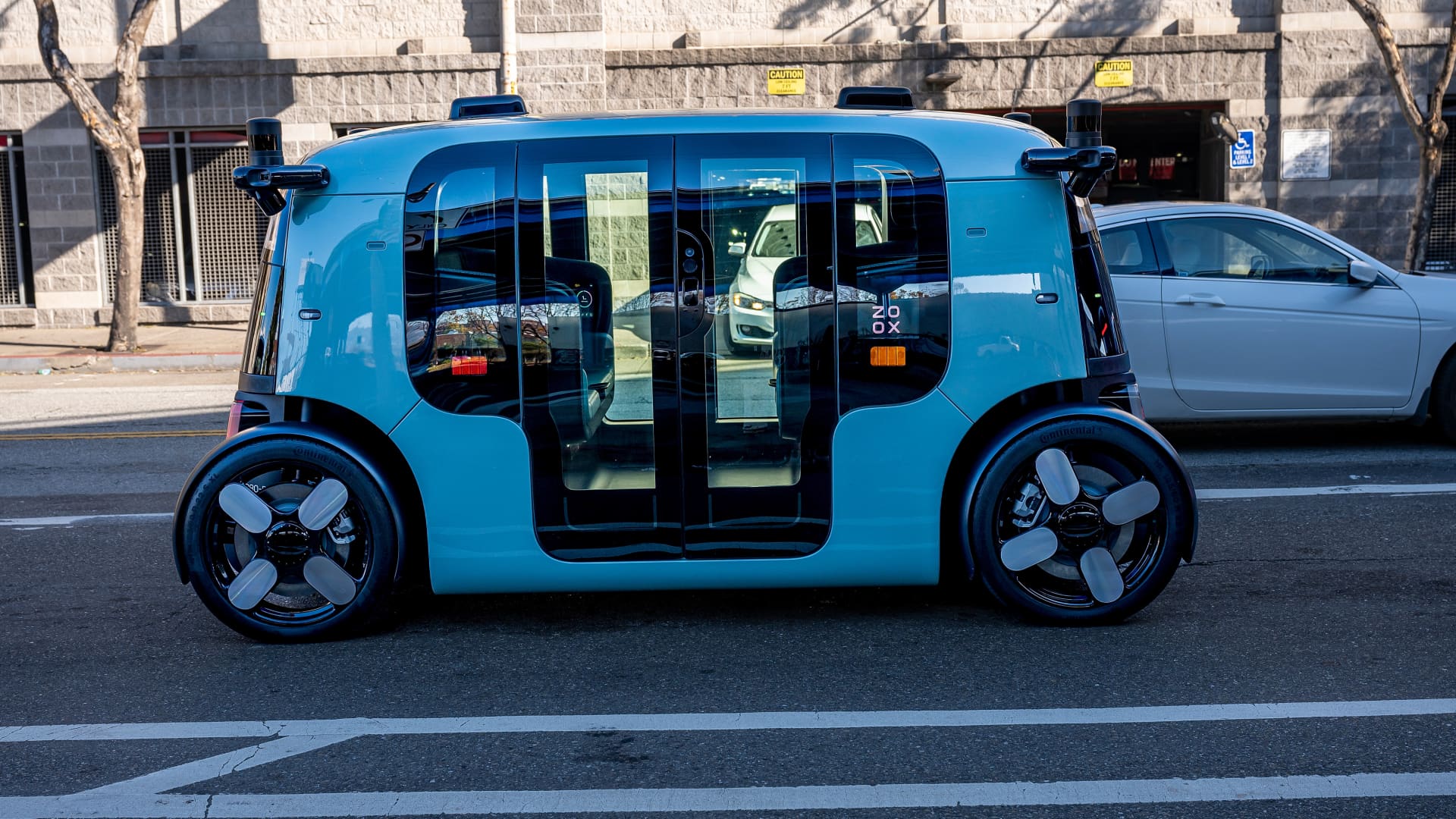
Zoox self-driving robotaxi in San Francisco, December 4, 2024.
David Paul Morris | Bloomberg | Getty Images
AmazonZoox’s self-driving division is preparing to launch robotaxi service to the public in parts of Austin and Miami later this year, the company announced Tuesday.
Zoox will soon deploy its toaster-shaped robotaxis, which have no steering wheel or pedals, for testing in “small areas” in both cities. Trips will initially be limited to Zoox employees and their family and friends, before the Explorer program launches and the general public will be able to join the vehicle waiting list.
The company has been gradually opening up its robotaxi service to the public over the past year.
Zoox, which was acquired by Amazon in 2020, began offering free driverless rides last year in parts of the Las Vegas Strip and San Francisco. The company said it had served 350,000 passengers as of late March, with about 500,000 people on its waiting list.
Zoox is racing to catch up alphabetWaymo is the US robotaxi leader. Waymo currently offers 400,000 paid rides per week in six metropolitan areas in the United States. It currently operates the service commercially in 10 U.S. cities and is aiming to expand to London and Tokyo this year.
As part of Tuesday’s announcement, Zoox is also expanding its service area in San Francisco and Las Vegas.
The move will quadruple Zoox’s coverage in San Francisco to include the Marina, North Beach, Chinatown, the Pacific Heights area and along the Embarcadero. Previously, its services were limited to the city’s SoMa, Mission and Design districts.
Zoox in Las Vegas ball and T-Mobile arena later this spring. It is also preparing to transport passengers to Harry Reid International Airport in the coming months.
The company is currently testing self-driving technology in 10 U.S. cities. Zoox robotaxis will soon be roaming the streets of Atlanta and Los Angeles, CEO Aicha Evans said in an interview. Its modified Toyota Highlander has been collecting data there since last year.
Once Zoox expands its service in Las Vegas and San Francisco, it will put 100 robotaxis on public roads and begin testing in Austin and Miami, the company said.
Zoox’s biggest hurdle continues to be launching a paid service, in addition to producing enough robotaxis to meet passenger demand. The company is awaiting approval from the National Highway Traffic Safety Administration to put up to 2,500 self-driving cars on public roads for commercial purposes.
The agency plans to publish its decision on Zoox’s proposal after a 30-day comment period that began March 11.
“We’re ready to charge. Especially in Las Vegas, obviously we’ve been there a long time,” Evans said.
Earlier this month, Zoox entered into partnerships with: Uber Starting this summer, robotaxis will be available in Las Vegas through a ride-hailing app. Uber is partnering with several robotaxi companies, including Waymo, to secure its future in the growing self-driving car market.
Evans said the company expects to “learn a lot” from its partnership with Uber. However, she added that the Zoox app will be the primary means of dispatching the company’s vehicles “for the foreseeable future,” declining to speculate on what percentage of vehicles will be distributed through ride-hailing partners.
“This is a long journey. We’ve been working on this for 12 years. We’ve been very consistent and very stubborn,” Evans said. “You’re not going to wake up tomorrow morning and see a million robotaxis running everywhere.”

