

International Energy Agency (IEA) Director-General Fatih Birol speaks at the National Press Club in Canberra, Australia, Monday, March 23, 2026.
Bloomberg | Bloomberg | Getty Images
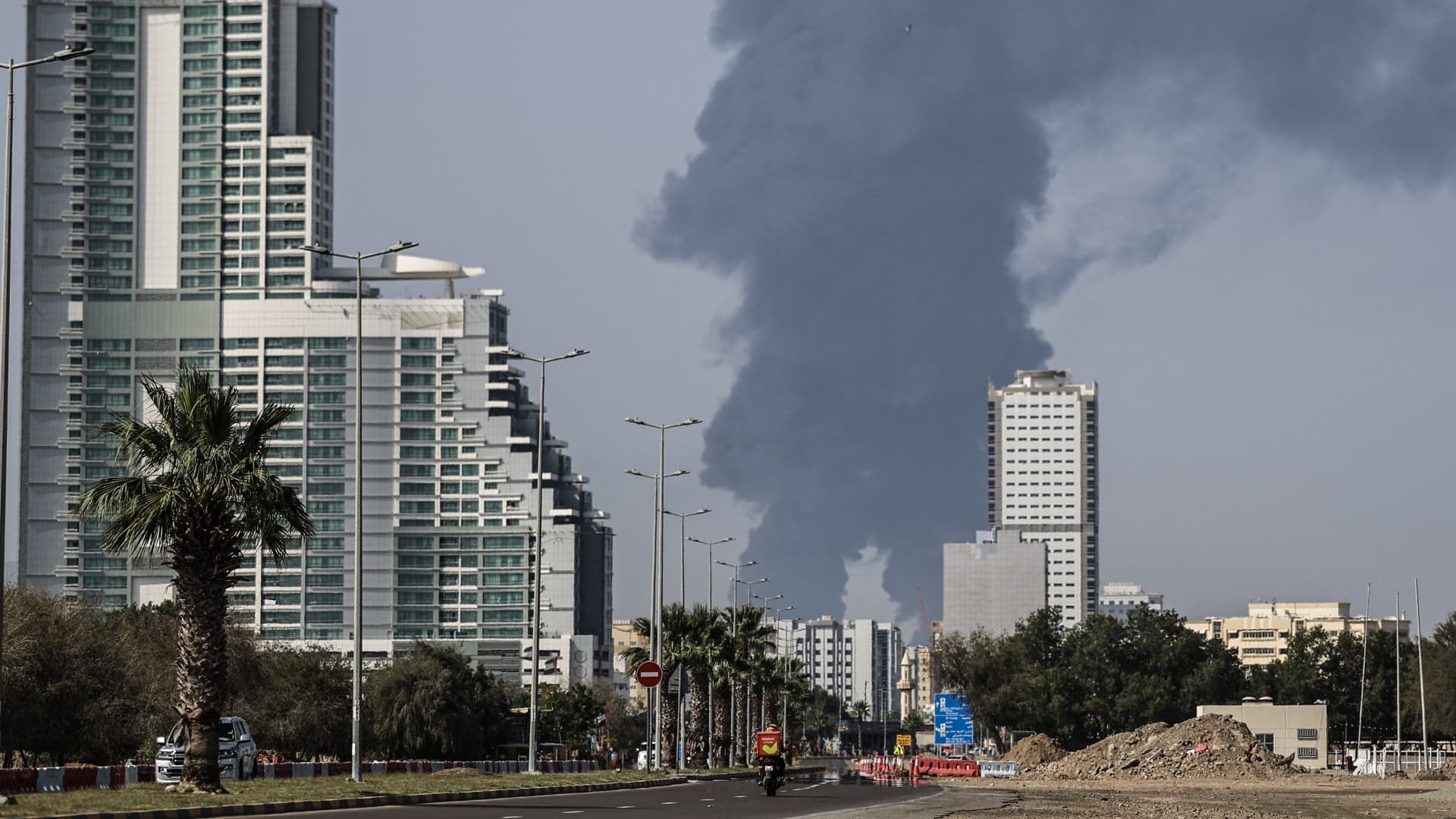
At least 40 energy assets in nine Middle Eastern countries have suffered “severe or very severe” damage since the Iran war began, the head of the International Energy Agency said on Monday, raising concerns of long-term supply disruptions.
IEA Director-General Fatih Birol, speaking at the National Press Club in the Australian capital, said damage to oil and gas fields, refineries and pipelines across the Middle East will take time to repair.
His comments come as market participants are closely monitoring threats from the United States and Iran over energy facilities as the major regional conflict enters its fourth week.
The Iran war has significantly disrupted the flow of energy trade through the strategically important Strait of Hormuz, causing the largest supply disruption in the history of the global oil market, according to the IEA. Global liquefied natural gas (LNG) supplies have also fallen by about 20% since the conflict began on February 28.
Birol said the impact of the Iran war would be comparable to the two major oil crises of the 1970s and the 2022 gas crisis “combined.”
He added: “And hopefully not just oil and gas, but petrochemicals, fertilizers, sulfur, helium, some of the key arteries of the world economy. All those trades are being disrupted, and that will have a severe impact on the world economy.”
US President Donald Trump on Saturday threatened to “destroy” Iran’s power plants unless the Iranian government fully reopens the Strait of Hormuz within 48 hours.
This narrow waterway is an important maritime corridor connecting the Persian Gulf and the Gulf of Oman. Typically, about 20% of the world’s oil and gas passes through it.
In response, Iranian parliamentary spokesperson Mohammad Baqer Qalibaf said that if Iranian power plants were attacked, critical infrastructure and energy facilities in the Gulf region could be “irreversibly destroyed.”
Given that shipping has virtually stopped in the Strait of Hormuz since the conflict began, IEA’s Birol said reopening the waterway was the “single most important” solution to the global energy crisis.
He singled out Asia as being on the front lines of the energy shock from the Iran war and said the IEA was ready to follow up on the historic 400 million barrels of oil released into the market on March 11.
“If it’s necessary, of course we’ll do it,” Birol said.
—CNBC’s Anniek Bao contributed to this report.
