

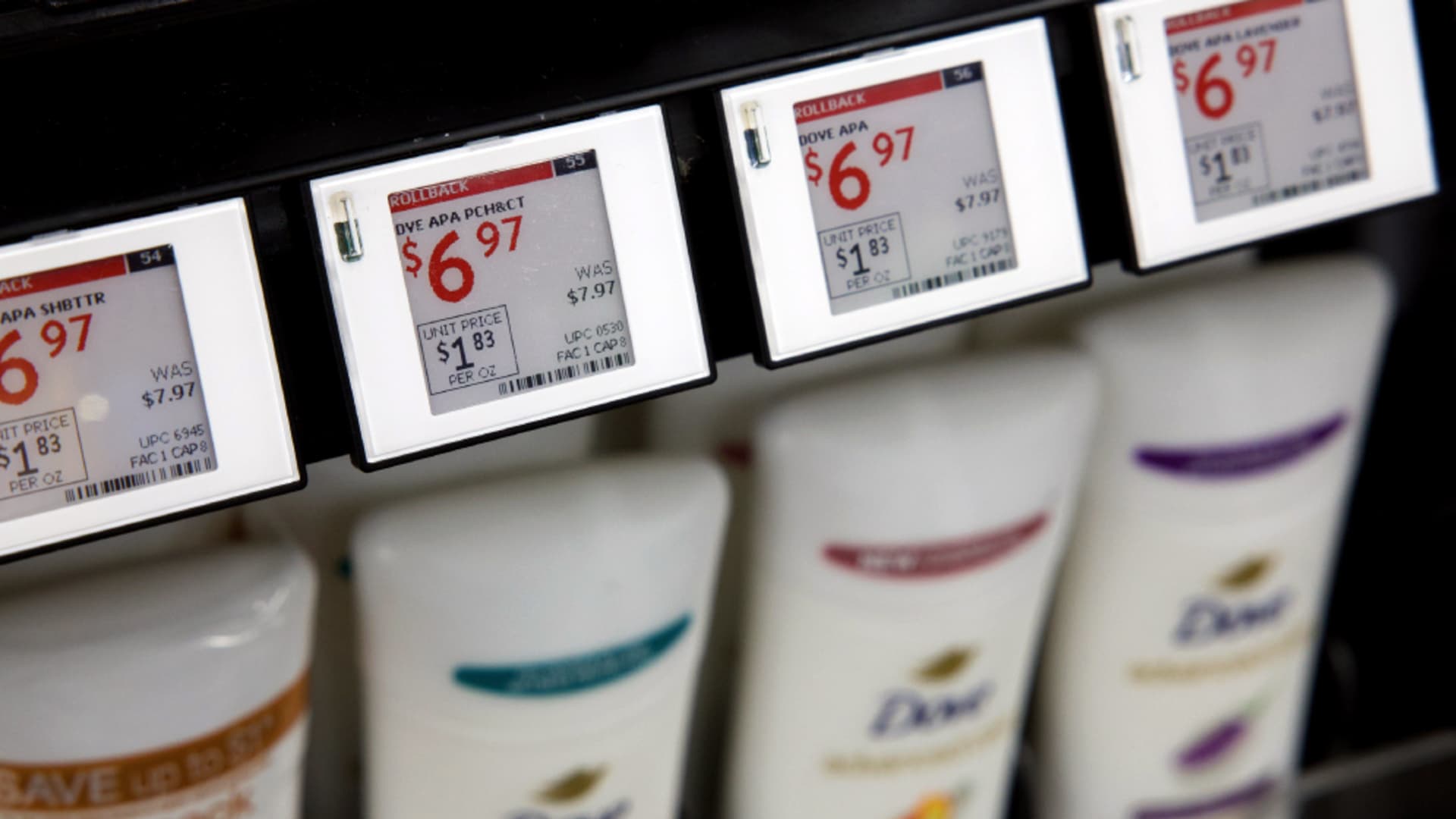
While the technology and digital landscape has transformed American retail, some parts of life have remained the same. For example, grocery store aisles look much the same as they did 50 years ago. Sure, the price stickers on products have been replaced with barcodes, but otherwise the aisles look much the same. But the biggest change since barcodes were introduced is in the most important shelf space for planners.
walmart is currently rolling out digital price tags to replace the old paper ones. The plan is to roll out the price tag in all stores across the U.S. by the end of the year. It’s not just Walmart. grocery giant kroger has also begun experimenting with this technology. The speed of digital tags promises to make stores more efficient in an era of supply chain shocks and inflation, but it has also raised concerns from lawmakers about skyrocketing prices.
Amanda Bailey, a team leader in the electronics department at Walmart in West Chester, Ohio, estimates that digital shelf labels, known as DSL, have reduced the time she previously spent on pricing tasks by 75 percent, freeing up time to support customers. He also said DSL is a game-changer because Walmart Spark delivery drivers looking for items will see a flashing DSL, making it easier to find items.
Mr Bailey acknowledged that any changes could cause consumer alarm, but set aside concerns about soaring prices. “They’re not used to seeing digital tags. They think the price is being increased, but what they’re really doing is eliminating the process,” Bailey said.
Scott Benedict, a retail consultant and former Sam’s Club and Walmart executive, said customers’ concerns are understandable but probably overstated. “When retailers introduce technology that allows them to change prices in minutes, shoppers naturally wonder how it will be used,” Benedict says. But trust is fragile at grocery stores, where shoppers track prices weekly, he said. “Every penny counts and people notice small changes, and this is especially sensitive right now given inflation, tariffs and broader economic pressures,” Benedict said.
“Electronic shelf tags make shopping easier by allowing customers to see clear and accurate prices on the shelf,” a Kroger spokesperson said. Digital tags also reduce the time it takes to update paper tags each week, allowing your staff to spend more time serving customers. The tags are only updated to reflect prices displayed on the company’s website or to coincide with weekly promotions, so “customers can rely on consistent and reliable information no matter how they shop,” the spokesperson said.
‘Gateway to price gouging,’ say critics
While dynamic pricing exists in the retail industry, Benedict said most of these programs focus on practical use cases, such as clearing out seasonal items or excess inventory, unifying prices across channels, and quickly fixing discrepancies. “It’s not a sudden spike that’s different for each customer,” Benedict said. “If people understand what is changing and why it is changing, they will generally agree with it,” he added.
Nevertheless, some lawmakers take a dim view of DSL, calling it a gateway to price gouging. Sen. Ben Ray Luján (D-N.M.) is leading legislation that not only bans dynamic pricing but also directly targets DSLs.
“With the cost of groceries rising every month, it’s more important than ever that new technology introduced to grocery stores helps reduce costs, rather than increase them,” Luján said in a statement to CNBC. “That’s why I introduced the Stop Price Gouging in Grocery Stores Act. This legislation is meant to put common-sense guardrails at big-box stores and preventative measures to protect consumers.”
One such guardrail is a ban on DSL in grocery stores larger than 10,000 square feet. A Walmart Supercenter could reach 200,000 square feet in size. Even smaller Neighborhood Market stores tend to far exceed the 10,000 square foot standard. Such laws also apply to most Trader Joe’s, which have much smaller footprints, averaging about 10,000 to 15,000 square feet.
Rep. Val Hoyle (D-Ore.) is sponsoring a bill in the House that would ban DSL. “We need laws and enforcement to protect consumers. Until then, we want them banned completely,” Hoyle said. There have been no reports yet that the use of digital shelf labels has led to skyrocketing prices, but in her opinion it’s only a matter of time.
“Without proper regulation, it’s not that hard to see companies using loopholes to jack up prices on consumers. The idea exists, and it’s only a matter of time before billionaires in boardrooms implement it,” Hoyle said.

Sean Turner, chief technology officer at Swiftly, a retail technology and media platform serving the grocery industry, said it’s natural for people to have questions about dynamic pricing, but the real issue is store-level efficiency. “Digital shelf labels solve several real-world operational problems. Digital shelf labels reduce manual price changes, reduce checkout discrepancies, and make it easier to align in-store and digital promotions,” Turner said. All of this could mean fewer surprises at the checkout and better tailored promotions for shoppers.
“The biggest benefit for consumers is accuracy and consistency,” Benedict said. “Shoppers want to know that the price they see is the price they will pay, and digital labels make it easier for stores to evaluate perishables in real time, reducing food waste and creating savings opportunities.”
Roger White, an economics professor at Whittier College, said there’s no question that digital shelf labels open the door to potential pricing problems, and the use of dynamic pricing is growing in many industries. Airlines, sports teams, other forms of entertainment, and ride-sharing platforms all use dynamic pricing. “In some ways it’s surprising that Walmart and other retailers didn’t make this move sooner,” White said. “Given the costs that businesses incur in installing dynamic pricing capabilities in their stores, it would be corporate misconduct if they did not believe that doing so would not only recover their costs, but also add to their profits,” White said.
A Walmart spokesperson said the company is working with lawmakers to allay concerns and that the labels are intended to improve customer service at the store level. “If you talk to the people who shop in our stores every week, they’ll have a different perspective,” a Walmart spokesperson said. She added that the labels are “just a modern tool to help employees do their jobs better, but the prices shown are the same for everyone in every store.”
The Food and Commercial Workers International Union opposes DSL, while the National Retail Federation supports its use. Mercy Beehler, NRF’s vice president of government relations, wrote in a recent blog post that safeguards are already in place to prevent DSL abuse. “These are not theoretical; they are mandatory. Retailers abide by this framework every day,” Bieler wrote, citing antitrust laws that prohibit price fixing and anticompetitive adjustments. He also noted that more than 40 states and territories have enacted price gouging laws designed to protect consumers from exorbitant price hikes during emergencies or times of increased demand.
Some states are considering banning dynamic pricing. Pennsylvania is one of the latest states to introduce legislation outlawing the practice, following New York’s algorithmic price disclosure law, which passed in November.
“Algorithmic pricing is ultimately an exercise in trust, and right now trust is in short supply,” said Amanda Mosseri Oren, vice president of North American grocery industry strategy at Relex, a supply chain and retail planning software company. She says the real test will come as the technology matures. “Shoppers aren’t against technology, but they want to know it’s not working against them. If pricing starts to feel targeted or arbitrary, there will be increased scrutiny.”
“Clear communication and predictable guardrails go a long way,” she said. “Most grocers use dynamic pricing to lower prices, adjust online and in-store prices, and reduce waste. When price changes are easy to understand and align with shopper interests, technology plays a role. When they’re not, there will soon be a backlash,” she added.
