

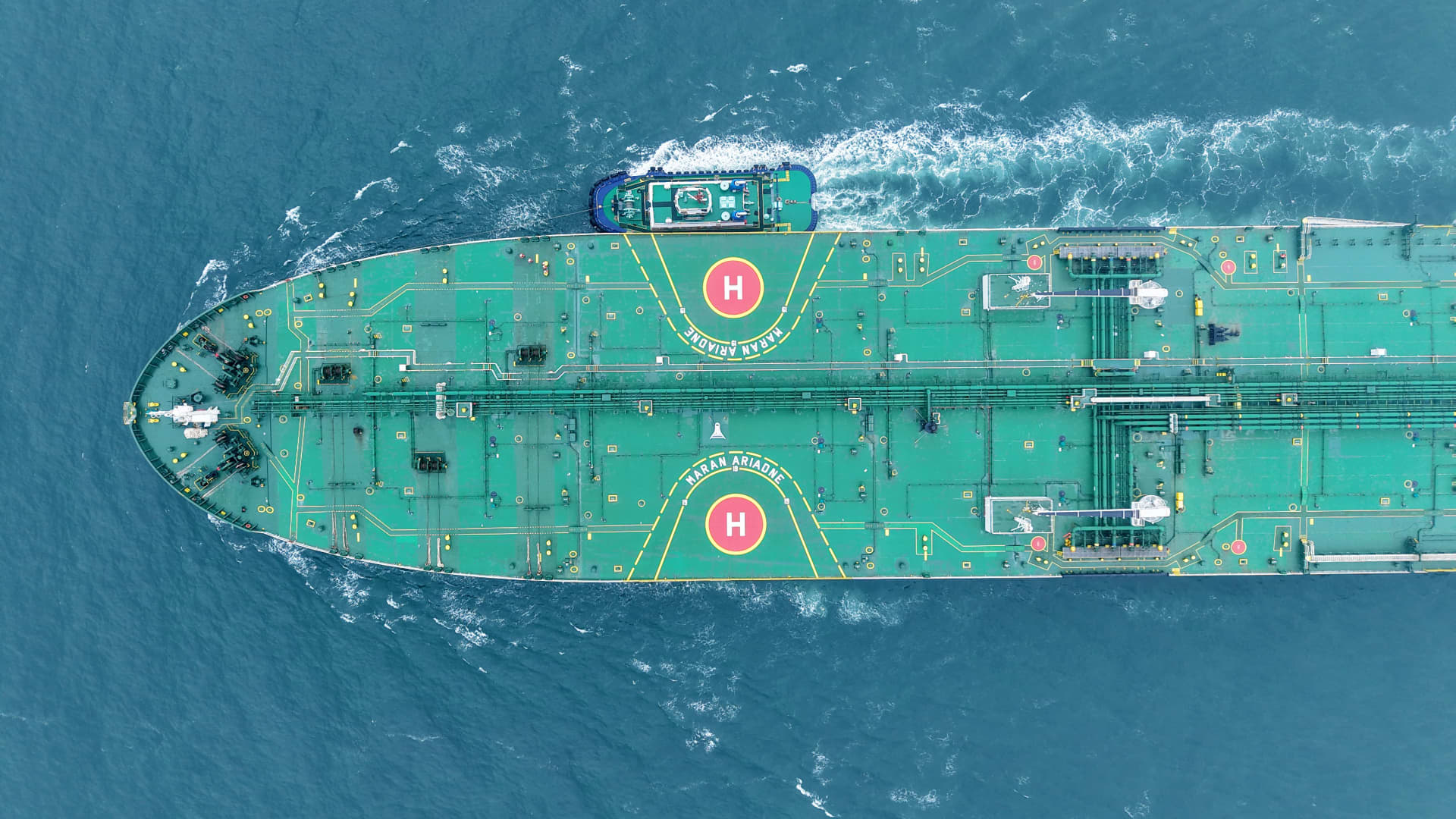

Energy ministers from G7 countries will meet virtually on Tuesday morning to discuss the possibility of releasing oil reserves to deal with supply disruptions caused by the Iran war, sources told CNBC.
G7 finance ministers met on Monday to discuss the release of reserves, but no decision was reached. G7 members are Canada, France, Germany, Italy, Japan, the United Kingdom, and the United States.
Sources said the G7 talks had a “positive” outcome. They said any coordinated action on the release of reserves would take place after the energy ministers’ meeting.
The U.S. believes a joint release of 300 million to 400 million barrels, or 25% to 30% of its 1.2 billion barrels of reserves, is appropriate, officials told CNBC.
“We stand ready to take the necessary steps, including supporting global energy supplies by releasing stockpiles,” G7 finance ministers said after their meeting on Monday.
Oil prices have soared to a peak of more than $100 per barrel as the vital Strait of Hormuz remains closed due to threats from Iran. It is unclear when traffic across the strait will resume.
Prices fell on Monday on expectations that a release of oil reserves would occur. U.S. crude oil has recently been trading around $95 a barrel, while global benchmark Brent crude is just below $100.
The closure of the strait caused the largest oil supply disruption in history, according to an analysis by consulting firm Rapidan. Approximately 20% of the world’s oil consumption is exported through this narrow waterway.
Unlike past shocks, Saudi Arabia and the United Arab Emirates are cut off from global oil markets by the closure of the strait, so they don’t have the wherewithal to deal with the disruption, Rapidan analysts said.
Analysts said the U.S. strategic oil reserves are not enough to offset supplies jammed in the Persian Gulf. According to the Department of Energy, U.S. reserves currently stand at 415 million barrels, about 58% of the total licensed capacity of 714 million barrels.
Analysts at Rapidan said International Energy Agency member states would be under pressure to release their strategic stockpiles as this was “the only remaining supply response option”.
