


Oil prices fell below $100 a barrel on Monday, as G7 energy ministers are expected to discuss the possibility of releasing oil stockpiles to deal with massive supply disruptions caused by the Iran war.
west texas intermediate Crude oil futures rose 2.98% to $93.61 a barrel by 12:49 p.m. ET. WTI rose to $119 overnight as Gulf Arab states cut production as the Strait of Hormuz remains closed due to Iranian threats.
international benchmark brent Oil prices traded at $98.60 per barrel, up 6.38%, after hitting a high of $119.50 in early trading. This is the first time since the Russian invasion in 2022 that oil prices have exceeded $100 per barrel.
G7 energy ministers will meet virtually on Tuesday morning to discuss the possibility of a joint release of oil reserves, sources told CNBC. Action towards releasing the reserves would be taken after the energy ministers’ meeting, they said.
G7 finance ministers held a virtual meeting on Monday to discuss the Iran war. “We stand ready to take the necessary measures, including supporting global energy supplies by releasing stockpiles,” the ministers said in a joint statement. G7 members are Canada, France, Germany, Italy, Japan, the United Kingdom, and the United States.
biggest supply disruption
According to an analysis by consulting firm Rapidan Energy, the strait closure caused the largest oil supply disruption in history. Approximately 20% of the world’s oil consumption is exported through the Strait.
Janib Shah, vice president of oil markets at Rystad Energy, said in a note on Monday that Brent crude oil prices could soar to $135 a barrel if current conditions continue for four months. Shah said if the current situation continues for two months, Brent prices will rise above $110.

WTI crude oil, 5 years
Shortly after oil prices topped $100 at the start of trading Sunday night, President Donald Trump posted on Truth Social that higher “short-term oil prices” were a “very small price” for defeating Iran’s nuclear threat.
“Only a fool would think otherwise!” Trump added.
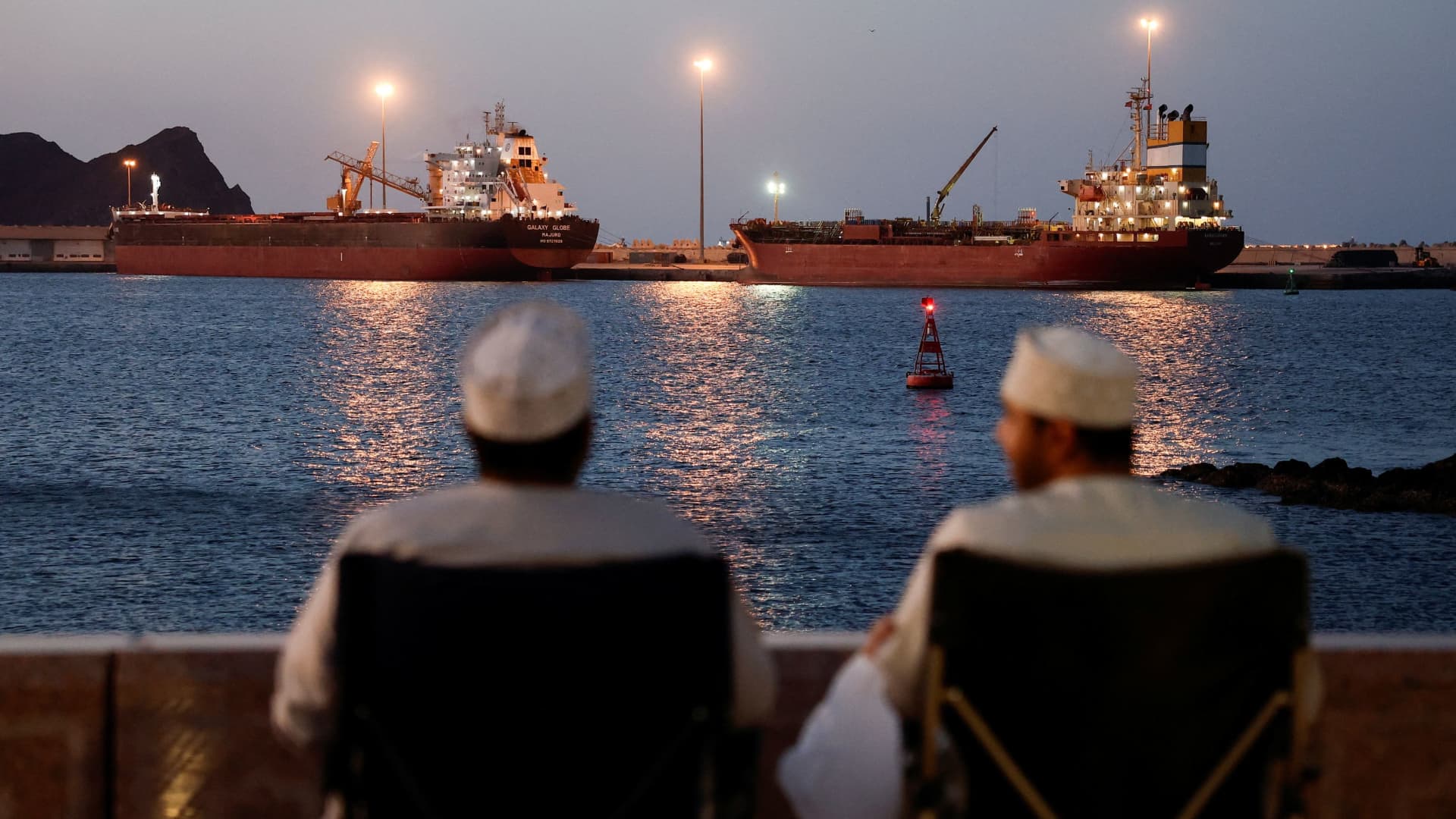
Gulf Arab states are cutting production due to a lack of storage space as crude oil piles up with nowhere to go due to the closure of the straits. Tankers are reluctant to pass through the narrow waterway due to fears of Iranian attack.
Iran’s Foreign Ministry spokesman warned on Monday that oil tankers “need to exercise extreme caution.”
“I think that as long as the situation remains volatile, all tankers, all maritime navigation needs to be done with extreme caution,” Foreign Ministry spokesman Esmail Baghaei said in an interview with CNBC.
Middle East producers cut production
Kuwait, OPEC’s fifth-largest producer, announced on Saturday that it would preemptively reduce oil production and refinery output, citing “Iran’s threat to the safe navigation of ships in the Strait of Hormuz.” The state-run Kuwait Petroleum Corporation has not provided details on the scale of production cuts.
Production in Iraq, OPEC’s second largest producer, has virtually collapsed. Output from three major oil fields in the south fell by 70% to 1.3 million barrels a day, three industry sources told Reuters on Sunday. These fields were producing 4.3 million barrels per day before the Iran War.
And the United Arab Emirates, OPEC’s third-largest producer, said on Saturday it was “carefully managing offshore production levels to address storage requirements.” Abu Dhabi National Oil Company (ADNOC) said onshore operations continue as normal.

The war showed no signs of slowing down, despite President Trump’s assertion that the war was “already won.” Iran has appointed Ayatollah Khamenei’s son Mojtaba as its new supreme leader. The United States and Israel killed Khamenei early in the war.
Energy Secretary Chris Wright said Sunday that traffic in the strait would resume after the United States destroyed Iran’s ability to threaten tankers.
“It won’t be long before more regular shipping operations resume through the Strait of Hormuz,” Wright said in an interview with CNN. “We’re nowhere near normal traffic at the moment. It’s going to take time. But again, the worst case scenario is weeks, not months.”
