

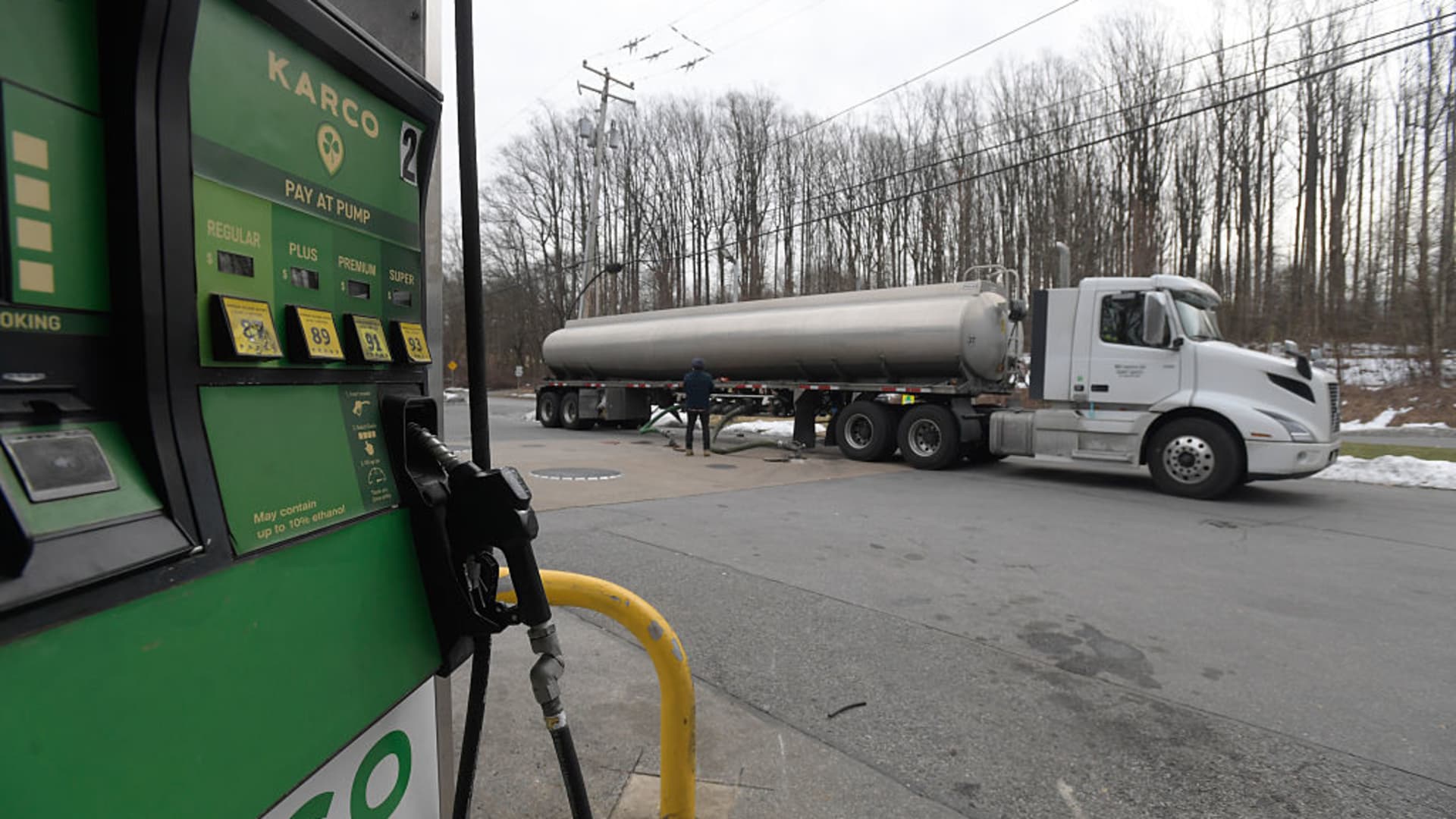
Investors will have a lot on their plate over the coming week. As earnings season draws to a close, some important economic updates are expected to be released, all against the backdrop of the ongoing war in Iran. There may be another unstable week ahead. 1. The war between the US and Iran is the most important thing to watch. Whether you’re on Wall Street or Main Street, you’re already feeling the effects of rising energy prices. As we explained in last week’s article, a significant jump in oil prices not only squeezes consumers and leaves companies with less money to spend on the products they sell, it also means that companies face higher input costs and have to make tough choices about how to respond. The deteriorating situation in the Strait of Hormuz is putting upward pressure on oil prices, perhaps even more so than some of the documented attacks on oil infrastructure. Traders are worried about supply disruptions, and that’s exactly what we’re seeing in the Strait. Some 20 million barrels of crude oil per day, equivalent to about a fifth of the world’s oil consumption, pass through this vital waterway, but it has been effectively shut down due to concerns that Iran or its proxies would attack anything that passes through it. That’s obviously problematic. Production is being affected because each country has limited storage capacity to store oil for export via the Strait of Hormuz. Kuwait is cutting back on oil production as it runs out of storage space, and even deeper cuts could follow, The Wall Street Journal reported Friday. On Friday, the Trump administration announced a $20 billion reinsurance program for tankers aimed at resuming maritime traffic in the Strait. Only time will tell if it works. Investors also need to consider where much of this Persian Gulf oil is going. Best destination?China. China is the world’s largest importer of crude oil. Some estimates suggest that more than 80% of Iranian oil goes to China. Another way of thinking is that about 50% of China’s oil imports pass through the strait. Although China has reserves and their reserves are rapidly increasing, we focus on this to point out the serious ramifications for everyone. And these could be very negative for China, which is reportedly in talks with Iran about allowing oil vessels to safely pass through the strait. In addition to being the world’s second-largest economy, the United States and China already have a tense “frenemy” relationship, and it is undesirable for the relationship to become even more tense. A situation that angers Beijing and increases pressure on Taiwan could cause even bigger problems. Most of the world’s most advanced chips are made in Taiwan, so anything that disrupts that supply chain is bad for stock markets and the global economy. As we continue to monitor the situation in the Middle East, we do not want to minimize the human cost of this conflict. But given the investment world and its impact on corporate profits, markets are focused on how quickly the Strait of Hormuz can be reopened and global oil supplies resumed. 2. The most important economic report of the week will be released on Wednesday morning with the release of the February Consumer Price Index, which will influence Federal Reserve policy. As of Friday, economists expected a 2.4% year-over-year increase in headline CPI levels, according to FactSet. Normally, Friday’s core PCE price index would be the report to watch because it is the Fed’s preferred measure of inflation. However, due to delays related to the government shutdown, the PCE statistics released Friday are for January. This means that you need to be aware that you are looking backwards more than usual. In fact, while these two inflation reports are some of the most important monthly economic announcements we get each month, it’s important to note that both should be taken with a grain of salt this time. Because neither reflects the fact that the United States is currently at war with Iran. In other words, these reports do not reflect rising oil prices or corresponding changes in consumer behavior. But they can be used to assess whether other important inflationary factors, such as shelter costs, were really falling before the war. From there, you can adjust your inflation outlook based on how long oil price increases last. Remember, the market is forward-looking. While we always pay close attention to economic data to improve our understanding of the present and the future, it is important to remember that how the market reacts to data will change depending on future expectations. Lessons from these reports will therefore need to take into account recent geopolitical developments. Beyond these inflation updates, keep an eye on the job openings and turnover survey, known as the JOLTS report, to be released Friday morning. Investors use this report to gauge labor market tightness and influence wage inflation expectations. In a hot labor market, companies need to pay to attract talent, but when there are far more job seekers than job openings, fewer financial incentives are needed. The JOLTS report also measures labor demand. Simply put, is a company willing to hire people? It also includes “turnover rate,” which is a way to understand whether workers feel comfortable enough to leave their jobs voluntarily. The weaker the job market, the lower the expected turnover rate. After Friday’s dismal jobs report, investors are scrambling to understand whether February’s 92,000 job losses were a one-off or a harbinger of more layoffs as companies increasingly adopt AI. While its introduction has certainly increased employee efficiency, the concern is that increased efficiency per employee ultimately means fewer employees. Some argue that AI will likely create new jobs, potentially increasing productivity and increasing demand, so we will probably need more talent. As companies look to layoffs as a way to offset rising costs, some have legitimate concerns that the opposite will happen. There is also a centrist view that AI will lead to job growth in the long run, but only after a highly disruptive transition period. This is not a debate that will be resolved overnight. But for now, any view of labor market weakness will be viewed negatively. Additionally, on Friday we’ll have a second round of fourth-quarter U.S. GDP growth, as well as some important updates on the housing market. On Tuesday, existing home sales statistics for February will be announced, and on Thursday, housing starts for January will be announced. In our portfolio, Home Depot is the stock that will benefit most from increased housing market activity. 3. We will also be watching how markets respond to the Fed’s newfound problem: stagflation concerns. With soaring oil prices and weak February employment statistics, we can expect to hear this phrase more frequently. Indeed, Chicago Fed President Austan Goolsby warned of that risk in an interview with the Wall Street Journal on Friday afternoon. Stagflation, a combination of the words “stagnation and inflation,” is an economic nightmare that occurs when unemployment rises as inflation accelerates. Just as we learned the U.S. economy lost jobs in February, when economists were hoping for an economic recovery, soaring oil prices related to the war are fueling inflation concerns. This dynamic puts the Fed in a real predicament. A weak labor market means interest rates should be lowered, but a sustained rise in inflation will force them to rise. Of course, Goldsby acknowledged in that interview, this move is too important to ignore, and we think the extent to which the impact of the Iran war on energy markets will be talked about in the coming weeks is a risk we’ll be watching. 4. Finally, despite not having the club’s name on the calendar, there are still some revenue reports to watch. Hewlett Packard Enterprise’s announcement is scheduled for Monday evening, and drone maker Aerovironment, also scheduled to be announced on Tuesday evening, will provide further insight into global defense spending intentions in the context of wars in the Middle East. Kohl’s on Tuesday morning, Dick’s Sporting Goods and Dollar General before the bell on Thursday, and Ulta Beauty on Thursday night will all be watching closely to see if consumer behavior has changed since prices started rising over the past week. On this dynamic Friday afternoon CNBC show, JPMorgan retail analyst Matt Vos said: A 30% increase in gas (prices), which is basically what we’ve seen in oil in the past, is about a $9 billion headwind to consumer spending. That being said… February tax refunds increased by 10%. That’s actually about a $9 billion to $10 billion tailwind. “So if this continues, in March and April, these two companies will basically wash each other out.” Finally, Thursday night will give down market darling Adobe, one of the most well-known companies in the software-as-a-service (SaaS) space, a chance to make the case why concerns about AI disruption are overblown. Sentiment towards the SaaS group has been quietly improving after a sharp decline heading into 2026, with Adobe stock up about 15% from its close on Friday. Low closing prices of the year on February 23 add an extra element of interest to the report Monday, March 9 Before the bell: ZIM Integrated Shipping (ZIM) After the bell: Hewlett Packard Enterprise (HPE), Voyager Technologies (VOYG), Zevra Therapeutics (ZVRA), Casey’s General Stores (CASY), LifeMD (LFMD), Vail Resorts (MTN) 10 a.m. ET: Existing Home Sales Before the bell: NIO (NIO), Kohl’s (KSS), ABM Industries (ABM), Priority Technology Holdings (PRTH), Uranium Energy (UEC), BioNTech (BNTX), United Natural Foods (UNFI) After the bell: Oracle (ORCL), Aerovironment (AVAV), Auna (AUNA), Avino Silver & Gold Mines (ASM), Evolv Technology (EVLV), Franco-Nevada (FNV), Kodiak AI (KDK), Concrete Pumping Holdings (BBCP), Beachbody Company (BODI), Cadre Holdings (CDRE) Wednesday, March 11, 8:30 a.m. ET: Consumer Price Index Before the Bell: Campbell Soup (CPB) After the Bell: UiPath (PATH), Netskope (NTSK), Stitch Fix (SFIX), Algoma Steel Group (ASTL), Bumble (BMBL), Descartes Systems Group (DSGX), Viant Technology (DSP), Petco Health and Wellness Company (WOOF) Thursday, March 12, 8:30 a.m. ET: First unemployment claims 8:30 a.m. ET: Housing starts before the bell: DICK’S Sporting Goods (DKS), Dollar General (DG), Li After the Auto (LI) bell: Adobe (ADBE), Rubrik (RBRK), SentinelOne (S), Nektar Therapeutics (NKTR), Ulta Beauty (ULTA), ServiceTitan (TTAN), Green Dot (GDOT) Friday, March 13 8:30 a.m. ET: Gross Domestic Product 8:30 a.m. ET: Personal Spending and Income 10 a.m.: JOLT Jobs (See here for a complete list of Jim Cramer Charitable Trust stocks.) Subscribers to Jim Cramer’s CNBC Investment Club will wait 45 minutes after Jim sends a trade alert before buying or selling stocks in the Charitable Trust’s portfolio. If Jim talks about stocks on CNBC TV, he will wait 72 hours after issuing a trade alert before executing the trade. Investment Club Information is subject to our Terms of Use and Privacy Policy, along with our disclaimer, and no fiduciary duties or obligations exist or arise from receipt of information provided in connection with any investment. club. No specific results or benefits are guaranteed.
