

A version of this article first appeared in CNBC’s Inside Wealth newsletter by Robert Frank, a weekly guide for high-net-worth investors and consumers. Sign up to receive future editions directly to your inbox.
The Iran war has undermined Dubai’s status as the world’s wealth capital, sending expatriates fleeing in droves and causing family offices and wealth management firms to reconsider their presence in the Middle East.
Over the past decade, Dubai has successfully marketed itself as a safe haven for the world’s elite. Attracted by the sun, security and tax-free income, Dubai’s millionaire population has doubled since 2014 to more than 81,000, according to Henley & Partners. Dubai’s luxury real estate market has grown for the fifth consecutive year, with 500 properties sold for more than $10 million last year, up from just 30 properties in 2020.
But now Dubai’s safety reputation has been shattered.
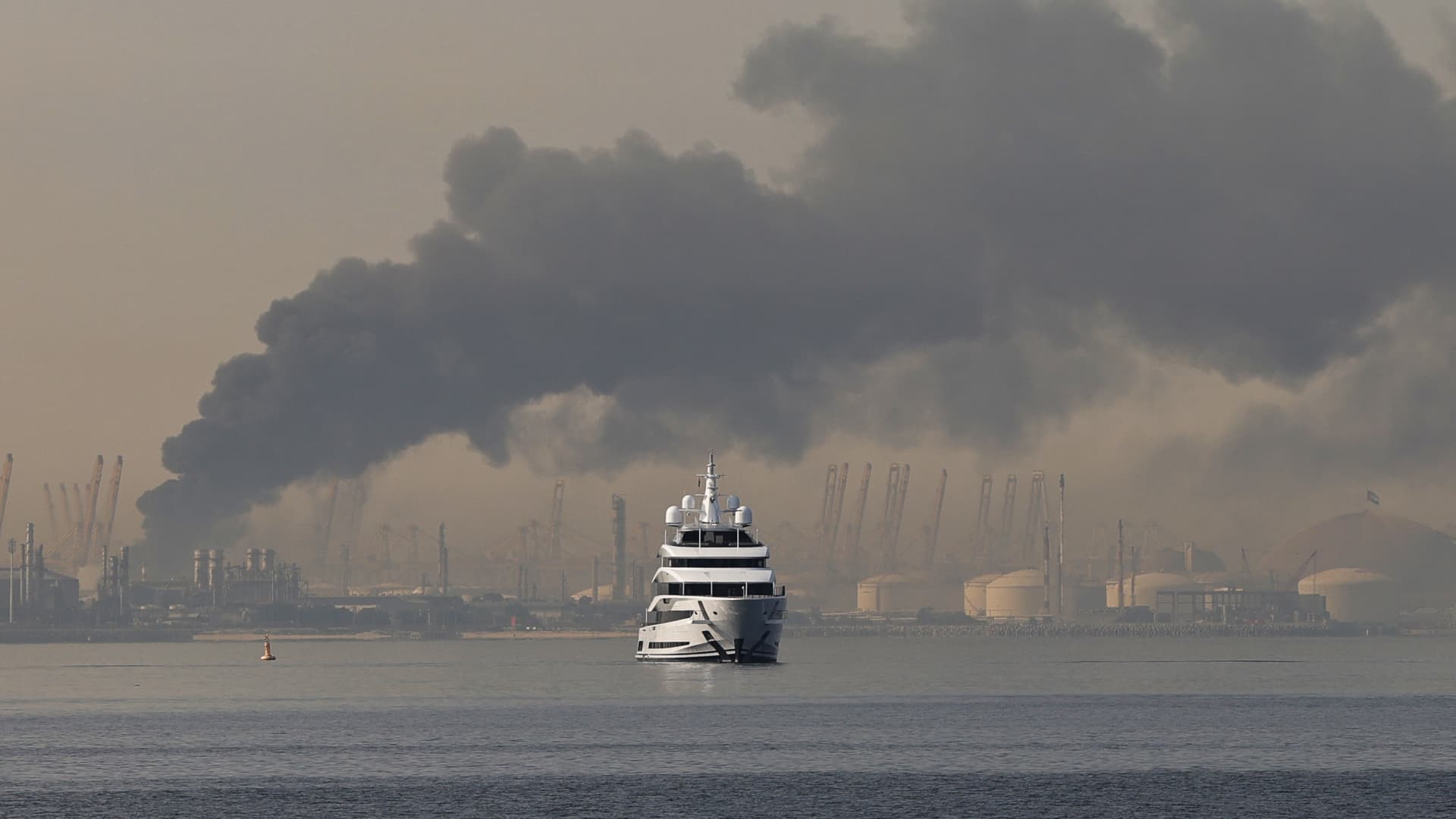
Last week, an explosion hit the five-star Fairmont The Palm hotel in Dubai’s famous man-made palm-shaped archipelago. Debris from a crashed Iranian drone set the Burj Al Arab hotel on fire, and Dubai airport was damaged in a missile attack. On Tuesday, the U.S. Consulate General in Dubai was the target of an apparent drone attack that caused a fire to break out nearby.
“The U.S.-Israel war against Iran is fundamentally upsetting the critical security atmosphere in Dubai,” said Jim Crane, a research fellow at Rice University’s Baker Institute. “Dubai’s economic model is based on expats providing the brains, stamina and investment capital. We need stability and security to attract smart expats.”
Dubai and the United Arab Emirates were quick to reassure investors. The UAE’s National Emergency Crisis and Disaster Management Authority announced on Saturday that the situation was “under control.” Dubai Police this week threatened to arrest and imprison social media influencers who share social content that is “contrary to official statements or is likely to cause public panic”.
Other wealth centers in the region, including Abu Dhabi, Doha and Riyadh, have also been caught in the war’s aftermath. And like Dubai, its main economic policy is to attract wealthy people. But Dubai’s rise and dependence on wealthy capital stands out in the region. Mr Kane said this was because Dubai was no longer dependent on oil revenues like its neighbors, but instead relied on the trust of foreigners.
“If everyone with a foreign passport is evacuated, the city will not be able to function,” he said. “Dubai will literally be shut down. Dubai will be further exposed to the risk of an exodus of foreigners.”
According to Henley & Partners, Dubai currently has 237 centimillionaires (people worth more than $100 million) and at least 20 billionaires. An estimated 9,800 billionaires will move to Dubai in 2025, bringing with them $63 billion in wealth, Henry said. This is more than any other country in the world. Most of Dubai’s wealthy people come from the UK, China, India, and other parts of Europe and Asia. Decades ago, as the ruling Maktoum family began to diversify its economy away from oil, Dubai created special economic zones and a golden visa program as a national strategy to effectively industrialize attracting wealth.
Dubai has no personal income tax, capital gains tax or inheritance tax, making it an ideal destination for ultra-high net worth individuals and family offices. The Dubai International Financial Center, a special economic zone, reported in early January that the top 120 households in the zone manage a total of more than $1.2 trillion. The DIFC announced last month that there were 1,289 “family associations” in the region, an increase of 61% on the previous year.
For now, many wealthy families and wealthy professionals are focused on escaping. Charter companies report that demand for private jets far outstrips availability and number of flights. Vimana Private Jets CEO Ameer Narang said on Tuesday that the brokerage received more than 100 customer inquiries overnight. He said he hasn’t seen demand like this since the pandemic. He said a jet from Riyadh to Europe could cost up to $350,000.
He added that the Dubai residents he spoke to were not fleeing to safety, but were traveling for business meetings.
“They don’t feel in danger,” he says. “Life is pretty much going on as normal, just a little bit of extra noise in the background from the missile launches. But life has to go on. They have to travel.”
Dale Buckner, CEO of security firm Global Guardian and a former Green Beret, said there is no sign that the exodus is slowing. By Tuesday morning, seven corporate clients, including large financial firms and consulting firms, were considering evacuating between 1,000 and 3,000 employees, Buckner said.
“This is a lot like Ukraine,” he said.
“I think everyone is aware that Iran has been successful in targeting five-star hotels and airports on a large scale, and has now started shutting down oil infrastructure,” he said. “I don’t think anyone thought that was possible.”
Many businesses and experts in Dubai said the business case for remaining remains strong. And they are careful not to go beyond the government in times of crisis. Hedge funds and family offices are primarily attracted to Dubai’s taxes, regulations and stable banking system, said Hasnain Malik, head of emerging market equities and geopolitical strategy at Dubai-based Tellimer. All of these characteristics remain intact, he said.
“Those reasons haven’t changed,” he said. “Recent events call into question only one aspect of the pristine safety that drives this lifestyle.”
Henley & Partners, which helps wealthy people secure visas in other countries, said Dubai has always proven resilient in times of uncertainty. Dominik Volek, head of private clients at Henley & Partners, said the Dubai attack was also a reminder of the importance of geographic hedging.
“Situations like this reinforce a core principle that we frequently discuss with our clients: the value of global selectivity,” he said. “Internationally mobile families typically spread their residence and citizenship across multiple regions, including the Americas, Europe, the Middle East, and Asia, allowing them the flexibility to respond to geopolitical uncertainties wherever and whenever they occur. These decisions are generally strategic and long-term in nature, rather than reactions to short-term events.”
One sector that may feel long-term pressure is Dubai’s real estate market. Property prices in Dubai have soared for the fifth consecutive year due to the Golden Visa program, which grants foreigners a 10-year renewable visa if they purchase property worth more than $550,000. Last year, a 47,200 square foot penthouse in the new Bugatti Residence sold for 550 UAE dirhams, or about $150 million, setting a price record in Dubai and the UAE.
But even before the Iran war, there were some signs that Dubai’s ferocious building boom, soaring prices and widespread speculation could begin to subside. UBS estimated in September that Dubai had the fifth highest bubble risk among 21 major cities, behind Zurich and Los Angeles. Fitch Ratings predicted in the spring that a correction would occur in late 2025 or 2026, with prices falling by up to 15%.
Fitch Ratings’ Anton Lopatin said the impact on property values would depend on the scope and duration of the dispute. He said the exodus of expatriates could “put pressure” on Dubai’s housing market at this time.
