

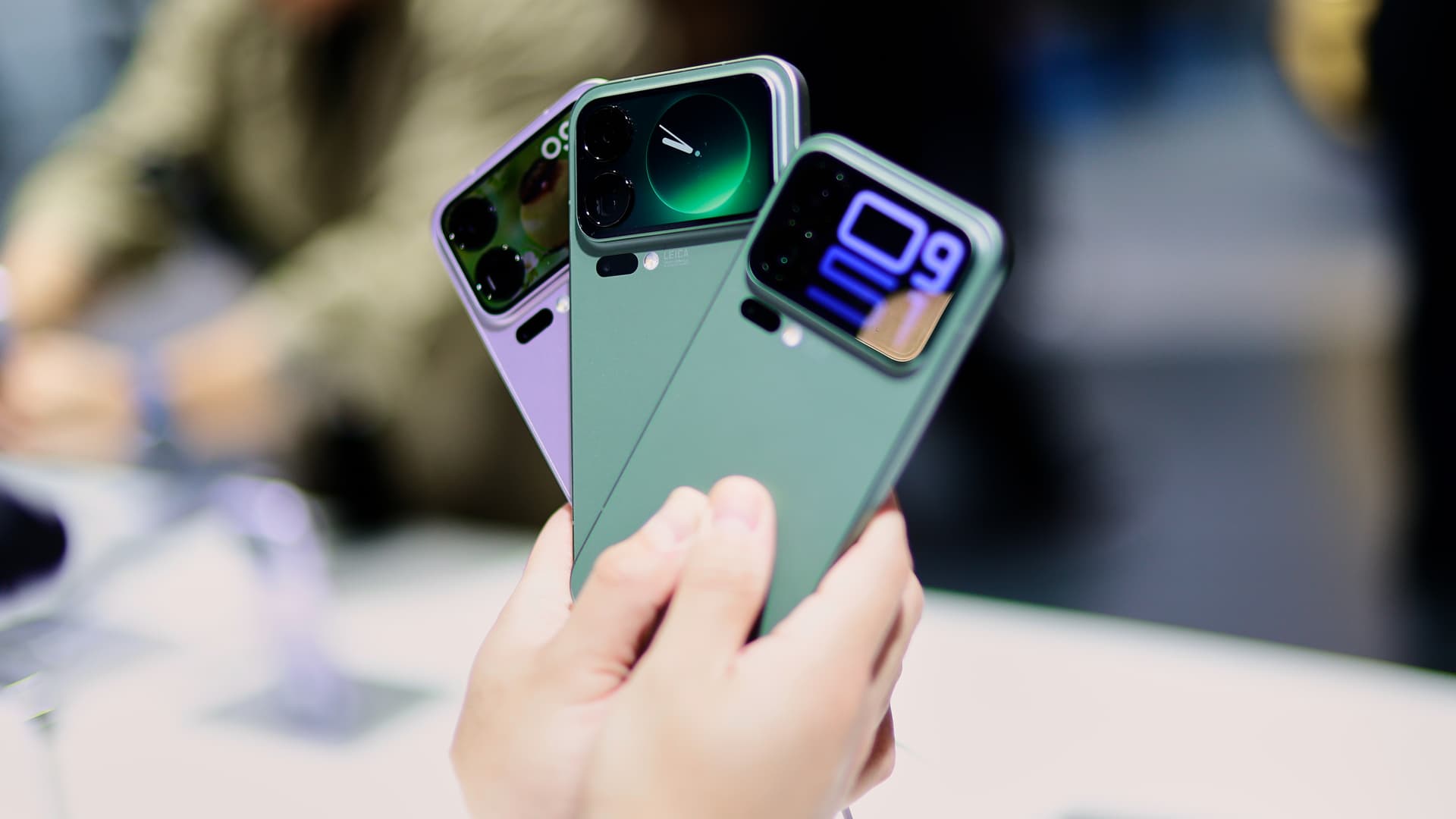
Xiaomi’s rear display flagship smartphone “Xiaomi 17 Pro Max” was exhibited at Mobile World Congress held in Barcelona, Spain on March 3, 2026.
Joanne Crosnull Photo | Getty Images
Barcelona — xiaomi The company’s president, Lu Weibin, told CNBC that the company plans to launch new smartphone processor chips every year, underscoring the company’s ambitions to expand into more sophisticated technology areas.
In a wide-ranging interview on Tuesday, Lu also said Xiaomi is preparing to launch its own AI assistant for overseas markets.
Last year, Xiaomi launched the XRing O1, a system-on-chip (SoC) based on an advanced 3-nanometer manufacturing process. Few smartphone manufacturers design their own SoCs to power their internal devices.
apple has A-series chips, while Samsung has the Exynos brand. Other smartphone manufacturers rely on SoCs from companies such as: Qualcomm and media tech.
“This is our first chip product. From now on, we will probably have to release upgrades every year,” Lu told CNBC on the sidelines of the Mobile World Congress trade show in Barcelona.

Annual SoC upgrades are a major undertaking, keeping pace with Apple, which typically releases new A-chips every year. Lu said the chip will debut in devices launched in China this year and will eventually be included in phones the company sells overseas.
Lu’s comments differ from what Xiaomi Vice President Xu Fei told CNBC in September that the company cannot promise to release a new product every year.
The custom SoC allows Xiaomi to tightly integrate hardware and software and differentiate it from competitors’ products. Xiaomi has developed its own mobile operating system based on Android called HyperOS.
International AI assistant
In China, Xiaomi devices are equipped with an AI assistant called Xiao AI, built on an AI model developed in-house.
Xiao AI mainly focuses on Xiaomi products in China. However, Lu told CNBC that the company is preparing to release the AI assistant for international markets when it launches its EVs overseas (the company previously said it would launch in Europe in 2027).
“When our cars are shipped to international markets, you will see our AI agents coming with the cars,” Lu said.
According to Lu, Xiaomi is likely to consider partnering with Google to use the company’s Gemini model for its own AI assistants as well as overseas.
Other smartphone makers are taking a similar approach. Samsung integrates various AI models and products into its devices, relying heavily on Google Gemini.
Lu said Xiaomi aims to bring AI assistants to smartphones and cars.
Xiaomi CEO Lei Jun said last year that the company would invest at least 50 billion yuan ($6.9 billion) over the next 10 years in developing its own chips.
The Beijing-based company plans to integrate the XRing O1 chip, HyperOS operating system and AI assistant into one device for the first time this year, Lu said.
“We will first deploy it in the Chinese market, but eventually we would like to introduce it to overseas markets as well,” he added.
