

Seoul, South Korea
—
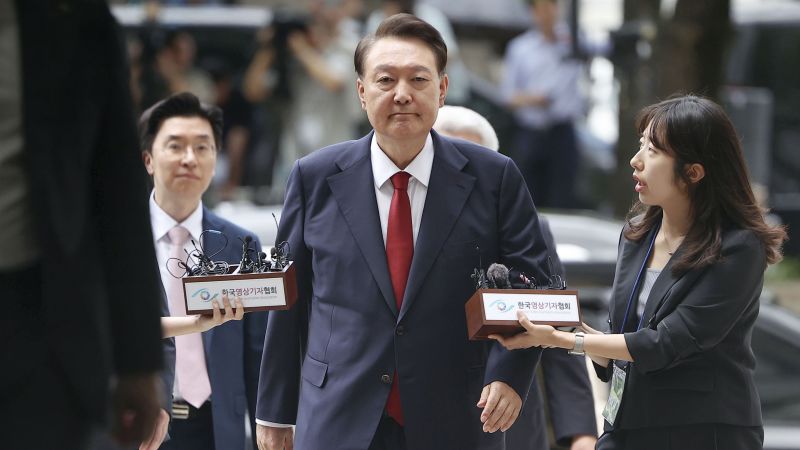
Former South Korean President Yun Seok-Yeol was sentenced to life in prison on Thursday after a court found him guilty of leading an uprising during a brief period of martial law that plunged the country into political turmoil and threatened to disrupt decades of democracy.
The verdict closes a chapter in one of South Korea’s biggest political crises, a story full of dramatic developments that test the country’s democratic guardrails.
On December 3, 2024, Yoon declared martial law in a late-night televised speech, stating that there were “anti-national forces” sympathetic to North Korea within the opposition party.
Armed soldiers descended on parliament by helicopter and attempted to storm the chamber where lawmakers were assembled. Shocked and angry members of the public, along with MPs and parliamentary staff, quickly barricaded entrances and struggled to prevent soldiers from reaching the chamber, with the chaos broadcast live on television.
Yoon’s shocking declaration was widely condemned as reviving dark memories of the country’s authoritarian past, plunging South Korea into a constitutional crisis and shaking the foundations of the country’s democracy. He reversed course within six hours after lawmakers stormed Congress and voted unanimously to block it.
Since the late 1980s, South Korea has transformed into a strong democracy through regular protests, free speech, fair elections, and a peaceful transfer of power. The country has since grown into a major player in the global economy and remains a key ally of the United States in Asia.
However, the domestic political situation remains deeply polarized and difficult, with presidents on both sides of the political divide often facing calls for impeachment, criminal investigations, and prosecution.
A crowd of Yoon supporters gathered outside the Seoul Central District Court to watch the trial, which was broadcast live across the country, on a large screen.
Presiding Judge Ji Kwi-young said it was clear that Yoon’s intention in issuing martial law was to paralyze the National Assembly for a long period of time, considering the words Yun used in the military order and the fact that he attempted to arrest political opponents, including the opposition Democratic Party leader and ruling party leader Han Dong-hoo.
Ji said the very act of sending armed soldiers to the Capitol and transporting them by helicopter constituted an act of insurrection.
Former Defense Minister Kim Yong-hyun was also found guilty on Thursday of playing a key role in the rebellion and sentenced to 30 years in prison. Kim had previously been responsible for ordering soldiers to institute martial law.
This is breaking news. This will continue in the future.
