

Marketing is one of the few functions that no industry can ignore. That’s why so many AI-powered marketing tools are shoved in marketers’ faces today. From Facebook and Instagram to TikTok, and from large incumbents like Microsoft and Google to content generation startups like Jasper and Copy.ai, all social platforms offer AI tools that make marketers’ lives easier in countless ways.
That was one of the reasons I was perplexed to see yet another marketing AI startup enter the picture. San Francisco-based Kana just sneaked onto the scene with a suite of AI agents that can perform data analysis, audience targeting, campaign management, customer engagement, media planning, and AI chatbot optimization. The startup has raised $15 million in a seed funding round led by Mayfield.
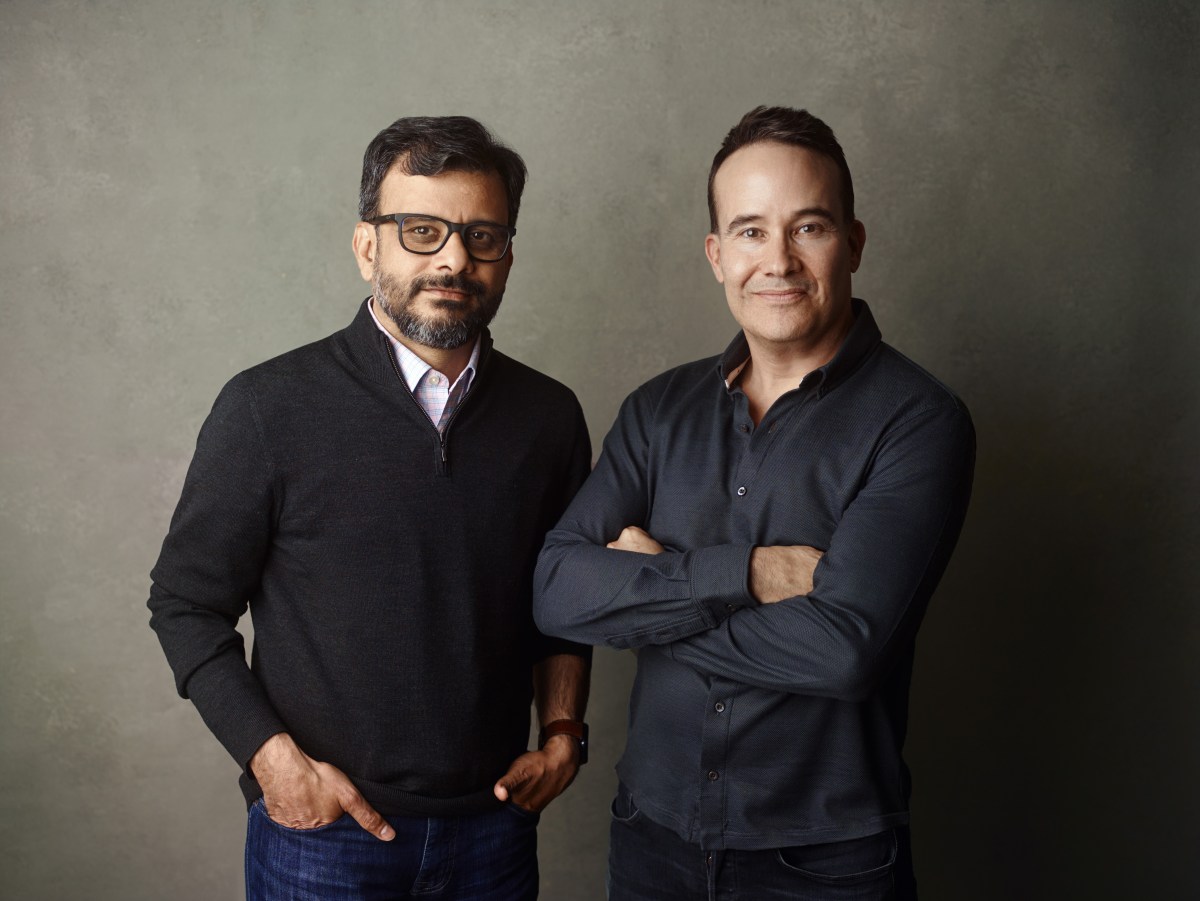
But Kana has something that most marketing startups today don’t have. Its co-founders Tom Chavez (CEO, pictured above, right) and Vivek Vaidya (CTO, pictured above, left) have been building marketing technology for over 25 years. In fact, Kana is their fourth venture after Rapt (acquired by Microsoft in 2008), Krux (acquired by Salesforce in 2016), and super{set}, the startup studio where they incubated Kana for nine months.
Chavez called this a “wonderful” time and said there is a clear opportunity to leverage his experience and today’s AI technology for these types of problems. “We’re seeing the market demand solutions that fit this moment (…) We understand this space deeply, and we’ve probably been immersed in it for a little too long. We’ve really been alongside our customers’ pains,” he told TechCrunch.
The solution Kana pitches includes a “loosely coupled” AI agent that can be adjusted “on the fly,” integrates with traditional marketing software, and perform a variety of tasks simultaneously. So, marketers can, for example, upload a media brief and Kana’s agents can analyze it to understand campaign goals, search for target audiences, and pull data from inventory and market research to further adjust plans. The platform includes autonomous campaign tracking, optimization, and reporting capabilities.
Similar to Agent, Kana provides synthetic data generation to enrich third-party data sources for activities such as market research and audience targeting. This could help companies reduce the cost of using third-party data, fill data gaps, and help marketers run tests more quickly across different platforms and refine their strategies, Chavez argued.
Kana said this is all done while keeping up-to-date with human information, allowing marketers to approve the AI agent’s actions, provide feedback, and customize the agent’s behavior as needs change.
Chavez and Vaidya emphasized the importance of the platform’s flexibility, arguing that the ability to deploy, adjust and build new agents in real time allows marketers to see campaign results faster than with traditional systems.
Going forward, the startup believes it will have a lot of flexibility in customizing the platform for customers and will also act as a moat for established companies and other startups building similar products.
“Rather than creating bespoke solutions, we have the opportunity to highly customize and configure these solutions to where our customers are. Larger companies can never get there,” Chavez said.
“We live in a world where we can explore a third option[with our customers]: don’t build, don’t buy, build together, build in a supported way,” Vaidya added. “We can move at insane speeds that these big companies can’t. That’s our advantage.”
Kana plans to use the cash to expand hiring in the engineering, product and go-to-market areas. Navin Chaddha, Mayfield’s managing partner, will join the firm’s board of directors.
