

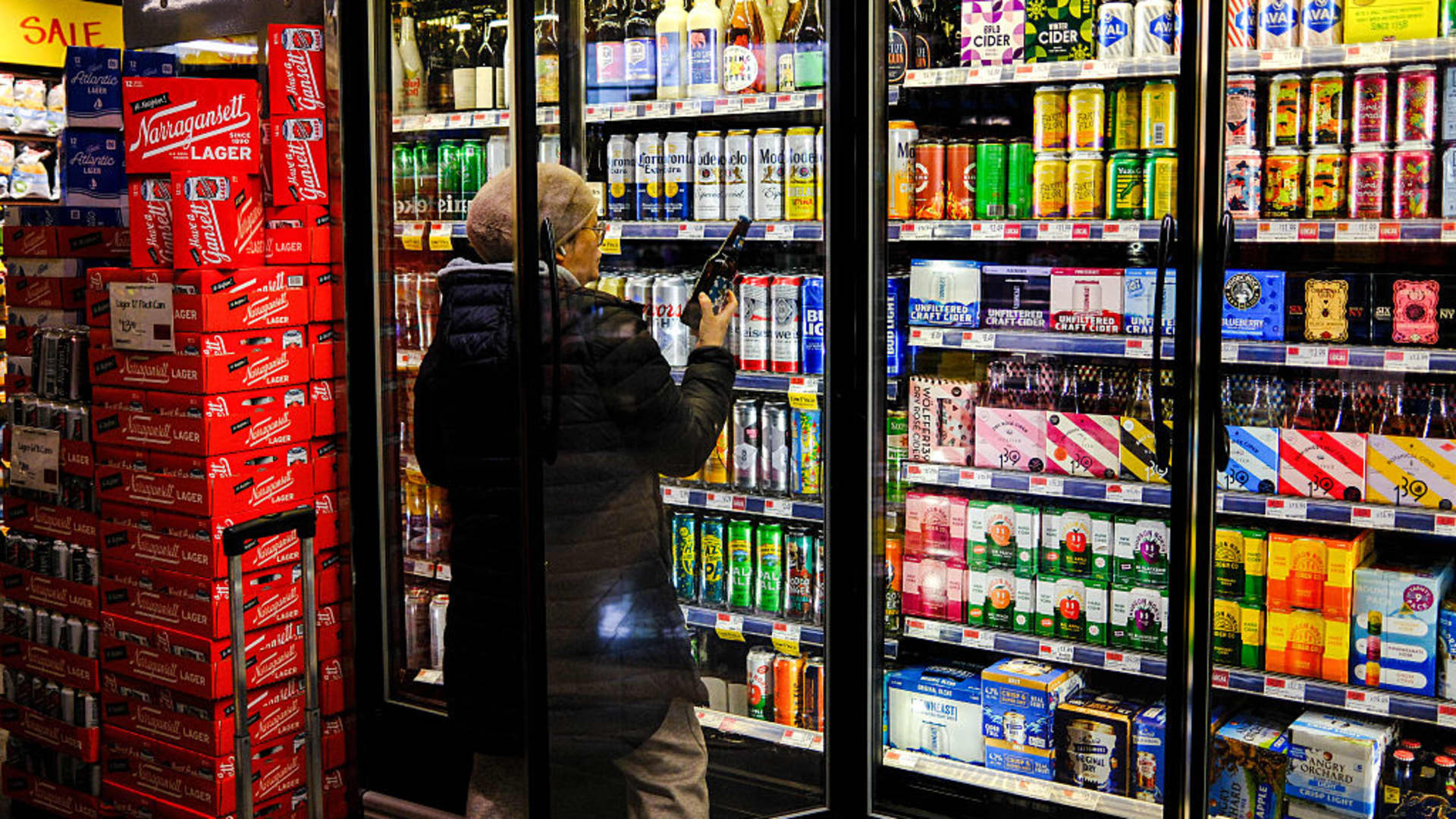
Consumer staples have been the main beneficiary as investors shift their bets toward 2026, starting with tech stocks. Consumer staples is the third-best performing sector on the S&P 500 year-to-date, behind materials and energy. The sector will rise by more than 15.5% in 2026, while the overall market index will remain largely unchanged during this period. Market-weighted valuations for consumer staples have soared to their highest levels since the 1990s, Wolf Research wrote in a note Tuesday. Earlier this month, Bank of America found that net inflows into the sector as a percentage of market capitalization were at an all-time high. The rally has been so rapid that the sector’s Relative Strength Index is currently 80, indicating it may be in overbought territory. “Most of what we’ve seen since the beginning of the year so far has more to do with the broader market than with the staples themselves,” Deutsche Bank analyst Steve Powers said in an interview with CNBC. “As there has been a rethinking of market positioning, particularly in the tech sector, it has opened up rotation to more overlooked, perhaps less popular, and defensive sectors.” Walmart’s Huge Footprint Amid the market rally, the consumer staples giant Walmart has joined the exclusive $1 trillion market capitalization club comprised primarily of tech giants. Citi analyst Paul Lejuer said in an interview that the company benefits from being seen as a retailer ready to adapt to the artificial intelligence economy. “This is a combination of both their historic brick-and-mortar eco-business as well as what they’re doing in the technology world,” he said. “I think a lot of what they’re building is just going to increase the distance between them and their competitors.”Stocks of Walmart’s peers had lagged behind until the recent rally. In 2025, Walmart was up more than 23%, while overall consumer staples were roughly flat. Walmart’s 20% rise in 2026 brings it much closer to a breakthrough in this space. WMT 1Y Mountain WMT 1 year chart. Driving the sector in 2026 So why are other companies in the sector gaining attention now? Bank of America analyst Peter Garbo wrote in a recent note that a weaker dollar may be supporting the stock prices of multinationals like Coca-Cola, Procter & Gamble, and Philip Morris. Garbo added that some companies with easier earnings comparison periods are also doing better, such as Constellation Brands and Conagra Brands. There are also signs that the fundamentals of these stocks may start to improve. Some analysts say companies in the industry are likely to benefit most from the hefty tax refunds that come with President Donald Trump’s “Big and Beautiful Bill.” “Going back to 2025, a large portion of the demand headwinds were related to lower-income and lower-middle-income household income groups,” Deutsche Bank’s Powers said. “To the extent that they provide some relief…that will help many sectors, but it could help demand for consumer products going into this year.” Powers added that investors expect these stocks to rise as 2026 progresses as consumption and demand increases. This is something some companies are already predicting, with Procter & Gamble Chief Financial Officer Andre Schulten telling investors on a recent earnings call to “expect better performance” in the second half of fiscal 2026. For consumer staples to continue outperforming, Powers said there will need to be further signs of improving fundamentals and continued investor interest in rotating out of momentum stocks. He added that the rest of earnings season will be crucial to learn more from a fundamentals perspective. Steve Sosnick, chief strategist at Interactive Brokers, predicted that investor behavior will remain the same throughout the year starting in 2026 when it comes to rotational play. “The trend of increasing popularity of value stocks will continue,” he told CNBC, especially with tech stocks underperforming relatively well even before 2026 begins. “So I’m like, ‘Let me get back to knitting here. Maybe boring is good in this environment.'”
