

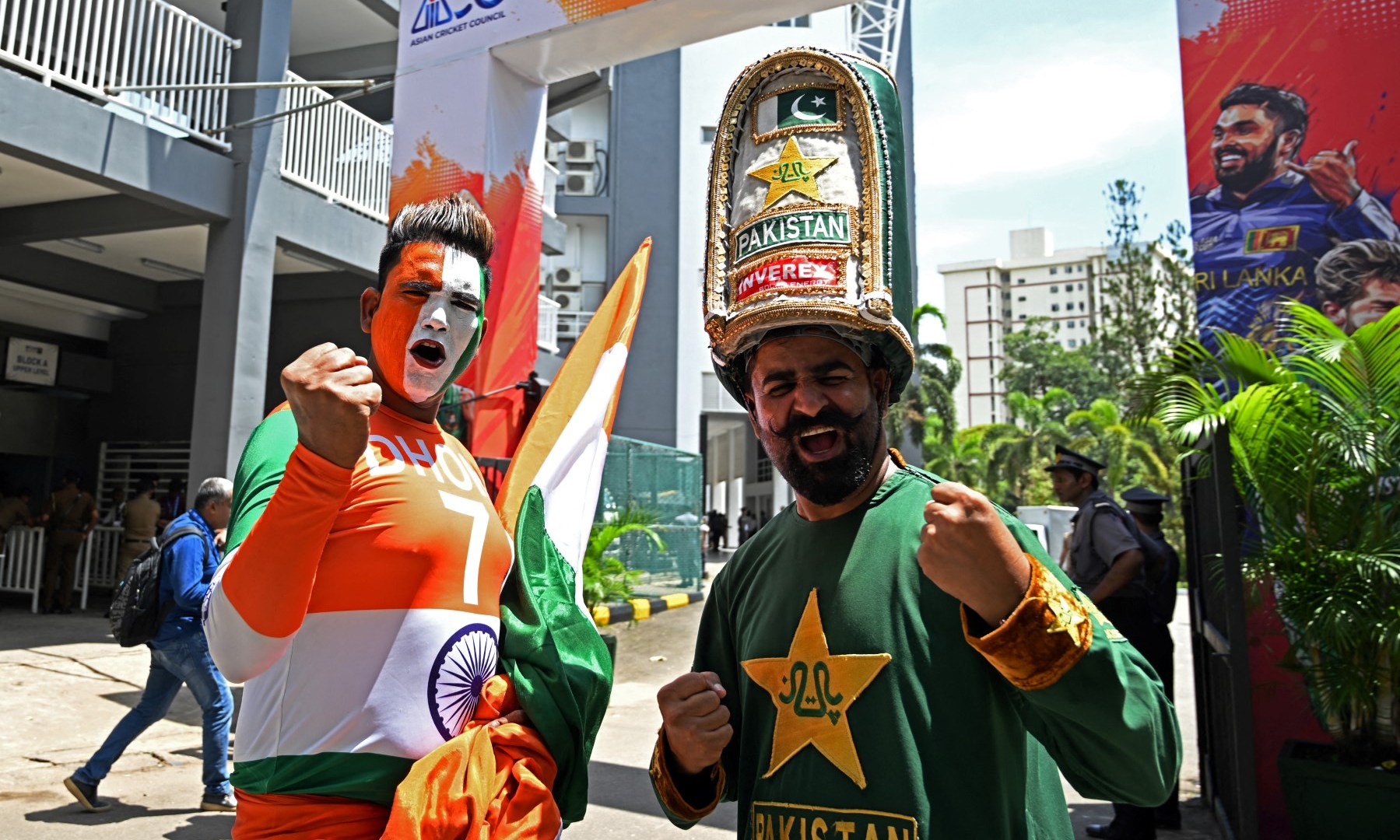
COLOMBO, Sri Lanka — Nearly 30 years ago today, India and Pakistan formed a joint cricket team to play Sri Lanka ahead of the 1996 Cricket World Cup, marking an unprecedented moment of unity in the history of the sport.
The two long-time rivals put aside their differences and banded together to support their fellow South Asian team, who were facing the threat of a match boycott in the tournament they had fought so hard to host.
Recommended stories
list of 4 itemsend of list
India vs Pakistan is the most-watched match in any multilateral tournament, be it the World Cup, Asian Cup or Asian Games, be it men’s, women’s or U-19 competitions.
Few sporting events around the world carry as much weight and anticipation as the India vs Pakistan cricket match. As a result, Pakistan’s government ordered its team not to play against India in the ongoing T20 World Cup, which temporarily threw the tournament into chaos.
Sri Lanka, which had been designated as the host of this match, also held its breath.
After a week of negotiations, the Pakistan government made a dramatic late U-turn and the match will be held as scheduled on Sunday at the R Premadasa International Cricket Stadium in Colombo.
But what would have happened if the boycott had gone ahead? The impact could have been devastating not only for Pakistan but also for the International Cricket Council (ICC) and Sri Lanka.
Crisis appears to have been averted, and the island nation is poised to reap benefits in terms of its fiscal position, diplomatic standing, and community.
‘Huge impact’ on tourism industry
For a country still grappling with the fallout from the economic crisis in 2022, India vs Pakistan’s World Cup appearance could be a godsend.
Tourism and hospitality is one of the industries hardest hit by Sri Lanka’s financial collapse, and the match will see a large influx of fans from India and Pakistan.
Hotels in and around Colombo were fully booked well in advance of the Games, but the industry braced itself for huge losses after Pakistan threatened a boycott.
“Ever since the boycott was announced, there has been a huge impact,” Sudarshana Pieris, who works in Sri Lanka’s hospitality sector, told Al Jazeera.
“All the major hotels in Colombo were fully booked by Indian travel agents well in advance (of the match), but when the boycott was announced, almost all of those reservations were lost,” he said.
“However, after Pakistan reversed its decision, room rates at five-star hotels in Colombo increased by about 300 to 400 percent.”
In addition to hotels, several other local businesses, from street vendors to fine dining restaurants, are also hoping to see an increase in foot traffic and spending over the weekend.
These short trips and the experiences they provide can have long-term benefits for the industry, influencing visitors to extend their stay or return to Sri Lanka for vacation long after the games have concluded.
Another relatively underappreciated impact of the game is the employment opportunities it creates, albeit temporarily, in the media, event management, security, and transportation industries.
Freelance journalist and broadcaster Asanka Hadirampela, who is currently working as the Sinhala commentator for the World Cup, recognizes the marquee match as a great opportunity from a personal perspective.
“This is my first World Cup as a broadcaster,” Hadirampela said.
“The India-Pakistan match is the biggest and most-watched match of the tournament, so I think it’s exciting and a special achievement to work on a match like this.”
geopolitical victory
The line between sports and politics has always been blurred in South Asia.
Therefore, while the economic benefits are expected to be large, the impact this match will have on the region’s geopolitical environment cannot be overlooked.
Pakistan’s boycott also admitted to be clearly political, with Pakistan Prime Minister Shehbaz Sharif saying he was offering support to Bangladesh after the Tigers were expelled from the tournament by the ICC.
They said Pakistan’s reversal of the decision followed calls from several “friends” in the region to reconsider the boycott, but politics were also involved.
Sri Lankan President Anura Kumara Dissanayake reportedly spoke to Prime Minister Sharif over the phone and urged the government to reconsider its decision to boycott the match, as a successful staging of the match would not only establish Sri Lanka as a capable host of global sporting events, but also strengthen its position as a neutral arbiter in a region fraught with geopolitical complexity.
Sri Lanka and Pakistan have always maintained strong diplomatic ties, which extend to the field of cricket as well.
Sri Lanka were one of the first teams to tour Pakistan after being banned from international cricket for a decade as a result of the terrorist attack targeting the Sri Lankan team in March 2009.
When Al Jazeera contacted Sri Lanka Cricket (SLC), vice-president Rabin Wickramaratne confirmed that SLC had indeed contacted the Pakistan Cricket Board (PCB) after the boycott was announced.
“We have asked them to reconsider their decision,” Wickramaratne said.
“It (boycott) would have had an economic impact on Sri Lanka either directly or indirectly.
“We have always had a good relationship with the PCB and have always supported them, so we are happy with their decision.”
Just over 24 hours before the game in Colombo, there is palpable excitement and buzz around the game, which was brought back from the brink of cancellation.
As of Saturday morning, 28,000 tickets had been sold for the game, but local organizers expect 40,000 fans to be in the stands.
On Sunday, thousands more will line the streets in and around Maligawat, a bustling suburb of Colombo that is home to the famous Premadasa Stadium.

